



 Chat with AI
Exam 22: The Integumentary System

Exam 1: Introduction to Medical Assisting76 Questions
Exam 2: Healthcare and the Healthcare Team80 Questions
Exam 3: Professionalism and Success75 Questions
Exam 4: Interpersonal Communication97 Questions
Exam 5: Legal and Ethical Issues85 Questions
Exam 6: Infection Control Fundamentals74 Questions
Exam 7: Safety and Patient Reception73 Questions
Exam 8: Office Equipment and Supplies155 Questions
Exam 9: Examination and Treatment Areas97 Questions
Exam 10: Written and Electronic Communication84 Questions
Exam 11: Medical Records and Documentation75 Questions
Exam 12: Electronic Health Records72 Questions
Exam 13: Managing Medical Records74 Questions
Exam 14: Telephone Techniques89 Questions
Exam 15: Patient Education75 Questions
Exam 16: Schedule Management80 Questions
Exam 17: Insurance Billing80 Questions
Exam 18: Diagnostic Coding74 Questions
Exam 19: Procedure Coding75 Questions
Exam 20: Patient Collections and Financial Management142 Questions
Exam 21: Organization of the Body145 Questions
Exam 22: The Integumentary System100 Questions
Exam 23: The Skeletal System154 Questions
Exam 24: The Muscular System100 Questions
Exam 25: The Cardiovascular System89 Questions
Exam 26: The Blood74 Questions
Exam 27: The Lymphatic and Immune Systems78 Questions
Exam 28: The Respiratory System91 Questions
Exam 29: The Nervous System130 Questions
Exam 30: The Urinary System91 Questions
Exam 31: The Reproductive Systems124 Questions
Exam 32: The Digestive System112 Questions
Exam 33: The Endocrine System80 Questions
Exam 34: Special Senses92 Questions
Exam 35: Infection Control Practices105 Questions
Exam 36: Patient Interview and History96 Questions
Exam 37: Vital Signs and Measurements93 Questions
Exam 38: Assisting With a General Physical Exam75 Questions
Exam 39: Assisting in Reproductive and Urinary Specialties74 Questions
Exam 40: Assisting in Pediatrics75 Questions
Exam 41: Assisting in Geriatrics75 Questions
Exam 42: Assisting in Other Medical Specialties75 Questions
Exam 43: Assisting in Eye and Ear Care75 Questions
Exam 44: Assisting in Minor Surgery92 Questions
Exam 45: Orientation to the Lab85 Questions
Exam 46: Microbiology and Disease117 Questions
Exam 47: Processing and Testing Urine and Stool Samples95 Questions
Exam 48: Collecting, Processing, and Testing Blood Specimens75 Questions
Exam 49: Electrocardiography and Pulmonary Function Testing94 Questions
Exam 50: Diagnostic Imaging79 Questions
Exam 51: Principles of Pharmacology104 Questions
Exam 52: Math and Dosage Calculations74 Questions
Exam 53: Medication Administration76 Questions
Exam 54: Physical Therapy and Rehabilitation78 Questions
Exam 55: Nutrition and Health90 Questions
Exam 56: Practice Management76 Questions
Exam 57: Emergency Preparedness105 Questions
Exam 58: Preparing for the World of Work76 Questions
Select questions type


Redness, swelling, localized warmth, and pain are characteristics of ________.
(Short Answer)
4.9/5  (64)
(64) In ________, the skin develops oozing lesions that eventually crust over with a distinctive honey-colored crust. It is highly contagious for those who come in contact with the lesions or the exudates from them.
(Short Answer)
5.0/5 (69)
(69) The stratum ________ is the deepest layer of the epidermis. The cells in this layer are constantly dividing and push older cells up toward the stratum corneum.
(Short Answer)
4.9/5 (72)
(72) A burn that causes only pain, swelling, and redness is a ____.
(Multiple Choice)
4.7/5 (82)
(82) The major component of scars is a whitish fiber called ________.
(Short Answer)
4.7/5 (85)
(85) When the structures and blood vessels of the dermis are injured, a blood ________ forms initially.
(Short Answer)
4.8/5 (96)
(96) 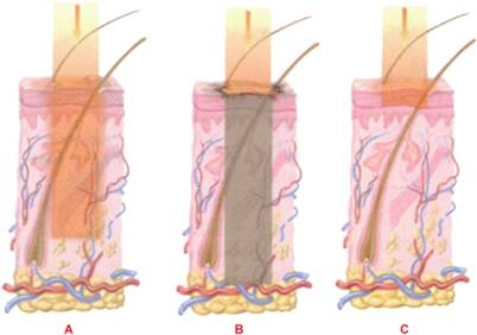 -Unless they are extensive, burns like the one shown in the figure by letter ________ do not require medical attention and usually heal well.
 (Short Answer)
4.8/5 (83)
(83) Anomalies of the blood vessels, such as telangiectasias or ecchymoses, are called ________ lesions.
(Short Answer)
4.7/5 (81)
(81) Joanne is in the office today because of a rash that is occurring down one side of her back and thigh. She is obviously in great pain and the rash is beginning to blister in places. Which of the following questions would help the provider make a diagnosis in this case?
(Multiple Choice)
4.7/5 (86)
(86) Barry has come to the medical office today because he has a small sore on the back of his left forearm that appeared three months ago and has not gone away. The sore is smooth and red and has a slight waxy sheen. Given the appearance of this sore, which of the following skin disorders would the practitioner test for?
(Multiple Choice)
4.7/5 (83)
(83) Because ________, which is caused by the itch mite, is highly contagious, it is wise to treat an entire family if one member is infected.
(Short Answer)
4.8/5 (84)
(84) The A of the ABCDE rule used in evaluating melanoma is for ________. The mole should look equal in size from side to side.
(Short Answer)
4.8/5 (84)
(84) Bleeding disorders may cause pinpoint skin hemorrhages known as ________ .
(Short Answer)
4.8/5 (99)
(99) A hair ________ is a tube-like structure in the dermis of skin made of epithelial tissue.
(Short Answer)
4.9/5 (66)
(66) Which of the following conditions may require chemotherapy?
(Multiple Choice)
4.9/5 (77)
(77) When the supply of oxygen in the blood is low, what color would the skin appear?
(Multiple Choice)
5.0/5 (86)
(86) 
Filters
- Essay(0)
- Multiple Choice(0)
- Short Answer(0)
- True False(0)
- Matching(0)