



 Chat with AI
Exam 22: Monetary Policy

Exam 1: Economics: The World Around You90 Questions
Exam 2: Choice, Opportunity Costs, and Specialization94 Questions
Exam 3: Markets, Demand and Supply, and the Price System97 Questions
Exam 5: The Market System and the Private and Public Sector97 Questions
Exam 4: Elasticity: Demand and Supply126 Questions
Exam 6: National Income Accounting104 Questions
Exam 7: an Introduction to the Foreign Exchange Market and the Balance of Payments90 Questions
Exam 8: Consumer Choice132 Questions
Exam 9: Supply: The Costs of Doing Business106 Questions
Exam 10: Unemployment and Inflation129 Questions
Exam 11: Macroeconomic Equilibrium: Aggregate Demand and Supply122 Questions
Exam 12: Profit Maximization122 Questions
Exam 13: Aggregate Expenditures115 Questions
Exam 14: Perfect Competition135 Questions
Exam 15: Income and Expenditures Equilibrium134 Questions
Exam 16: Monopoly118 Questions
Exam 17: Fiscal Policy93 Questions
Exam 18: Monopolistic Competition and Oligopoly111 Questions
Exam 19: Antitrust and Regulation100 Questions
Exam 10: Money and Banking125 Questions
Exam 21: Market Failures, Government Failures, and Rent Seeking121 Questions
Exam 22: Monetary Policy141 Questions
Exam 23: Macroeconomic Policy: Tradeoffs, Expectations, Credibility, and Sources of Business Cycles112 Questions
Exam 24: Resource Markets112 Questions
Exam 25: Macroeconomic Viewpoints: New Keynesian, Monetarist, and New Classical99 Questions
Exam 26: The Labor Market114 Questions
Exam 27: Capital Markets100 Questions
Exam 28: Economic Growth99 Questions
Exam 29: Development Economics104 Questions
Exam 30: the Land Market and Natural Resources55 Questions
Exam 31: Aging, Social Security and Health Care88 Questions
Exam 32: Globalization84 Questions
Exam 33: Elasticity: Demand and Supply126 Questions
Exam 34: Income Distribution, Poverty and Government Policy115 Questions
Exam 35: World Trade Equilibrium112 Questions
Exam 36: Consumer Choice132 Questions
Exam 37: International Trade Restrictions109 Questions
Exam 38: World Trade Equilibrium112 Questions
Exam 39: Exchange Rates and Financial Links Between Countries132 Questions
Exam 40: International Trade Restrictions109 Questions
Exam 41: Supply: the Costs of Doing Business106 Questions
Exam 42: Exchange Rates and Financial Links Between Countries132 Questions
Exam 43: Profit Maximization122 Questions
Exam 44: Perfect Competition135 Questions
Exam 45: Monopoly118 Questions
Exam 46: Monopolistic Competition and Oligopoly111 Questions
Exam 47: Antitrust and Regulation100 Questions
Exam 48: Market Failures, Government Failures, and Rent Seeking121 Questions
Exam 49: Resource Markets112 Questions
Exam 50: The Labor Market114 Questions
Exam 51: Capital Markets100 Questions
Exam 52: The Land Market and Natural Resources55 Questions
Exam 53: Aging, Social Security and Health Care87 Questions
Exam 54: Income Distribution, Poverty and Government Policy115 Questions
Exam 55: World Trade Equilibrium112 Questions
Exam 56: International Trade Restrictions109 Questions
Exam 57: Exchange Rates and Financial Links Between Countries132 Questions
Select questions type


All the following affect short-run operating targets of the FOMC, except:

Free
(Multiple Choice)
4.8/5  (89)
(89) Correct Answer: Verified
C
Sterilization occurs when a central bank offsets the effects of expansionary monetary policy through foreign exchange market intervention.
Free
(True/False)
4.9/5 (78)
(78) Correct Answer:Verified
VerifiedFalse
Suppose a bond sells for $2, 000 and pays $200 per year in interest.What will happen to the current interest rate if the price of the bond changes to $1, 800?
Free
(Multiple Choice)
4.9/5 (78)
(78) Correct Answer:Verified
VerifiedD
Assume that there is an unexpected increase in the demand for U.S.dollars in Switzerland.If the foreign currency price of the U.S.dollar is fixed, the U.S.Federal Reserve must intervene in the foreign exchange market such that:
(Multiple Choice)
4.9/5 (82)
(82) Refer to Scenario 13.1.What is the change in investment spending following the open market operation by the Fed?
(Multiple Choice)
4.8/5 (71)
(71) The bank rate is the interest rate charged by the commercial banks to its borrowers.
(True/False)
4.8/5 (65)
(65) If the U.S.dollar depreciates against the yen below the targeted exchange rate, the U.S.Federal Reserve has to intervene in the foreign exchange market such that:
(Multiple Choice)
4.8/5 (84)
(84) The quantity of excess reserves in the banking system and the federal funds rate can serve as short-run operating targets for the FOMC and help it perform the open market operation.
(True/False)
4.9/5 (78)
(78) An outward shift of the money demand function indicates an increase in the market rate of interest and hence a decrease in the level of investment in the economy.
(True/False)
4.7/5 (84)
(84) The transactions demand for money increases when more people want to hold some of their wealth in the form of money to reduce the risks associated with unexpected emergencies.
(True/False)
4.8/5 (81)
(81) According to the equation of exchange, a contractionary monetary policy must be adopted to offset any decrease in the velocity of money.
(True/False)
4.7/5 (79)
(79) The figure given below depicts the equilibrium in the foreign exchange market. Figure 13.1  Refer to Figure 13.1.If the exchange rate is fixed at E2 but the free market equilibrium rate is E1 then:
 (Multiple Choice)
4.8/5 (67)
(67) The interest rate represents the opportunity cost of holding non-monetary assets.
(True/False)
4.9/5 (68)
(68) The sum of the coins and currencies in the bank's vault and its deposit in the Fed is called:
(Multiple Choice)
4.8/5 (79)
(79) If a percentage decrease in money supply is followed by a proportional percentage decrease in prices and output, this means that:
(Multiple Choice)
4.8/5 (72)
(72) Suppose the interest rate on a bond is 12.5 percent and that bond pays $90 a year in interest and sells for $720.If the supply of bonds increases and the price of the bond falls to $600, the interest rate will ____ to ____.
(Multiple Choice)
4.8/5 (78)
(78) When the foreign exchange value of the Mexican peso is above its equilibrium rate, the peso will:
(Multiple Choice)
4.9/5 (73)
(73) Scenario 13.1 Assume the following conditions hold.
 Now the Federal Reserve engages in an open market operation by purchasing $1 billion worth of government bonds from private bond dealers, who then deposit the $1 billion in the banks.This acts to lower the equilibrium interest rate by 2 percent.
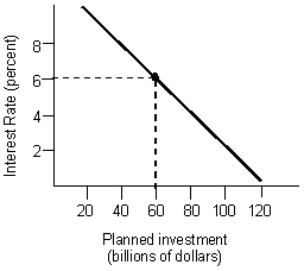 Refer to Scenario 13.1.What is the change in required reserves following the open market operation by the Fed?
Now the Federal Reserve engages in an open market operation by purchasing $1 billion worth of government bonds from private bond dealers, who then deposit the $1 billion in the banks.This acts to lower the equilibrium interest rate by 2 percent. Refer to Scenario 13.1.What is the change in required reserves following the open market operation by the Fed? (Multiple Choice)
4.9/5 (77)
(77) If M = quantity of money, V = velocity of money, P = price level, and Q = the quantity of output, then the equation of exchange will be defined as:
(Multiple Choice)
4.7/5 (90)
(90) The velocity of circulation of money is the ratio of the real gross domestic product to the money supply.
(True/False)
4.8/5 (71)
(71) 
Filters
- Essay(0)
- Multiple Choice(0)
- Short Answer(0)
- True False(0)
- Matching(0)