



 Chat with AI
Exam 5: Externalities, environmental Policy, and Public Goods

Exam 1: Economics: Foundations and Models447 Questions
Exam 2: Trade-Offs, comparative Advantage, and the Market System492 Questions
Exam 3: Where Prices Come From: the Interaction of Demand and Supply476 Questions
Exam 4: Economic Efficiency, government Price Setting, and Taxes420 Questions
Exam 5: Externalities, environmental Policy, and Public Goods263 Questions
Exam 6: Elasticity: the Responsiveness of Demand and Supply294 Questions
Exam 7: The Economics of Health Care338 Questions
Exam 8: Firms,the Stock Market,and Corporate Governance522 Questions
Exam 9: Comparative Advantage and the Gains From International Trade377 Questions
Exam 10: Consumer Choice and Behavioral Economics300 Questions
Exam 11: Technology,production,and Costs327 Questions
Exam 12: Firms in Perfectly Competitive Markets296 Questions
Exam 13: Monopolistic Competition: the Competitive Model in a More Realistic Setting272 Questions
Exam 14: Oligopoly: Firms in Less Competitive Markets258 Questions
Exam 15: Monopoly and Antitrust Policy279 Questions
Exam 16: Pricing Strategy261 Questions
Exam 17: The Markets for Labor and Other Factors of Production281 Questions
Exam 18: Public Choice, taxes, and the Distribution of Income258 Questions
Exam 19: Gdp: Measuring Total Production and Income261 Questions
Exam 20: Unemployment and Inflation291 Questions
Exam 21: Economic Growth, the Financial System, and Business Cycles253 Questions
Exam 22: Long-Run Economic Growth: Sources and Policies262 Questions
Exam 23: Aggregate Expenditure and Output in the Short Run301 Questions
Exam 24: Aggregate Demand and Aggregate Supply Analysis286 Questions
Exam 25: Money,banks,and the Federal Reserve System281 Questions
Exam 26: Monetary Policy275 Questions
Exam 27: Fiscal Policy306 Questions
Exam 28: Inflation, unemployment, and Federal Reserve Policy257 Questions
Exam 29: Macroeconomics in an Open Economy278 Questions
Exam 30: The International Financial System258 Questions
Select questions type


The U.S.government has frequently used a "command-and-control" approach in dealing with pollution.Which of the following describes this approach?
(Multiple Choice)
4.8/5  (88)
(88) Ronald Coase was awarded the 1991 Nobel Prize in Economics primarily for addressing problems related to externalities.Which of the following describes Coase's work?
(Multiple Choice)
4.9/5 (76)
(76) Parents who do not have their children immunized and attempt to benefit from other parents who did have their own children immunized are exhibiting an economic behavior known as
(Multiple Choice)
4.9/5 (75)
(75) In the city of Alvarez,with the exception of guide dogs for blind people,all dogs are banned from its three public parks,regardless of whether the animals are leashed.Many residents are pushing for a change in policy.Canine lover Sara Northridge observed,"There are 800 or more homes here.There are three parks within 10 minutes,and almost everyone has a dog,but we can't take our dogs there." Others fear that allowing dogs would detract from their enjoyment of the parks.Tim Cortis retorted,"We're not preventing dog lovers from enjoying the park,just come without your dog." Which of the following is a way of dealing with the problem by assigning property rights to a particular group?
(Multiple Choice)
4.8/5 (67)
(67) The cost borne by a producer in the production of a good or service is called
(Multiple Choice)
4.9/5 (69)
(69) The "tragedy of the commons" refers to the phenomenon where
(Multiple Choice)
4.9/5 (91)
(91)  Figure 5-15 shows the market for Atlantic salmon,a common resource.The current market equilibrium output of Q1 is not the economically efficient output.The economically efficient output is Q2.
-Refer to Figure 5-15.The current market equilibrium output is partly the result of overfishing.In that case,what does S2 represent?
Figure 5-15 shows the market for Atlantic salmon,a common resource.The current market equilibrium output of Q1 is not the economically efficient output.The economically efficient output is Q2.
-Refer to Figure 5-15.The current market equilibrium output is partly the result of overfishing.In that case,what does S2 represent? (Multiple Choice)
4.8/5 (80)
(80)  Figure 5-13 illustrates the market for gasoline before and after the government imposes a tax to bring about the efficient level of gasoline production.
-Refer to Figure 5-13.The actual price of gasoline paid by consumers after the tax is implemented is ________ per gallon.
Figure 5-13 illustrates the market for gasoline before and after the government imposes a tax to bring about the efficient level of gasoline production.
-Refer to Figure 5-13.The actual price of gasoline paid by consumers after the tax is implemented is ________ per gallon. (Multiple Choice)
4.8/5 (82)
(82) A product is considered to be excludable if it is jointly owned by all members of a community.
(True/False)
4.9/5 (72)
(72) An external benefit is created when you pursue a college education.
(True/False)
4.9/5 (79)
(79) 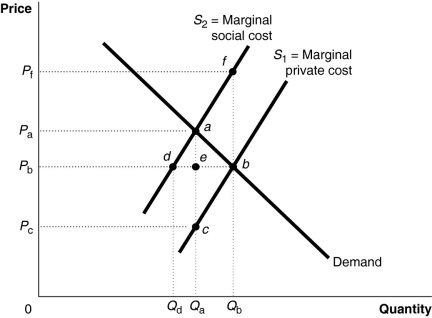 Figure 5-2 shows a market with a negative externality.
-Refer to Figure 5-2.The private profit-maximizing quantity for the firm is
Figure 5-2 shows a market with a negative externality.
-Refer to Figure 5-2.The private profit-maximizing quantity for the firm is (Multiple Choice)
4.9/5 (90)
(90) 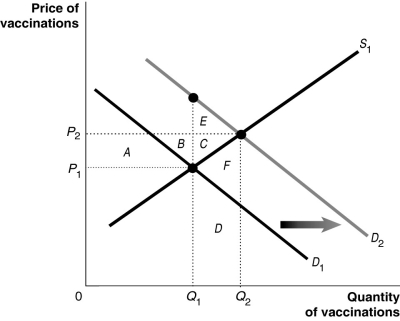 Figure 5-6 shows the market for measles vaccinations,a product whose use generates positive externalities.
-Refer to Figure 5-6.What does D1 represent?
Figure 5-6 shows the market for measles vaccinations,a product whose use generates positive externalities.
-Refer to Figure 5-6.What does D1 represent? (Multiple Choice)
4.8/5 (89)
(89) Which of the following describes how a positive externality affects a competitive market?
(Multiple Choice)
4.8/5 (76)
(76) Sefronia and Bella share an apartment and they are deciding whether or not to purchase a weekly housecleaning service.The value of the service to each of them is $50 and it costs $80 to hire a housecleaner.Should they hire a housecleaner?
(Multiple Choice)
4.8/5 (82)
(82) 
Filters
- Essay(0)
- Multiple Choice(0)
- Short Answer(0)
- True False(0)
- Matching(0)