



 Chat with AI
Exam 20: Organic and Biological Molecules: the Compounds of Life

Exam 1: Matter and Energy: The Origin of the Universe103 Questions
Exam 2: Atoms, Ions, and Molecules: Matter Starts Here144 Questions
Exam 3: Stoichiometry: Mass, Formulas, and Reactions141 Questions
Exam 4: Solution Chemistry: The Hydrosphere148 Questions
Exam 5: Thermochemistry: Energy Changes in Reactions139 Questions
Exam 6: Properties of Gases: The Air We Breathe164 Questions
Exam 7: A Quantum Model of Atoms: Waves and Particles166 Questions
Exam 8: Chemical Bonds: What Makes a Gas a Greenhouse Gas156 Questions
Exam 9: Molecular Geometry: Shape Determines Function188 Questions
Exam 10: Intermolecular Forces: The Uniqueness of Water165 Questions
Exam 11: Solutions: Properties and Behavior150 Questions
Exam 12: Solids: Crystals, Alloys, and Polymers130 Questions
Exam 13: Chemical Kinetics: Reactions in the Atmosphere155 Questions
Exam 14: Chemical Equilibrium: How Much Product Does a Reaction Really Make111 Questions
Exam 15: Acidbase Equilibria: Proton Transfer in Biological Systems122 Questions
Exam 16: Additional Aqueous Equilibria: Chemistry and the Oceans127 Questions
Exam 17: Thermodynamics: Spontaneous and Nonspontaneous Reactions and Processes186 Questions
Exam 18: Electrochemistry: The Quest for Clean Energy167 Questions
Exam 19: Nuclear Chemistry: Applications to Energy and Medicine165 Questions
Exam 20: Organic and Biological Molecules: the Compounds of Life168 Questions
Exam 21: The Main Group Elements: Life and the Periodic Table96 Questions
Exam 22: Transition Metals: Biological and Medical Applications142 Questions
Select questions type


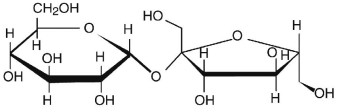
Glucose and fructose undergo a(n) ________ reaction in the formation of sucrose.
(Multiple Choice)
4.8/5  (86)
(86) Which of the following statements about phospholipids is not true?
(Multiple Choice)
4.8/5 (89)
(89) Consider the 1,2-dichloro derivative of ethylene, in which one of the hydrogen atoms on each of the carbon atoms in ethylene is substituted with a chlorine atom, giving the structural formula CHClCHCl. Does this molecule have geometrical isomers? Remember that ethylene does not.
(Multiple Choice)
4.8/5 (85)
(85) What are the similarities and differences between structural (constitutional) isomers, geometric (stereo) isomers, and optical isomers?
(Essay)
4.9/5 (81)
(81) Draw the structure of a phospholipid and identify the hydrophilic and hydrophobic portions of the molecule.
(Essay)
4.9/5 (87)
(87) Which one of the following is best associated with carbohydrates?
(Multiple Choice)
4.9/5 (82)
(82) 
The three-nucleotide sequence that codes for a specific amino acid is called a(n) ________
(Multiple Choice)
4.9/5 (79)
(79) What is the dominant intermolecular force that holds the double helix of DNA together?
(Short Answer)
4.9/5 (74)
(74) Which of the noted functional group(s) is/are found in the following molecule? 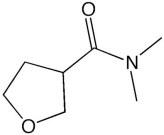
(Multiple Choice)
4.7/5 (83)
(83) Which statement is not correct? Starch and cellulose ________
(Multiple Choice)
4.8/5 (80)
(80) The following reaction produces a peptide. Which statement about this reaction is not correct? 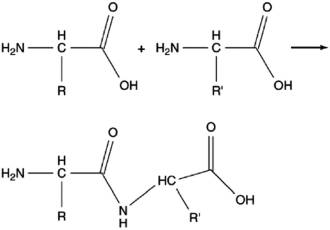
(Multiple Choice)
4.9/5 (78)
(78) 
Filters
- Essay(0)
- Multiple Choice(0)
- Short Answer(0)
- True False(0)
- Matching(0)