



 Chat with AI
Exam 20: Organic and Biological Molecules: the Compounds of Life

Exam 1: Matter and Energy: The Origin of the Universe103 Questions
Exam 2: Atoms, Ions, and Molecules: Matter Starts Here144 Questions
Exam 3: Stoichiometry: Mass, Formulas, and Reactions141 Questions
Exam 4: Solution Chemistry: The Hydrosphere148 Questions
Exam 5: Thermochemistry: Energy Changes in Reactions139 Questions
Exam 6: Properties of Gases: The Air We Breathe164 Questions
Exam 7: A Quantum Model of Atoms: Waves and Particles166 Questions
Exam 8: Chemical Bonds: What Makes a Gas a Greenhouse Gas156 Questions
Exam 9: Molecular Geometry: Shape Determines Function188 Questions
Exam 10: Intermolecular Forces: The Uniqueness of Water165 Questions
Exam 11: Solutions: Properties and Behavior150 Questions
Exam 12: Solids: Crystals, Alloys, and Polymers130 Questions
Exam 13: Chemical Kinetics: Reactions in the Atmosphere155 Questions
Exam 14: Chemical Equilibrium: How Much Product Does a Reaction Really Make111 Questions
Exam 15: Acidbase Equilibria: Proton Transfer in Biological Systems122 Questions
Exam 16: Additional Aqueous Equilibria: Chemistry and the Oceans127 Questions
Exam 17: Thermodynamics: Spontaneous and Nonspontaneous Reactions and Processes186 Questions
Exam 18: Electrochemistry: The Quest for Clean Energy167 Questions
Exam 19: Nuclear Chemistry: Applications to Energy and Medicine165 Questions
Exam 20: Organic and Biological Molecules: the Compounds of Life168 Questions
Exam 21: The Main Group Elements: Life and the Periodic Table96 Questions
Exam 22: Transition Metals: Biological and Medical Applications142 Questions
Select questions type


The human body can synthesize 12 of the 20 amino acids necessary for survival, but the other 8 must be obtained from food. These amino acids are called ________ amino acids.

Free
(Multiple Choice)
4.9/5  (74)
(74) Correct Answer: Verified
B
A subunit of an organic compound that confers particular chemical and physical properties is termed ________
Free
(Multiple Choice)
4.8/5 (95)
(95) Correct Answer:Verified
VerifiedC
Which of these functional groups does not contain a carbonyl group?
Free
(Multiple Choice)
4.8/5 (85)
(85) Correct Answer:Verified
VerifiedD
Identify the type of amines (primary, secondary, tertiary) present in the following molecule. 
(Essay)
4.9/5 (89)
(89) At a physiological pH of 7.4, which of the following would be an accurate representation of the structure of the amino acid serine?
(Multiple Choice)
4.7/5 (74)
(74) Which one of the following is best associated with proteins?
(Multiple Choice)
4.8/5 (90)
(90) 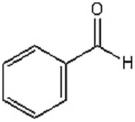
The active ingredient, sucralose, in an artificial sweetener, Splenda, is shown below. Sucralose is advertised as being made from table sugar. What is the main difference between sucrose (table sugar) and sucralose? 
(Multiple Choice)
4.9/5 (71)
(71) Explain why, in terms of their molecular structure, saturated and trans fats are considered to be unhealthy.
(Essay)
4.9/5 (89)
(89) 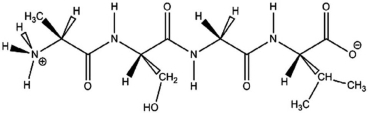
Identify each of the chiral centers in the following ibuprofen derivative, an over-the-counter medicine used to treat pain relief. 
(Essay)
4.7/5 (82)
(82) Which region(s) of the following phospholipid is/are hydrophobic? 
(Multiple Choice)
4.9/5 (77)
(77) For each of the bonds in the following unsaturated fatty acid shown below, identify whether the bond is cis, trans, or neither cis nor trans. 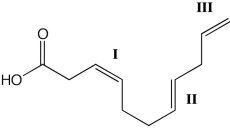
(Multiple Choice)
5.0/5 (85)
(85) 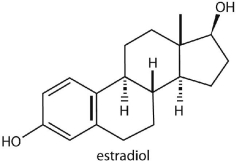
Malt is needed to produce good beer. Beer and other liquors are produced by hydrolyzing and fermenting grains such as corn, barley, and wheat. Maltose is a disaccharide produced when starch obtained from grains is hydrolyzed. What are the two saccharides that comprise maltose?
(Essay)
5.0/5 (81)
(81) The cyclization reaction of fructose is different from that of glucose because ________
(Multiple Choice)
4.9/5 (83)
(83) 
Filters
- Essay(0)
- Multiple Choice(0)
- Short Answer(0)
- True False(0)
- Matching(0)