



 Chat with AI
Exam 20: Organic and Biological Molecules: the Compounds of Life

Exam 1: Matter and Energy: The Origin of the Universe103 Questions
Exam 2: Atoms, Ions, and Molecules: Matter Starts Here144 Questions
Exam 3: Stoichiometry: Mass, Formulas, and Reactions141 Questions
Exam 4: Solution Chemistry: The Hydrosphere148 Questions
Exam 5: Thermochemistry: Energy Changes in Reactions139 Questions
Exam 6: Properties of Gases: The Air We Breathe164 Questions
Exam 7: A Quantum Model of Atoms: Waves and Particles166 Questions
Exam 8: Chemical Bonds: What Makes a Gas a Greenhouse Gas156 Questions
Exam 9: Molecular Geometry: Shape Determines Function188 Questions
Exam 10: Intermolecular Forces: The Uniqueness of Water165 Questions
Exam 11: Solutions: Properties and Behavior150 Questions
Exam 12: Solids: Crystals, Alloys, and Polymers130 Questions
Exam 13: Chemical Kinetics: Reactions in the Atmosphere155 Questions
Exam 14: Chemical Equilibrium: How Much Product Does a Reaction Really Make111 Questions
Exam 15: Acidbase Equilibria: Proton Transfer in Biological Systems122 Questions
Exam 16: Additional Aqueous Equilibria: Chemistry and the Oceans127 Questions
Exam 17: Thermodynamics: Spontaneous and Nonspontaneous Reactions and Processes186 Questions
Exam 18: Electrochemistry: The Quest for Clean Energy167 Questions
Exam 19: Nuclear Chemistry: Applications to Energy and Medicine165 Questions
Exam 20: Organic and Biological Molecules: the Compounds of Life168 Questions
Exam 21: The Main Group Elements: Life and the Periodic Table96 Questions
Exam 22: Transition Metals: Biological and Medical Applications142 Questions
Select questions type


How many chiral centers are there in the following molecule? 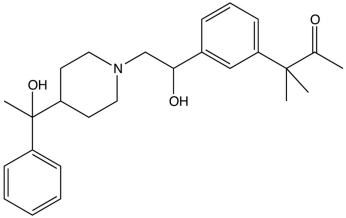
(Multiple Choice)
4.9/5  (75)
(75) Which of the noted functional group(s) is/are found in the following molecule? 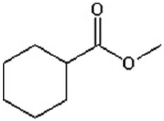
(Multiple Choice)
4.9/5 (90)
(90) How many structural isomers (also called constitutional isomers) are there for butene, and why?
(Multiple Choice)
4.9/5 (88)
(88) Which statement about amino acid enantiomers is not correct?
(Multiple Choice)
4.8/5 (76)
(76) At a physiological pH of 7.4, amino acids exist as zwitterions. At a very low pH (in an acid solution), both the amine group and the carboxylic acid group on an amino acid are protonated. Therefore, the following must be true: the pKa of the ________ group is larger than the pKa of the ________ group.
(Multiple Choice)
4.8/5 (83)
(83) What is the substrate in the context of an enzyme-catalyzed reaction?
(Essay)
4.8/5 (74)
(74) Which one of the following statements about biomolecules is not correct?
(Multiple Choice)
4.8/5 (73)
(73) Two dipeptides can be produced from the amino acids glycine and alanine. Draw their structures and label the structures with the names of these peptides. The R groups are H for glycine and CH3 for alanine.
(Essay)
5.0/5 (83)
(83) 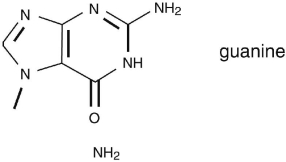
Which one of the following is best associated with nucleic acids?
(Multiple Choice)
4.8/5 (69)
(69) Which of the following molecular formulas identifies a monosaccharide?
(Multiple Choice)
4.8/5 (78)
(78) Which one of the following is an example of a monosaccharide?
(Multiple Choice)
4.9/5 (78)
(78) Draw all of the isomers for butanol. Include structural isomers and stereoisomers, both geometric and optical.
(Essay)
4.7/5 (77)
(77) Which of the following statements is not true about enzyme catalysis?
(Multiple Choice)
4.9/5 (88)
(88) Which of the following is the correct structure of alanine at its isoelectric point?
(Multiple Choice)
4.9/5 (62)
(62) 
Filters
- Essay(0)
- Multiple Choice(0)
- Short Answer(0)
- True False(0)
- Matching(0)