



 Chat with AI
Exam 4: Solution Chemistry: The Hydrosphere

Exam 1: Matter and Energy: The Origin of the Universe103 Questions
Exam 2: Atoms, Ions, and Molecules: Matter Starts Here144 Questions
Exam 3: Stoichiometry: Mass, Formulas, and Reactions141 Questions
Exam 4: Solution Chemistry: The Hydrosphere148 Questions
Exam 5: Thermochemistry: Energy Changes in Reactions139 Questions
Exam 6: Properties of Gases: The Air We Breathe164 Questions
Exam 7: A Quantum Model of Atoms: Waves and Particles166 Questions
Exam 8: Chemical Bonds: What Makes a Gas a Greenhouse Gas156 Questions
Exam 9: Molecular Geometry: Shape Determines Function188 Questions
Exam 10: Intermolecular Forces: The Uniqueness of Water165 Questions
Exam 11: Solutions: Properties and Behavior150 Questions
Exam 12: Solids: Crystals, Alloys, and Polymers130 Questions
Exam 13: Chemical Kinetics: Reactions in the Atmosphere155 Questions
Exam 14: Chemical Equilibrium: How Much Product Does a Reaction Really Make111 Questions
Exam 15: Acidbase Equilibria: Proton Transfer in Biological Systems122 Questions
Exam 16: Additional Aqueous Equilibria: Chemistry and the Oceans127 Questions
Exam 17: Thermodynamics: Spontaneous and Nonspontaneous Reactions and Processes186 Questions
Exam 18: Electrochemistry: The Quest for Clean Energy167 Questions
Exam 19: Nuclear Chemistry: Applications to Energy and Medicine165 Questions
Exam 20: Organic and Biological Molecules: the Compounds of Life168 Questions
Exam 21: The Main Group Elements: Life and the Periodic Table96 Questions
Exam 22: Transition Metals: Biological and Medical Applications142 Questions
Select questions type


Identify the oxidizing and reducing agents in the following oxidation-reduction reaction.
CH4(g) + 2O2(g)  CO(g)+2H2(g)
Free
(Essay)
4.8/5  (78)
(78) Correct Answer: Verified
Oxidizing agent: O2 Reducing agent: CH4
An oxidizing agent is a chemical species that removes electrons from another species. A reducing agent is a chemical species that gives electrons to another species.
Write the balanced molecular equation and the net ionic equation for the reaction of solid magnesium hydroxide with a solution of sulfuric acid.
Free
(Essay)
4.7/5 (82)
(82) Correct Answer:Verified
VerifiedMg(OH)2(s)  H2SO4(aq)
 MgSO4(aq)
 H2O(l )
Mg(OH)2(s)  2H3O+(aq)
 Mg2+(aq)
 4H2O(l )
or Mg(OH)2(s)  2H+(aq)
 Mg2+(aq)
 2H2O(l )
Molarity, M, is defined as ________
Free
(Multiple Choice)
4.8/5 (75)
(75) Correct Answer:Verified
VerifiedD
If 50.0 mL of a 0.10 M solution of sodium chloride is mixed with 50.0 mL of 0.10 M magnesium chloride, what is the molar concentration of chloride in the resulting solution?
(Multiple Choice)
4.8/5 (79)
(79) Hartmann's solution is used in intravenous therapy to replace lost body fluid and mineral salts. The total ion concentration in Hartmann's solution is 276 mM. It often is prepared from a more concentrated stock solution. How much stock solution is needed to prepare 500 mL of Hartmann's solution? The total ion concentration in the stock solution is 1.38 M.
(Multiple Choice)
4.9/5 (94)
(94) Most alkaline earth salts are soluble. Identify an exception to this generalization.
(Multiple Choice)
4.8/5 (64)
(64) In a demonstration of strong electrolytes, weak electrolytes, and nonelectrolytes, Professor Popsnorkle used a lightbulb apparatus that showed how much a solution conducted electricity by the brightness of the lightbulb. When pure water was tested, the bulb did not light. Then Professor Popsnorkle tested the following aqueous solutions. Which one caused the bulb to burn the brightest?
(Multiple Choice)
4.9/5 (92)
(92) Which contains more solute particles: a 0.10 M aqueous solution of methanol (CH3OH) or a 0.10 M aqueous solution of salt (NaCl)?
(Multiple Choice)
4.8/5 (82)
(82) Draw pictures that represent: (a) a strong electrolyte, (b) a weak electrolyte, and (c) a nonelectrolyte solution. Omit solvent molecules for clarity and use the following formula unit in each diagram as a starting point. 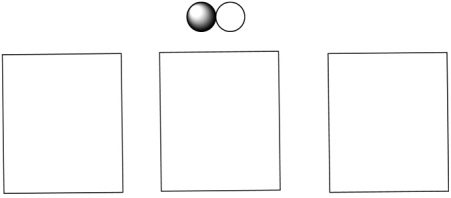 Strong electrolyte Weak electrolyte Nonelectrolyte
 (Essay)
4.8/5 (91)
(91) Sodium fluoride is added to drinking water in some municipalities to protect teeth against cavities. The idea is to convert hydroxyapatite, Ca10(PO4)6(OH)2, into more stable fluorapatite, Ca10(PO4)6F2. What is the molarity of a 5.0 mg/L sodium fluoride solution?
(Short Answer)
4.8/5 (76)
(76) In which one of the following compounds is the oxidation number of silicon not equal to +4?
(Multiple Choice)
4.7/5 (76)
(76) Why is an aqueous solution of table salt (NaCl) a good conductor of electricity but a solution containing an equal molar concentration of table sugar (C12H22O11) is not?
(Essay)
4.8/5 (78)
(78) Identify the reducing agent in the following reaction. Fe2+(aq)  Ce4+(aq)
 Fe3+(aq)
 Ce3+(aq)
Ce4+(aq) Fe3+(aq) Ce3+(aq) (Multiple Choice)
4.8/5 (76)
(76) If one regular antacid tablet contains 500 mg of solid CaCO3 (100 g/mol), how many mL of 1.0 M stomach acid (HCl) could it neutralize?
(Multiple Choice)
4.8/5 (92)
(92) Identify which of the following compounds are soluble in water.
(Multiple Choice)
4.9/5 (75)
(75) Write the net ionic equation for the precipitation reaction that occurs between potassium bromide and lead(II) nitrate.
(Essay)
4.8/5 (84)
(84) In the dilution of 10.0 mL of a 0.10 M solution of HCl to a volume of 20.0 mL, what remains unchanged?
(Multiple Choice)
4.8/5 (80)
(80) A typical adult body contains about 6.0 L of blood. The hemoglobin content is about 16 g per 100.0 mL of blood. The molar mass of hemoglobin is approximately 64,000 g/mol. (a) What is the molar concentration of hemoglobin in blood, and (b) how many moles of hemoglobin are present in a typical adult?
(Essay)
4.8/5 (84)
(84) Mercury is one of the most toxic metal ions to fish, as they can only tolerate a concentration slightly above 1.5 
 mM. What is the mercury concentration in g/L?
 (Multiple Choice)
4.8/5 (79)
(79) 
Filters
- Essay(0)
- Multiple Choice(0)
- Short Answer(0)
- True False(0)
- Matching(0)