



 Chat with AI
Exam 2: Water

Exam 1: Introduction to the Chemistry of Life56 Questions
Exam 2: Water59 Questions
Exam 3: Nucleotides, Nucleic Acids, and Genetic Information68 Questions
Exam 4: Amino Acids68 Questions
Exam 5: Proteins: Primary Structure68 Questions
Exam 6: Proteins: Three-Dimensional Structure60 Questions
Exam 7: Protein Function Part I: Myoglobin and Hemoglobin74 Questions
Exam 8: Carbohydrates66 Questions
Exam 9: Lipids and Biological Membranes59 Questions
Exam 10: Membrane Transport50 Questions
Exam 11: Enzyme Catalysis53 Questions
Exam 12: Enzyme Kinetics, Inhibition and Control55 Questions
Exam 13: Biochemical Signaling50 Questions
Exam 14: Introduction to Metabolism52 Questions
Exam 15: Glycogen Metabolism and Gluconeogenesis50 Questions
Exam 16: Glucose Catabolism50 Questions
Exam 17: Citric Acid Cycle50 Questions
Exam 18: Electron Transport and Oxidative Phosphorylation50 Questions
Exam 19: Photosynthesis50 Questions
Exam 20: Lipid Metabolism51 Questions
Exam 21: Amino Acid Metabolism50 Questions
Exam 22: Mammalian Fuel Metabolism: Integration and Regulation50 Questions
Exam 23: Nucleotide Metabolism50 Questions
Exam 24: Nucleic Acid Structure50 Questions
Exam 25: Dna Replication, Repair and Recombination50 Questions
Exam 26: Transcription and Rna Processing50 Questions
Exam 27: Translation49 Questions
Exam 28: Regulation of Gene Expression50 Questions
Select questions type


The pK1 of citric acid is 3.09.What is the citric acid : monosodium citrate ratio in a 1.0 M citric acid solution with a pH of 2.09?
(Multiple Choice)
4.9/5  (73)
(73) In the energetics of transferring hydrocarbons from water to nonpolar solvents, the factor T S is commonly
(Multiple Choice)
4.7/5 (79)
(79) The pKs of succinic acid are 4.21 and 5.64.How many grams of monosodium succinate (FW = 140 g/mol)and disodium succinate (FW = 162 g/mol)must be added to 1 L of water to produce a solution with a pH 5.28 and a total solute concentration of 100 mM? (Assume the total volume remains 1 liter, answer in grams monosodium succinate, grams disodium succinate, respectively.)
(Multiple Choice)
4.9/5 (73)
(73) Matching
-For the ______ represented by D-H...A, the donor D is weakly acidic and the acceptor A is weakly basic.
(Multiple Choice)
4.9/5 (72)
(72) To make a phosphate buffer at pH 6.82 starting with one liter of 10 mM phosphoric acid (pKs are 2.15, 6.82, and 12.38), you could add
(Multiple Choice)
4.9/5 (73)
(73) A buffer contains 0.010 mol of lactic acid (pKa = 3.86)and 0.050 mol sodium lactate per liter of aqueous solution.
a.Calculate the pH of this buffer.
b.Calculate the pH after 5.0 mL of 0.50 M HCl is added to 1 liter of the buffer (assume the total volume will be 1005 mL).
(Essay)
4.8/5 (63)
(63) In a hydrogen bond between a water molecule and another biomolecule
(Multiple Choice)
4.9/5 (88)
(88) The pH at the midpoint in the titration of an acid with a base is
(Multiple Choice)
4.7/5 (85)
(85) Matching
-The polarity of the O-H bond is caused by the ______ of oxygen relative to that of hydrogen.
(Multiple Choice)
4.9/5 (79)
(79) Urea is a water-soluble product of nitrogen metabolism.How many hydrogen bonds can one urea molecule donate to surrounding water molecules? 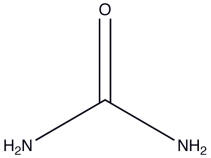
(Multiple Choice)
4.8/5 (86)
(86) A solution is made by mixing 0.05 mL of 1.0 M HCl with 999.95 mL of pure water.Calculate the pH of the resulting solution (assume the total volume is 1.0 L).
(Multiple Choice)
4.8/5 (75)
(75) What is the approximate pKa of a weak acid HA if a solution 0.1 M HA and 0.3 M A- has a pH of 6.5?
(Multiple Choice)
4.8/5 (66)
(66) 
Filters
- Essay(0)
- Multiple Choice(0)
- Short Answer(0)
- True False(0)
- Matching(0)