



 Chat with AI
Exam 29: Animal Hormones

Exam 1: The Nature of Science and the Characteristics of Life80 Questions
Exam 2: The Chemistry of Life93 Questions
Exam 3: Cell Structure and Internal Compartments89 Questions
Exam 4: Cell Membranes, Transport, and Communication89 Questions
Exam 5: Energy, Metabolism, and Enzymes85 Questions
Exam 6: Photosynthesis and Cellular Respiration89 Questions
Exam 7: Cell Division84 Questions
Exam 8: Cancer and Human Health86 Questions
Exam 9: Patterns of Inheritance86 Questions
Exam 10: Chromosomes and Human Genetics77 Questions
Exam 11: DNA and Genes83 Questions
Exam 12: From Gene to Protein88 Questions
Exam 13: DNA Technology96 Questions
Exam 14: How Evolution Works72 Questions
Exam 15: The Origin of Species76 Questions
Exam 16: The Evolution of Biodiversity102 Questions
Exam 17: Biological Diversity, Bacteria, and Archaea80 Questions
Exam 18: Protista, Plantae, and Fungi83 Questions
Exam 19: Animalia80 Questions
Exam 20: The Biosphere88 Questions
Exam 21: Growth of Populations70 Questions
Exam 22: Animal Behavior82 Questions
Exam 23: Ecological Communities105 Questions
Exam 24: Ecosystems74 Questions
Exam 25: Global Change73 Questions
Exam 26: Internal Organization and Homeostasis75 Questions
Exam 27: Nutrition and Digestion81 Questions
Exam 28: Circulation and Gas Exchange77 Questions
Exam 29: Animal Hormones79 Questions
Exam 30: Nervous and Sensory Systems76 Questions
Exam 31: Skeletons,Muscles,and Movement77 Questions
Exam 32: The Immune System80 Questions
Exam 33: Reproduction and Development86 Questions
Exam 34: Plant Structure, Nutrition, and Transport80 Questions
Exam 35: Plant Growth and Reproduction81 Questions
Select questions type


Hormones are released into ducts and only act upon nearby cells.
(True/False)
4.7/5  (93)
(93) The hormone-producing tissues of animals make up the ________ system.
(Short Answer)
4.7/5 (80)
(80) In response to a dangerous situation,your body has produced epinephrine and norepinephrine.As the danger dissipates,how might the pancreas respond?
(Multiple Choice)
4.9/5 (79)
(79) Hormones often alter ________ by turning a certain gene or group of genes on or off.
(Short Answer)
4.9/5 (87)
(87) Which of the following statements about the functions of follicle stimulating hormone (FSH)and luteinizing hormone (LH)is FALSE?
(Multiple Choice)
4.8/5 (78)
(78) The beginning of ________ is marked by a sudden rise in sex hormone production by the gonads of adolescent humans.
(Short Answer)
4.9/5 (88)
(88) Parathyroid hormone is released into the blood when the amount of calcium in the blood is too ________.
(Short Answer)
4.8/5 (84)
(84) When liver cells are unable to respond to insulin,the level of glucose in the blood remains ________ than normal.
(Short Answer)
4.8/5 (83)
(83) After studying the image below,which of the following conclusions can be drawn?
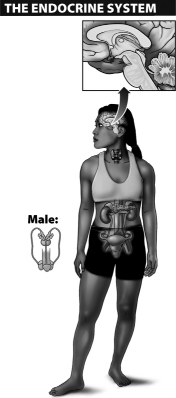
(Multiple Choice)
4.8/5 (91)
(91) Steroid hormones bind to receptors located in the cytoplasm of the cell because
(Multiple Choice)
4.8/5 (80)
(80) Endocrine glands have ducts that open directly into blood vessels.
(True/False)
4.8/5 (73)
(73) Birth control pills prevent pregnancy by maintaining high levels of the hormones ________ and ________,tricking the body into thinking it is pregnant.
(Essay)
4.8/5 (69)
(69) Four stages in the process of balancing glucose levels in the blood are highlighted by letters in the figure below.
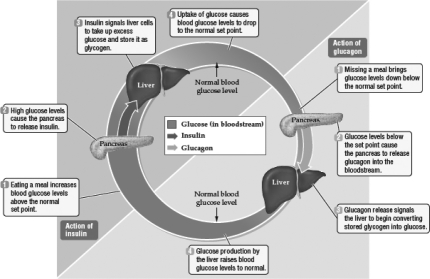 Which of the following statements is the most appropriate description for item C in the diagram above?
 (Multiple Choice)
5.0/5 (83)
(83) Some hormones do NOT need receptors and can directly interact with genes in a target cell's nucleus.
(True/False)
4.8/5 (83)
(83) 
Filters
- Essay(0)
- Multiple Choice(0)
- Short Answer(0)
- True False(0)
- Matching(0)