



 Chat with AI
Exam 22: Endocrine and Immune Systems

Exam 1: The Nature of Science66 Questions
Exam 2: Chemistry of Life78 Questions
Exam 3: Life Is Cellular72 Questions
Exam 4: How Cells Work64 Questions
Exam 5: Cell Division62 Questions
Exam 6: Patterns of Inheritance67 Questions
Exam 7: Chromosomes and Human Genetics68 Questions
Exam 8: What Genes Are64 Questions
Exam 9: How Genes Work64 Questions
Exam 10: Evidence for Evolution64 Questions
Exam 11: Mechanisms of Evolution64 Questions
Exam 12: Adaptation and Species64 Questions
Exam 13: The History of Life71 Questions
Exam 14: Human Evolution66 Questions
Exam 15: General Principles of Ecology64 Questions
Exam 16: Growth of Populations65 Questions
Exam 17: Communities of Organisms64 Questions
Exam 18: Ecosystems66 Questions
Exam 19: Homeostasis, Reproduction, and Development67 Questions
Exam 20: Digestive, Muscular, and Skeletal Systems66 Questions
Exam 21: Circulatory, Respiratory, Urinary, and Nervous Systems72 Questions
Exam 22: Endocrine and Immune Systems66 Questions
Exam 23: Plant Physiology64 Questions
Exam 24: Applying the Science67 Questions
Select questions type


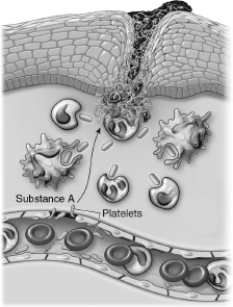

Which of the following statements correctly describes the immune response when the invading organism is a virus?
(Multiple Choice)
5.0/5  (80)
(80) Neutrophils usually get to a wound site ________ [before or after?] macrophages begin to phagocytize bacteria.
(Short Answer)
4.9/5 (75)
(75) Because steroid hormones are ________, they are able to pass through a cell's plasma membrane without the assistance of membrane transport proteins.
(Short Answer)
4.8/5 (72)
(72) Which of the following is a white blood cell that will arrive in the next stage of inflammation? 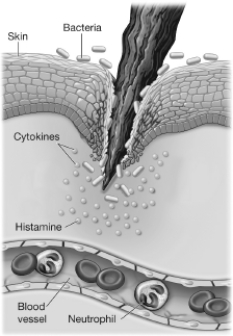
(Multiple Choice)
4.8/5 (88)
(88) Serotonin, one of the hormones thought to be involved in depression, is a water-soluble molecule. Where on the target cell would you expect to find receptors for this hormone?
(Multiple Choice)
4.9/5 (92)
(92) 
Filters
- Essay(0)
- Multiple Choice(0)
- Short Answer(0)
- True False(0)
- Matching(0)