



 Chat with AI
Exam 21: Circulatory, Respiratory, Urinary, and Nervous Systems

Exam 1: The Nature of Science66 Questions
Exam 2: Chemistry of Life78 Questions
Exam 3: Life Is Cellular72 Questions
Exam 4: How Cells Work64 Questions
Exam 5: Cell Division62 Questions
Exam 6: Patterns of Inheritance67 Questions
Exam 7: Chromosomes and Human Genetics68 Questions
Exam 8: What Genes Are64 Questions
Exam 9: How Genes Work64 Questions
Exam 10: Evidence for Evolution64 Questions
Exam 11: Mechanisms of Evolution64 Questions
Exam 12: Adaptation and Species64 Questions
Exam 13: The History of Life71 Questions
Exam 14: Human Evolution66 Questions
Exam 15: General Principles of Ecology64 Questions
Exam 16: Growth of Populations65 Questions
Exam 17: Communities of Organisms64 Questions
Exam 18: Ecosystems66 Questions
Exam 19: Homeostasis, Reproduction, and Development67 Questions
Exam 20: Digestive, Muscular, and Skeletal Systems66 Questions
Exam 21: Circulatory, Respiratory, Urinary, and Nervous Systems72 Questions
Exam 22: Endocrine and Immune Systems66 Questions
Exam 23: Plant Physiology64 Questions
Exam 24: Applying the Science67 Questions
Select questions type


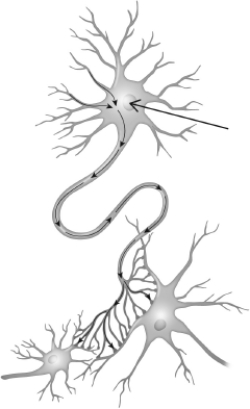
The ________ of a neuron contain(s) all of the structures, such as a nucleus, that are common to animal cells.

Free
(Multiple Choice)
4.8/5  (75)
(75) Correct Answer: Verified
D
The breaking open of alveoli in people who have emphysema decreases their rate of gas exchange because
Free
(Multiple Choice)
4.8/5 (80)
(80) Correct Answer:Verified
VerifiedD
When the ________ of the heart contracts, blood is pumped into the systemic circuit.
Free
(Short Answer)
4.9/5 (61)
(61) Correct Answer:Verified
Verifiedleft ventricle
Which of the following sequences correctly describes the pathway that a signal travels in a neuron?
(Multiple Choice)
4.8/5 (70)
(70) As you are driving to school one morning, the driver in front of you suddenly slams on his brakes and turns right without using his turning signal. Despite the potentially irritating situation, you remain calm because your ________ helped you control your emotions.
(Multiple Choice)
4.8/5 (71)
(71) Large blood vessels that return deoxygenated blood from the legs to the heart are
(Multiple Choice)
4.9/5 (79)
(79) If you were to step on a nail with your right foot, which of the following things would NOT happen?
(Multiple Choice)
4.9/5 (79)
(79) Match each receptor type to the sensory experience described below.
-mechanoreceptors
(Multiple Choice)
4.9/5 (88)
(88) Which of the following statements about the peripheral nervous system (PNS) is NOT true?
(Multiple Choice)
4.7/5 (88)
(88) When eating dessert, you notice the sweetness of sugar when ________ are stimulated.
(Multiple Choice)
5.0/5 (77)
(77) The force of blood pushing against the walls of blood vessels is called ________.
(Short Answer)
4.7/5 (77)
(77) Why do humans rely on a circulatory system to distribute oxygen?
(Multiple Choice)
4.9/5 (76)
(76) Which of the following does NOT facilitate exchange of materials by diffusion?
(Multiple Choice)
4.9/5 (73)
(73) Trace the pathway of air from the nose to the site of gas exchange in the lungs.
(Essay)
4.7/5 (91)
(91) Which of the following processes is NOT a function of nephrons?
(Multiple Choice)
4.8/5 (78)
(78) For a human to inhale, the rib muscles and the diaphragm must
(Multiple Choice)
4.8/5 (75)
(75) Sensory neurons that contain specialized membrane channels activated by moderate temperatures are
(Multiple Choice)
5.0/5 (80)
(80) 

Filters
- Essay(0)
- Multiple Choice(0)
- Short Answer(0)
- True False(0)
- Matching(0)