



 Chat with AI
Exam 3: Biochemistry

Exam 1: Anatomy265 Questions
Exam 2: Behavioral Sciences178 Questions
Exam 3: Biochemistry102 Questions
Exam 4: Embryology59 Questions
Exam 5: Epidemiology, Biostatistics, and Medical Informatics94 Questions
Exam 6: Genetics88 Questions
Exam 7: Histology46 Questions
Exam 8: Immunology147 Questions
Exam 9: Microbiology and Virology330 Questions
Exam 10: Pathology817 Questions
Exam 11: Pharmacology and Toxicology509 Questions
Exam 12: Physiology339 Questions
Exam 13: Psychiatry and Psychotherapy23 Questions
Select questions type


A 3-week-old male is brought to the emergency department because of increasing lethargy. He was born at home without prenatal care or neonatal screening and appeared to be normal at birth. Despite this, his parents noticed that he would vomit after breastfeeding. He then progressively became more lethargic and began to have a few episodes of diarrhea after feeding. His parents do not recall any significant family history and neither of his siblings have had similar symptoms. Upon presentation, the infant is found to be generally unresponsive with mild hepatomegaly. Physical exam further reveals signs of clouding in the lenses of his eyes bilaterally. Which of the following steps in metabolism is most likely impaired in this patient? 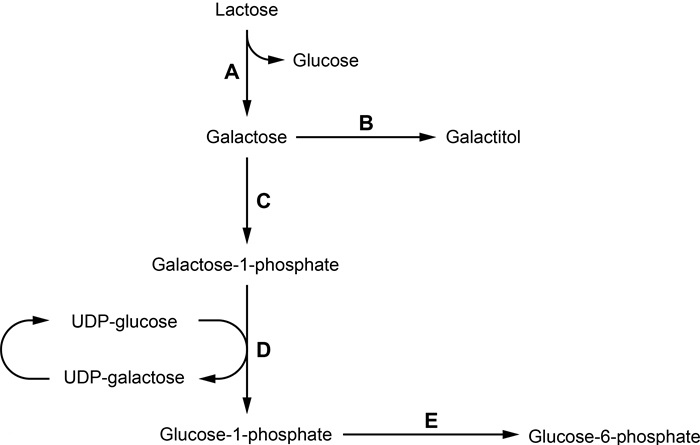
(Multiple Choice)
4.7/5  (86)
(86) A 15-year-old boy is evaluated for worsening gait instability, dysmetria, and dysarthria for the past several years. The patient stops play basketball due to his worsening symptoms. He is worried as his brother died of a neurologic disease at age 21. Physical examination of the lower extremities reveals bilateral motor weakness and loss of deep tendon reflexes, joint position, and vibration sense. MRI of the brain and spine shows degeneration of the posterior columns and spinocerebellar tracts. Which of the following conditions has clinical manifestations that closely resemble this patient's disease?
(Multiple Choice)
4.9/5 (81)
(81) A 5-month-old girl is brought to the office by her mother for a health checkup. The mother states, "My baby doesn't seem to be growing much despite feeding as often as my previous children. I am worried that something is wrong with her." Physical examination shows hepatomegaly, hypotonia, and height and weight below the 10th percentile. Laboratory studies show hypoglycemia and ketoacidosis. A liver biopsy shows hepatic fibrosis without fat accumulation. Further analysis reveals abundant quantities of a multibranched polysaccharide with abnormally short outer chains within the cytosol of the hepatocytes. Which of the following enzymes is most likely deficient in this patient?
(Multiple Choice)
4.7/5 (67)
(67) A 7-year-old boy is brought to the emergency department due to lethargy and vomiting. He hasn't eaten for approximately 24 hours because he had been on an overnight hiking trip with his family. During the trip, the family lost their food pack while canoeing and had to hike back to their car. The child became weak and was carried for the last mile. None of the family On examination, the patient appears listless. Mild hepatomegaly is noted. Laboratory results are as follows: 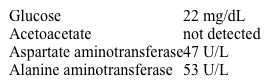 The patient begins seizing shortly after arriving at the emergency department. Which of the following enzymes is most likely deficient in this patient?
 (Multiple Choice)
4.9/5 (86)
(86) A 4-month-old boy is brought to the office for his first visit since arriving in the United States. The patient was recently adopted, and his adoptive mother says the boy is tremulous compared to her biological children. Over the past week, the boy has also had episodes of upward eye deviation and bilateral arm and leg shaking for approximately 2 minutes at a time. Biological family history is not available. His temperature is 36.7 C (98.1 F), blood pressure is 90/40 mm Hg, pulse is 120/min, and respirations are 30/min. Examination shows a fair-skinned infant with blue eyes and a musty body odor. Which of the following amino acids is most likely essential in this patient?
(Multiple Choice)
4.8/5 (82)
(82) A physiologist is studying the mechanisms of signal transduction involved in the pathogenesis of type 2 diabetes mellitus. Their research focuses on the intracellular signaling cascade that begins when insulin binds to the insulin receptor. In a series of experiments, they demonstrate that pre-treatment with tumor necrosis factor alpha (TNF-alph A) results in decreased insulin-mediated glucose uptake. This effect of TNF-alpha is most likely mediated through upregulation of which of the following processes?
(Multiple Choice)
4.8/5 (74)
(74) A 6-year-old African American youngster is brought to the doctor because he is easily fatigable. Splenomegaly is discovered on physical examination, and his complete blood count confirms slight anemia. On a cellulose acetate strip, hemoglobin electrophoresis is conducted at an alkaline pH. The patient's results are displayed below in comparison to those with normal hemoglobin and known sickle cell illness. 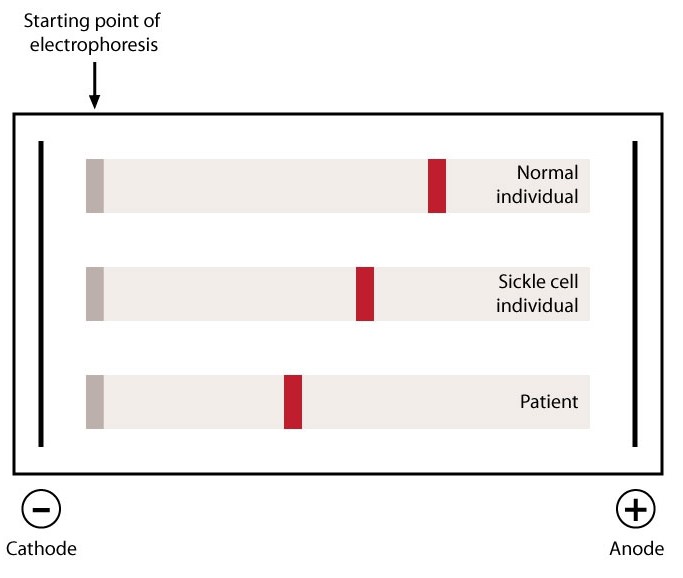 Which of the following is the most likely cause of this patient's condition?
 (Multiple Choice)
4.8/5 (73)
(73) Biologists investigating the morphologic changes associated with reversible cellular injury perform a procedure on anesthetized mice to assess the effects of transient hepatic ischemia. During the experiment, they clamp the hepatic artery and obtain liver biopsy samples at varying intervals. The samples are then examined by electron microscopy. Cells that are exposed to longer ischemic periods are found to have reduced numbers of ribosomes attached to the endoplasmic reticulum. This structural change is most likely to impair which of the following cellular functions?
(Multiple Choice)
4.7/5 (67)
(67) A pharmaceutical researcher develops a new drug that affects bacterial protein synthesis. In an experiment, Escherichia coli is exposed to the drug and serially cultured in media containing tagged nucleotides and amino acids. It is found that the drug inhibits molecules that recognize the highlighted codon in the bacterial mRNA fragment shown in the image below.  Which of the following molecules is the most likely target of this drug?
 (Multiple Choice)
4.9/5 (79)
(79) A 33-year-old man comes to the office for a health checkup. He has no prior medical problems and does not take any medications. The patient works as a fitness trainer and lifts weights recreationally. He has been consuming carbohydrate-rich food prior to his weightlifting sessions and claims that it increases muscle strength. A literature review shows that the rate of glycogenolysis within myocytes increases several hundredfold during active skeletal muscle contraction. Which of the following substances is most likely responsible for increasing the reaction rate during active contraction?
(Multiple Choice)
4.9/5 (79)
(79) An 8-year-old boy is brought to his pediatrician for developing multiple bruises over the course of the school year. The patient's mother believes the child is being bullied at school. The patient is otherwise healthy. Family history is significant for his father expiring at 38 yearas of age due to a severe subarachnoid hemorrhage. On physical exam, there are ecchymoses and hematomas over the shins and knees. The skin also appears fragile and thin, which demonstrates a venous pattern in the extremities. A skin biopsy is performed, and histochemical evaluation of the biopsy reveals a defect in extracellular processing of collagen. Which of the following steps of collagen synthesis is most likely impaired in this patient?
(Multiple Choice)
4.8/5 (78)
(78) A 40-year-old woman is enrolled in a research study. She has a 10-year history of Parkinson's disease with resting tremor, bradykinesia, and cogwheel rigidity . One of her siblings recently started having similar symptoms. Genetic analysis is performed on the patient and her affected sibling. The results show a loss-of-function mutation in a gene that leads to an accumulation of misfolded proteins. Which of the following biochemical processes is most likely defective in this patient?
(Multiple Choice)
4.7/5 (92)
(92) A 4-year-old boy is brought to the physician for a well-child examination. His mother has noticed that he frequently falls while walking. He was born at term and the pregnancy was uncomplicated. He is at the 20th percentile for height and at 30th percentile for weight. Vital signs are within normal limits. Examination shows decreased muscle strength in the lower extremities. . Physical examination reveals frontal bossing, dental enamel defects, and bilateral, symmetric, bead-like enlargement of the costochondral junctions. If a histologic examination of the bone is performed, which of the following changes is most likely to be seen in this patient?
(Multiple Choice)
4.8/5 (63)
(63) A 3-year-old boy is brought to the physician because of arm pain following a fall that took place 5 hours ago. According to his mother, the boy was running in the yard when he fell and injured his right arm. The boy is crying and clutching his arm. During the past year, he has been brought in 4 other times for extremity pain following falls, all of which have been diagnosed as long bone fractures. His right forearm is diffusely erythematous. The patient withdraws and yells when his forearm is touched. His left arm has two small ecchymotic regions overlying the elbow and wrist. A photograph of his eyes is shown. 1ec160b_3a5f_7b1a_9249_b532365e1285_MD0001_00 This patient's condition is most likely associated with impairment of which of the following processes?
(Multiple Choice)
4.8/5 (89)
(89) In an animal experiment, mouse proerythroblasts are cultivated in two distinct growth conditions; the first is lacking in folate, while the second (control) is enriched with folic acid. Both media contain large levels of erythropoietin. Over 48 hours, cells in the control medium proliferate and differentiate into reticulocytes, but cell proliferation is low in the folate-deficient media, with the majority of cells suffering apoptosis. In another experiment, a chemical is introduced to the folate-deficient medium that inhibits apoptosis and allows proerythroblasts to proliferate. Which of the following substances is most likely to be added to the growing medium?
(Multiple Choice)
4.8/5 (78)
(78) A 2-year-old kid from daycare is sent to the emergency room with diarrhea, exhaustion, and stomach pains. He also has foul-smelling, foamy feces, according to his parents. The youngster is brought to the hospital for rehydration and is later diagnosed with giardiasis, which is treated with metronidazole. He recovers and is sent home. One week after discharge, the youngster is examined by his primary care physician for recurring symptoms of frothy, loose feces, as well as stomach bloating and cramps. Which of the following phases in this route is most likely to be faulty in this patient? 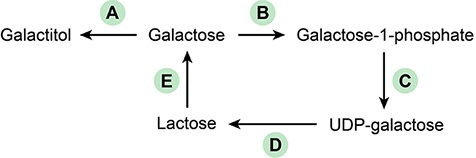
(Multiple Choice)
4.8/5 (65)
(65) A 55-year-old farmer is taken to the emergency room after his daughter discovered him confused and disoriented in his home tool shed. He is otherwise healthy and does not require any drugs. On physical examination, the blood pressure is 110/70 mm Hg and the pulse rate is 50 / minute. The patient's pupils are symmetric, 2 mm in diameter, and light reactive. His eyes are crying up a lot. On lung auscultation, there are scattered wheezes bilaterally. The patient's skin is clammy, and he is excessively sweating. Which of the following stages at the neuromuscular junction is most likely impaired in his presentation? 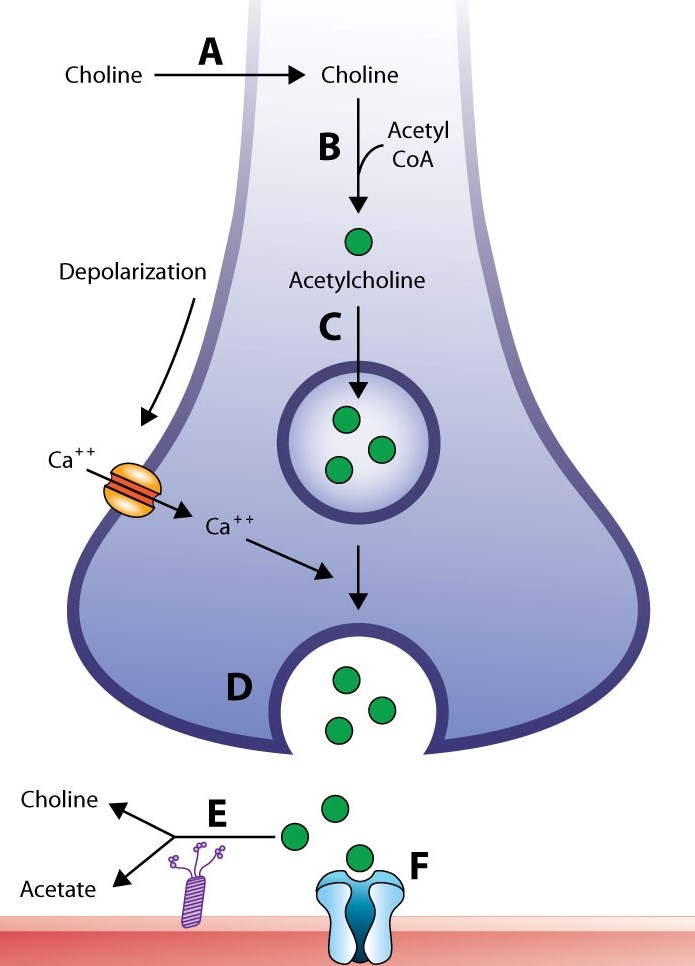
(Multiple Choice)
4.7/5 (69)
(69) A 54-year-old woman is evaluated for progressive constipation, anorexia, and a 5.4-kg (12-lb) weight loss over the past several months. Physical examination is unremarkable. Stool guaiac test is positive, and a colonoscopy is performed. An exophytic mass is identified in the sigmoid colon. The patient undergoes a left hemicolectomy, and histopathology of the surgical specimen is positive for adenocarcinoma. Molecular testing of the cancer cells reveals a mutation in the KRAS gene that results in constitutive activation of the Ras protein. Under normal circumstances, this protein is only active when bound to which of the following substances?
(Multiple Choice)
4.7/5 (96)
(96) An 8-day-old neonate born to a 25-year-old woman is brought to the office due to progressive lethargy, vomiting, and poor feeding. The mother reports an uneventful pregnancy and perinatal course. She exclusively breastfeeds the infant and has no medical problems in any of her other children. On examination, the infant is somnolent and dehydrated with decreased muscle tone. Laboratory studies reveal metabolic acidosis with an elevated anion gap, ketosis, and hypoglycemia. Further evaluation reveals a markedly elevated propionic acid level due to defective conversion of propionyl-CoA to methylmalonyl-CoA. This patient is most likely unable to use which of the following amino acids for energy production?
(Multiple Choice)
4.7/5 (72)
(72) A 20-year-old man arrives to the emergency department complaining of lethargy, malaise, and black urine. Several days earlier, the patient was treated for a bacterial skin infection. Scleral icterus is discovered during a physical examination. Anemia with an increased reticulocyte count is revealed by laboratory findings. On a peripheral smear, abnormal erythrocytes might be observed. Which of the following substrate flow routes in this patient is most likely deficient? 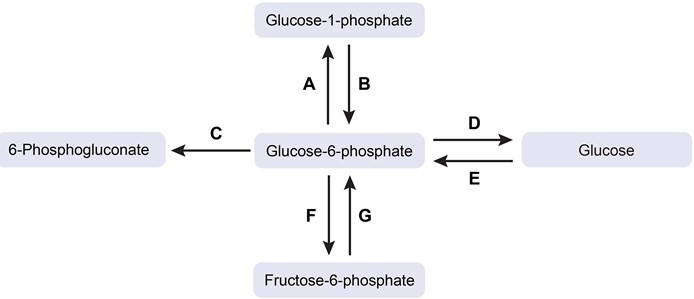
(Multiple Choice)
4.8/5 (88)
(88) 
Filters
- Essay(0)
- Multiple Choice(0)
- Short Answer(0)
- True False(0)
- Matching(0)