



 Chat with AI
Exam 3: Biochemistry

Exam 1: Anatomy265 Questions
Exam 2: Behavioral Sciences178 Questions
Exam 3: Biochemistry102 Questions
Exam 4: Embryology59 Questions
Exam 5: Epidemiology, Biostatistics, and Medical Informatics94 Questions
Exam 6: Genetics88 Questions
Exam 7: Histology46 Questions
Exam 8: Immunology147 Questions
Exam 9: Microbiology and Virology330 Questions
Exam 10: Pathology817 Questions
Exam 11: Pharmacology and Toxicology509 Questions
Exam 12: Physiology339 Questions
Exam 13: Psychiatry and Psychotherapy23 Questions
Select questions type


A 13-year-old boy is brought to the office due to gait instability and pruritic skin rash for the past several weeks. His mother reports that he has also been irritable and had loose stools during this time. The patient's childhood development has been unremarkable except for several episodes of similar skin rash that resolved spontaneously. Examination shows scaly, erythematous skin lesions in sun-exposed areas and cerebellar ataxia. Laboratory evaluation shows increased levels of neutral amino acids in the urine. This patient's symptoms would most likely respond to which of the following supplements?
(Multiple Choice)
4.8/5  (77)
(77) Two graphs illustrating the transport rate of solutes across the plasma membrane are shown on the slide below. 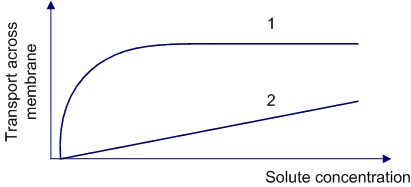 Which of the following best explains the difference in the shape of the curves?
 (Multiple Choice)
4.8/5 (78)
(78) 
Filters
- Essay(0)
- Multiple Choice(0)
- Short Answer(0)
- True False(0)
- Matching(0)