



 Chat with AI
Exam 21: International Trade and Finance

Exam 1: Introducing the Economic Way of Thinking254 Questions
Exam 2: Production Possibilities, Opportunity Cost, and Economic Growth209 Questions
Exam 3: Market Demand and Supply361 Questions
Exam 4: Markets in Action259 Questions
Exam 5: Price Elasticity of Demand181 Questions
Exam 6: Production Costs254 Questions
Exam 7: Perfect Competition226 Questions
Exam 8: Monopoly175 Questions
Exam 9: Monopolistic Competition and Oligopoly166 Questions
Exam 10: Labor Markets and Income Distribution185 Questions
Exam 11: Gross Domestic Product207 Questions
Exam 12: Business Cycles and Unemployment199 Questions
Exam 13: Inflation131 Questions
Exam 14: Aggregate Demand and Supply83 Questions
Exam 15: Fiscal Policy205 Questions
Exam 16: The Public Sector131 Questions
Exam 17: Federal Deficits, Surpluses, and the National Debt102 Questions
Exam 18: Money and the Federal Reserve System159 Questions
Exam 19: Money Creation250 Questions
Exam 20: Policy Disputes Using the Self-Correcting Aggregate Demand and Supply Model246 Questions
Exam 21: International Trade and Finance251 Questions
Exam 22: Economies in Transition108 Questions
Exam 23: Growth and the Less-Developed Countries121 Questions
Select questions type


If one country can produce a good with fewer resources than another country, this is called:
(Multiple Choice)
4.8/5  (70)
(70) Exhibit 21-6 Dollars per British pound 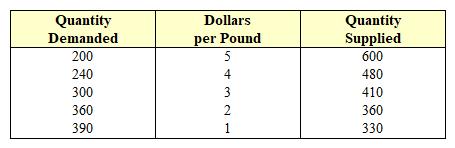 In Exhibit 21-6, when the exchange rate is 1 dollar per pound,
 (Multiple Choice)
4.9/5 (72)
(72) What are the different types of trade barriers? What are the arguments for trade barriers? What are the consequences of trade barriers?
(Essay)
4.9/5 (75)
(75) Exhibit 21-5 International currency markets 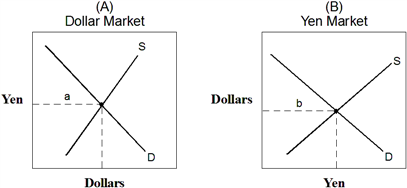 Exhibit 21-5 displays the international currency market for yen in terms of dollars and dollars in terms of yen. The supply curve in graph 5(A) is determined by:
 (Multiple Choice)
4.9/5 (80)
(80) If nation A has a comparative advantage over nation B in the production of a product, this implies:
(Multiple Choice)
4.9/5 (77)
(77) Which of the following is an infant-industry argument in favor of restrictions on foreign trade?
(Multiple Choice)
4.9/5 (82)
(82) A shift of the U.S. demand curve for Mexican pesos to the left and a decrease in the pesos price per dollar would likely result from:
(Multiple Choice)
4.7/5 (69)
(69) If the exchange rate between the yen and the dollar changes from 100 yen = $1 to 110 yen = $1, then:
(Multiple Choice)
5.0/5 (71)
(71) A limit on the quantity of a good that may be imported in a given time period is called:
(Multiple Choice)
4.9/5 (69)
(69) Exhibit 21-6 Dollars per British pound 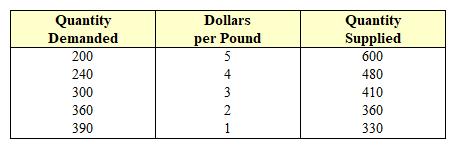 In Exhibit 21-6, when the exchange rate is 3 dollars per pound,
 (Multiple Choice)
4.8/5 (89)
(89) If U.S. buyers purchased $500 billion of foreign goods and foreign buyers purchased $400 billion of U.S. goods, the U.S. balance of trade would be:
(Multiple Choice)
4.8/5 (81)
(81) 
Filters
- Essay(0)
- Multiple Choice(0)
- Short Answer(0)
- True False(0)
- Matching(0)