



 Chat with AI
Exam 21: International Trade and Finance

Exam 1: Introducing the Economic Way of Thinking254 Questions
Exam 2: Production Possibilities, Opportunity Cost, and Economic Growth209 Questions
Exam 3: Market Demand and Supply361 Questions
Exam 4: Markets in Action259 Questions
Exam 5: Price Elasticity of Demand181 Questions
Exam 6: Production Costs254 Questions
Exam 7: Perfect Competition226 Questions
Exam 8: Monopoly175 Questions
Exam 9: Monopolistic Competition and Oligopoly166 Questions
Exam 10: Labor Markets and Income Distribution185 Questions
Exam 11: Gross Domestic Product207 Questions
Exam 12: Business Cycles and Unemployment199 Questions
Exam 13: Inflation131 Questions
Exam 14: Aggregate Demand and Supply83 Questions
Exam 15: Fiscal Policy205 Questions
Exam 16: The Public Sector131 Questions
Exam 17: Federal Deficits, Surpluses, and the National Debt102 Questions
Exam 18: Money and the Federal Reserve System159 Questions
Exam 19: Money Creation250 Questions
Exam 20: Policy Disputes Using the Self-Correcting Aggregate Demand and Supply Model246 Questions
Exam 21: International Trade and Finance251 Questions
Exam 22: Economies in Transition108 Questions
Exam 23: Growth and the Less-Developed Countries121 Questions
Select questions type


A country that can produce a good using fewer resources than another country has a(n):
(Multiple Choice)
4.9/5  (67)
(67) If Country A has an absolute advantage over Country B in the production of every commodity:
(Multiple Choice)
4.8/5 (81)
(81) Exhibit 21-7 Foreign exchange market for U.S. dollars and British pounds 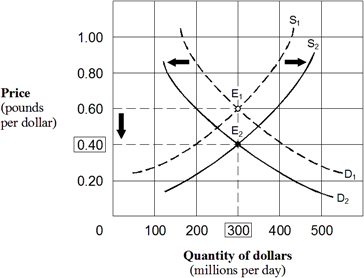 Exhibit 21-7 shows a situation in which:
 (Multiple Choice)
4.8/5 (81)
(81) Which of the following would not be counted in the U.S. BOP current account?
(Multiple Choice)
4.8/5 (92)
(92) Capital accounts are a measure of how much ____ have invested ____.
(Multiple Choice)
4.8/5 (74)
(74) Juanita, a lawyer, can type faster than Jill, her secretary. Jill, on the other hand, does not have the ability or skills to practice law. Applying the principles of international trade to this situation, an economic consultant advises Juanita to:
(Multiple Choice)
5.0/5 (87)
(87) Suppose a German bank purchases a U.S. Treasury bond. This transaction would be recorded in the:
(Multiple Choice)
4.8/5 (69)
(69) Exhibit 21-5 International currency markets 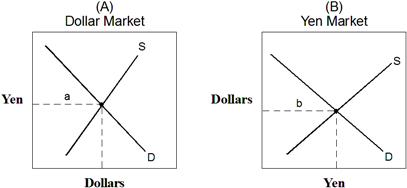 Exhibit 21-5 displays the international currency market for yen in terms of dollars and dollars in terms of yen. The supply curve in graph 5(B) is determined by:
 (Multiple Choice)
4.9/5 (82)
(82) If one U. S. dollar can be exchanged for 5 Swiss francs, then 1 franc can be exchanged for:
(Multiple Choice)
4.8/5 (71)
(71) Exhibit 21-6 Dollars per British pound 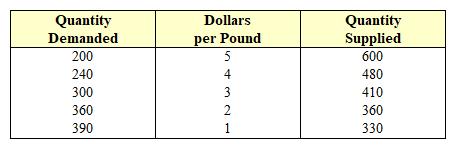 In Exhibit 21-6, the equilibrium exchange rate is:
 (Multiple Choice)
4.8/5 (77)
(77) Which of the following would cause the U.S. dollar to depreciate against the Japanese yen?
(Multiple Choice)
4.9/5 (73)
(73) Following the principle of comparative advantage, specialization:
(Multiple Choice)
4.7/5 (78)
(78) A country is said to have a comparative advantage in the production of a good when it:
(Multiple Choice)
4.8/5 (72)
(72) If the exchange rate of yen for dollars increases from 100 yen = $1 to 110 yen = $1, then:
(Multiple Choice)
4.7/5 (68)
(68) 
Filters
- Essay(0)
- Multiple Choice(0)
- Short Answer(0)
- True False(0)
- Matching(0)