



 Chat with AI
Exam 57: Biological Diversity and Conservation Biology

Exam 1: A View of Life72 Questions
Exam 2: Atoms and Molecules: the Chemical Basis of Life75 Questions
Exam 3: The Chemistry of Life: Organic Compounds75 Questions
Exam 4: Organization of the Cell76 Questions
Exam 5: Biological Membranes73 Questions
Exam 6: Cell Communication73 Questions
Exam 7: Energy and Metabolism73 Questions
Exam 8: How Cells Make Atp: Energy-Releasing Pathways75 Questions
Exam 9: Photosynthesis: Capturing Light Energy79 Questions
Exam 10: Chromosomes, Mitosis, and Meiosis78 Questions
Exam 11: The Basic Principles of Heredity87 Questions
Exam 12: DNA: The Carrier of Genetic Information83 Questions
Exam 13: Gene Expression92 Questions
Exam 14: Gene Regulation86 Questions
Exam 15: DNA Technology and Genomics98 Questions
Exam 16: Human Genetics and the Human Genome82 Questions
Exam 17: Developmental Genetics90 Questions
Exam 18: Introduction to Darwinian Evolution66 Questions
Exam 19: Evolutionary Change in Populations72 Questions
Exam 20: Speciation and Macroevolution72 Questions
Exam 21: The Origin and Evolutionary History of Life71 Questions
Exam 22: The Evolution of Primates73 Questions
Exam 23: Understanding Diversity: Systematics70 Questions
Exam 24: Viruses and Subviral Agents55 Questions
Exam 25: Bacteria and Archaea63 Questions
Exam 26: Protists76 Questions
Exam 27: Seedless Plants76 Questions
Exam 28: Seed Plants76 Questions
Exam 29: The Fungi78 Questions
Exam 30: An Introduction to Animal Diversity71 Questions
Exam 31: Sponges, Cnidarians, Ctenophores, and Protostomes114 Questions
Exam 32: The Deuterostomes79 Questions
Exam 33: Plant Structure, Growth, and Development94 Questions
Exam 34: Leaf Structure and Function90 Questions
Exam 35: Stem Structure and Transport91 Questions
Exam 36: Roots and Mineral Nutrition105 Questions
Exam 37: Reproduction in Flowering Plants107 Questions
Exam 38: Plant Developmental Responses to External and Internal Signals113 Questions
Exam 39: Animal Structure and Function: an Introduction106 Questions
Exam 40: Protection, Support, and Movement75 Questions
Exam 41: Neural Signaling76 Questions
Exam 42: Neural Regulation81 Questions
Exam 43: Sensory Systems83 Questions
Exam 44: Internal Transport119 Questions
Exam 45: The Immune System: Internal Defense93 Questions
Exam 46: Gas Exchange123 Questions
Exam 47: Processing Food and Nutrition127 Questions
Exam 48: Osmoregulation and Disposal of Metabolic Wastes111 Questions
Exam 49: Endocrine Regulation87 Questions
Exam 50: Reproduction121 Questions
Exam 51: Animal Development117 Questions
Exam 52: Animal Behavior91 Questions
Exam 53: Introduction to Ecology: Population Ecology99 Questions
Exam 54: Community Ecology91 Questions
Exam 55: Ecosystems and the Biosphere101 Questions
Exam 56: Ecology and the Geography of Life99 Questions
Exam 57: Biological Diversity and Conservation Biology82 Questions
Select questions type


Animals that are being hunted (often illegally) for bush meat value include
(Multiple Choice)
4.9/5  (93)
(93) Researchers report that the Zika virus epidemic of 2015-2016, which spread rapidly from South America to Mexico, Florida, and Puerto Rico, was aided by ______ and by______.
(Multiple Choice)
4.8/5 (78)
(78) Match these conservation biology terms with their corresponding description or example.
Premises:
Storing seeds of genetically diverse plants
Responses:
Biosphere reserves
In situ conservation
Ex situ conservation
Correct Answer: Verified
Premises:
Responses:
(Matching)
4.9/5 (82)
(82) The term species richness refers to the number of species in a specific location.
(True/False)
4.9/5 (88)
(88) Match these conservation biology terms with their corresponding description or example.
Premises:
Strips linking isolated habitat patches
Responses:
Biodiversity hotspot
Ex situ conservation
Habitat corridors
Correct Answer:Verified
VerifiedPremises:
Responses:
(Matching)
4.9/5 (74)
(74) Match these species with their definition or an example.
Premises:
Dodo bird
Responses:
Extinct species
Endangered species
Threatened species
Correct Answer:Verified
VerifiedPremises:
Responses:
(Matching)
4.8/5 (84)
(84) Which endangered species has become so due to its specialized feeding habits?
(Multiple Choice)
4.8/5 (67)
(67) An unprotected area of naturally occurring plant and animal assemblages that is surrounded by unsuitable territory due to development or habitat destruction is referred to by biologists as
(Multiple Choice)
4.8/5 (50)
(50) What bird, due to human efforts, has been removed from the endangered species list and is now listed as threatened?
(Multiple Choice)
4.8/5 (71)
(71) Building roads, parking lots, buildings and bridges all contribute to
(Multiple Choice)
4.9/5 (83)
(83) In slash-and-burn agriculture, the yield from the first crop is usually quite high.
(True/False)
4.7/5 (90)
(90) Which of the following is a predicted effect of continued global warming?
(Multiple Choice)
4.9/5 (95)
(95) Figure 57-1
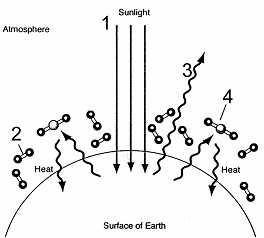
According to the accompanying figure, global warming would result from an increase in which of the labeled components?
According to the accompanying figure, global warming would result from an increase in which of the labeled components? (Multiple Choice)
4.8/5 (85)
(85) Match these species with their definition or an example.
Premises:
No more living members exist
Responses:
Extinct species
Endangered species
Threatened species
Correct Answer:Verified
VerifiedPremises:
Responses:
(Matching)
4.7/5 (79)
(79) Give examples of at least two species that are either extinct or facing extinction due to each of the following: (1) destruction of habitat, (2) biotic pollution, (3) unregulated hunting and poaching.
(Essay)
4.9/5 (84)
(84) 
Filters
- Essay(0)
- Multiple Choice(0)
- Short Answer(0)
- True False(0)
- Matching(0)