



 Chat with AI
Exam 46: Microbiology and Disease

Exam 1: Introduction to Medical Assisting76 Questions
Exam 2: Healthcare and the Healthcare Team80 Questions
Exam 3: Professionalism and Success75 Questions
Exam 4: Interpersonal Communication97 Questions
Exam 5: Legal and Ethical Issues85 Questions
Exam 6: Infection Control Fundamentals74 Questions
Exam 7: Safety and Patient Reception73 Questions
Exam 8: Office Equipment and Supplies155 Questions
Exam 9: Examination and Treatment Areas97 Questions
Exam 10: Written and Electronic Communication84 Questions
Exam 11: Medical Records and Documentation75 Questions
Exam 12: Electronic Health Records72 Questions
Exam 13: Managing Medical Records74 Questions
Exam 14: Telephone Techniques89 Questions
Exam 15: Patient Education75 Questions
Exam 16: Schedule Management80 Questions
Exam 17: Insurance Billing80 Questions
Exam 18: Diagnostic Coding74 Questions
Exam 19: Procedure Coding75 Questions
Exam 20: Patient Collections and Financial Management142 Questions
Exam 21: Organization of the Body145 Questions
Exam 22: The Integumentary System100 Questions
Exam 23: The Skeletal System154 Questions
Exam 24: The Muscular System100 Questions
Exam 25: The Cardiovascular System89 Questions
Exam 26: The Blood74 Questions
Exam 27: The Lymphatic and Immune Systems78 Questions
Exam 28: The Respiratory System91 Questions
Exam 29: The Nervous System130 Questions
Exam 30: The Urinary System91 Questions
Exam 31: The Reproductive Systems124 Questions
Exam 32: The Digestive System112 Questions
Exam 33: The Endocrine System80 Questions
Exam 34: Special Senses92 Questions
Exam 35: Infection Control Practices105 Questions
Exam 36: Patient Interview and History96 Questions
Exam 37: Vital Signs and Measurements93 Questions
Exam 38: Assisting With a General Physical Exam75 Questions
Exam 39: Assisting in Reproductive and Urinary Specialties74 Questions
Exam 40: Assisting in Pediatrics75 Questions
Exam 41: Assisting in Geriatrics75 Questions
Exam 42: Assisting in Other Medical Specialties75 Questions
Exam 43: Assisting in Eye and Ear Care75 Questions
Exam 44: Assisting in Minor Surgery92 Questions
Exam 45: Orientation to the Lab85 Questions
Exam 46: Microbiology and Disease117 Questions
Exam 47: Processing and Testing Urine and Stool Samples95 Questions
Exam 48: Collecting, Processing, and Testing Blood Specimens75 Questions
Exam 49: Electrocardiography and Pulmonary Function Testing94 Questions
Exam 50: Diagnostic Imaging79 Questions
Exam 51: Principles of Pharmacology104 Questions
Exam 52: Math and Dosage Calculations74 Questions
Exam 53: Medication Administration76 Questions
Exam 54: Physical Therapy and Rehabilitation78 Questions
Exam 55: Nutrition and Health90 Questions
Exam 56: Practice Management76 Questions
Exam 57: Emergency Preparedness105 Questions
Exam 58: Preparing for the World of Work76 Questions
Select questions type


Creutzfeldt-Jakob disease (CJD) and Bovine spongiform encephalopathy (BSE) are caused by a(n) ____.
(Multiple Choice)
4.8/5  (80)
(80) Infections by microorganisms that can cause disease only when a host's resistance is low are called ________ infections.
(Short Answer)
4.8/5 (58)
(58) A(n) ________ mount is a type of mount used when a physician suspects that a patient has a fungal infection of the skin, nails, hair, or vagina because it dissolves the keratin and allows visualization of any fungus.
(Short Answer)
4.7/5 (81)
(81) Which of the following would you include when performing a Gram stain?
(Multiple Choice)
4.9/5 (82)
(82) 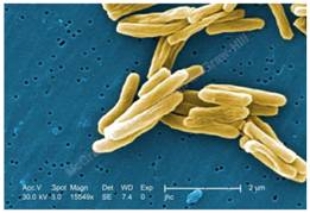
Which of the following is an inflammation of the heart tissue that occurs most frequently in school-age children as a result of an untreated strep throat?
(Multiple Choice)
4.8/5 (74)
(74) MRSA is an infection caused by a(n) ________ microorganism that is on the rise in the United States.
(Short Answer)
4.9/5 (77)
(77) Which of the following would you include in the preparation of a microbiologic specimen smear?
(Multiple Choice)
5.0/5 (80)
(80) Which of the following is a frequent cause of bacterial infections, including epiglottitis and pneumonia, in infants and young children in the United States?
(Multiple Choice)
4.7/5 (77)
(77) Which of the following are characteristics of prokaryotic cells?
(Multiple Choice)
4.8/5 (76)
(76) Rick, a 22-year-old patient, has had a bad cough that has lasted almost a month. He says his chest hurts, and he has been coughing up blood. Since his last visit three months ago, he has lost 12 pounds. His temperature is 101.9°F. For which of the following diseases might you expect the physician to test?
(Multiple Choice)
5.0/5 (89)
(89) The smallest known infectious agent, consisting only of nucleic acid surrounded by a protein coat, is a(n) ________.
(Short Answer)
4.8/5 (71)
(71) A(n) ________ medium is a substance that contains all the nutrients a particular type of microorganism needs to grow.
(Short Answer)
4.8/5 (78)
(78) Which of the following bacteria grow in grape-like clusters and are commonly found on the skin?
(Multiple Choice)
4.9/5 (73)
(73) Which of the following types of bacteria are responsible for gastroenteritis, tuberculosis, whooping cough, botulism, and tetanus?
(Multiple Choice)
5.0/5 (86)
(86) Which of the following is the most common staining procedure, which differentiates bacteria according to the chemical composition of their cell walls?
(Multiple Choice)
4.7/5 (81)
(81) A(n) ________ infestation can cause anal itching, as well as nighttime restlessness due to anal itching.
(Short Answer)
4.9/5 (85)
(85) 
Filters
- Essay(0)
- Multiple Choice(0)
- Short Answer(0)
- True False(0)
- Matching(0)