



 Chat with AI
Exam 20: Carbohydrates

Exam 1: Matter, Energy, and Measurement143 Questions
Exam 2: Atoms133 Questions
Exam 3: Chemical Bonds140 Questions
Exam 4: Chemical Reactions140 Questions
Exam 5: Gases, Liquids, and Solids132 Questions
Exam 6: Solutions and Colloids153 Questions
Exam 7: Reaction Rates and Chemical Equilibrium103 Questions
Exam 8: Acids and Bases197 Questions
Exam 9: Nuclear Chemistry155 Questions
Exam 10: Organic Chemistry70 Questions
Exam 11: Alkanes142 Questions
Exam 12: Alkenes and Alkynes123 Questions
Exam 13: Benzene and Its Derivatives60 Questions
Exam 14: Alcohols, Ethers, and Thiols122 Questions
Exam 15: Chirality: the Handedness of Molecules92 Questions
Exam 16: Amines89 Questions
Exam 17: Aldehydes and Ketones101 Questions
Exam 18: Carboxylic Acids115 Questions
Exam 19: Carboxylic Anhydrides, Esters, and Amides117 Questions
Exam 20: Carbohydrates103 Questions
Exam 21: Lipids132 Questions
Exam 22: Proteins128 Questions
Exam 23: Enzymes62 Questions
Exam 24: Chemical Communications: Neurotransmitters and Hormones89 Questions
Exam 25: Nucleotides, Nucleic Acids, and Heredity121 Questions
Exam 26: Gene Expression and Protein Synthesis129 Questions
Exam 27: Bioenergetics: How the Body Converts Food to Energy140 Questions
Exam 28: Specific Catabolic Pathways: Carbohydrate, Lipid, and Protein Metabolism104 Questions
Exam 29: Biosynthetic Pathways67 Questions
Exam 30: Nutrition73 Questions
Exam 31: Immunochemistry142 Questions
Exam 32: Body Fluids72 Questions
Select questions type


Which of the following contains β(1 → 4) glycosidic bonds?

Free
(Multiple Choice)
4.9/5  (91)
(91) Correct Answer: Verified
C
Examine the following ball-and-stick model. Atoms other than carbon and hydrogen are labeled with the symbol of the element. 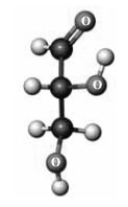 Which of the following is also a representation of this substance?
Free
(Multiple Choice)
4.8/5 (81)
(81) Correct Answer:Verified
VerifiedD
Which of the following is true of the glycosidic bonds in heparin?
Free
(Multiple Choice)
4.8/5 (72)
(72) Correct Answer:Verified
VerifiedC
Which of the following is true of the α and β anomers of glucose?
(Multiple Choice)
4.9/5 (75)
(75) Which of the following is associated with the projections commonly used to illustrate furanoses and pyranoses?
(Multiple Choice)
4.9/5 (84)
(84) Approximately how much glycogen is stored by a well-nourished healthy adult?
(Multiple Choice)
4.7/5 (81)
(81) When ribose adopts a furanose structure which carbon is the anomeric carbon?
(Multiple Choice)
4.8/5 (77)
(77) Examine the following structure. 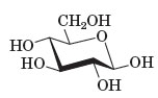 If this substance is treated with NaBH4, what type of functional group will be produced in the product?
 (Multiple Choice)
4.7/5 (87)
(87) What reaction occurs when glucose is converted to glucuronic acid?
(Multiple Choice)
4.8/5 (74)
(74) Which of the following determines blood type A in the ABO blood typing system?
(Multiple Choice)
4.8/5 (76)
(76) When a ketohexose such as fructose adopts the furanose structure which atoms are connected by an oxygen atom?
(Multiple Choice)
4.9/5 (77)
(77) The sugars in RNA and DNA are ribose and deoxyribose respectively. Which of the following describes the relationship between these two sugars?
(Multiple Choice)
4.9/5 (77)
(77) To which carbon of a monosaccharide is the amino group bound in the amino sugars commonly found in nature?
(Multiple Choice)
4.9/5 (73)
(73) How many chiral carbons are present in the open-chain form of an aldopentose?
(Multiple Choice)
4.8/5 (83)
(83) Which of the following is the Fischer projection of D-glyceraldehyde?
(Multiple Choice)
4.8/5 (80)
(80) Which of the following reagents is capable of hydrolyzing glycosides?
(Multiple Choice)
4.9/5 (72)
(72) 
Filters
- Essay(0)
- Multiple Choice(0)
- Short Answer(0)
- True False(0)
- Matching(0)