



 Chat with AI
Exam 7: Reaction Rates and Chemical Equilibrium

Exam 1: Matter, Energy, and Measurement143 Questions
Exam 2: Atoms133 Questions
Exam 3: Chemical Bonds140 Questions
Exam 4: Chemical Reactions140 Questions
Exam 5: Gases, Liquids, and Solids132 Questions
Exam 6: Solutions and Colloids153 Questions
Exam 7: Reaction Rates and Chemical Equilibrium103 Questions
Exam 8: Acids and Bases197 Questions
Exam 9: Nuclear Chemistry155 Questions
Exam 10: Organic Chemistry70 Questions
Exam 11: Alkanes142 Questions
Exam 12: Alkenes and Alkynes123 Questions
Exam 13: Benzene and Its Derivatives60 Questions
Exam 14: Alcohols, Ethers, and Thiols122 Questions
Exam 15: Chirality: the Handedness of Molecules92 Questions
Exam 16: Amines89 Questions
Exam 17: Aldehydes and Ketones101 Questions
Exam 18: Carboxylic Acids115 Questions
Exam 19: Carboxylic Anhydrides, Esters, and Amides117 Questions
Exam 20: Carbohydrates103 Questions
Exam 21: Lipids132 Questions
Exam 22: Proteins128 Questions
Exam 23: Enzymes62 Questions
Exam 24: Chemical Communications: Neurotransmitters and Hormones89 Questions
Exam 25: Nucleotides, Nucleic Acids, and Heredity121 Questions
Exam 26: Gene Expression and Protein Synthesis129 Questions
Exam 27: Bioenergetics: How the Body Converts Food to Energy140 Questions
Exam 28: Specific Catabolic Pathways: Carbohydrate, Lipid, and Protein Metabolism104 Questions
Exam 29: Biosynthetic Pathways67 Questions
Exam 30: Nutrition73 Questions
Exam 31: Immunochemistry142 Questions
Exam 32: Body Fluids72 Questions
Select questions type


Which of the following is true of a catalyst for a reaction?

Free
(Multiple Choice)
5.0/5  (79)
(79) Correct Answer: Verified
C
In a particular chemical reaction 4 bonds are broken and 3 bonds are formed. Based only on this information, which of the following is true?
Free
(Multiple Choice)
4.7/5 (90)
(90) Correct Answer:Verified
VerifiedD
Which of the following units can used to describe the rate of a chemical reaction?
Free
(Multiple Choice)
4.7/5 (78)
(78) Correct Answer:Verified
VerifiedB
Which of the following is the equilibrium constant expression for the reaction? 


(Multiple Choice)
4.8/5 (78)
(78) Silver iodide is an insoluble salt. If solid sodium iodide and solid silver nitrate are mixed together a reaction to for sodium nitrate and silver iodide occurs but it is extremely slow. However, if the sodium iodide and silver nitrate are first dissolved in water and the two solutions are mixed the reaction occurs very rapidly. Which of the following explain(s) the difference in reaction rates?
(Multiple Choice)
4.8/5 (77)
(77) A catalyst speeds up a chemical reaction as a result of which of the following?
(Multiple Choice)
4.9/5 (83)
(83) For the reaction 2C → A + B, 0.01 mol of A is formed during the first 15 seconds of the reaction. Assuming that the rate of reaction remains constant for two minutes, which of the following statements is true?
(Multiple Choice)
4.8/5 (85)
(85) For which of the following reactions is it important that the species collide with the correct orientation?
(Multiple Choice)
4.9/5 (79)
(79) In a certain chemical reaction 1.00 gram of product is produced in 15 minutes when the reaction is carried out at 20°C. Assuming that there is sufficient starting material available, about how much product will be produced in the same length of time if the reaction is carried out in a boiling water bath at 100°C?
(Multiple Choice)
4.7/5 (70)
(70) What is the effect of decreasing the temperature at which a reaction is carried out?
(Multiple Choice)
4.7/5 (77)
(77) Consider the following energy diagram for a reaction.  -Which letter represents the net energy change of the reaction?
 (Multiple Choice)
4.9/5 (90)
(90) Many molecular collisions do not result in chemical reaction. Why is this?
(Multiple Choice)
4.8/5 (91)
(91) For the reaction  at 472°C equilibrium is established when [H2] =0.0200M, [N2] = 0.0100M and [NH3] = 5.37 × 10⁻⁸M. What is the equilibrium constant for this reaction?
 (Multiple Choice)
4.8/5 (77)
(77) For which of the following reactions is it important that the species collide with the correct orientation?
(Multiple Choice)
4.9/5 (73)
(73) Which of the following statements is true about a reversible reaction?
(Multiple Choice)
4.9/5 (81)
(81) In an energy diagram for an endothermic chemical reaction which of the following is true?
(Multiple Choice)
5.0/5 (93)
(93) Consider the following energy diagram for a reaction.
-Which letter represents the transition state?
-Which letter represents the transition state? (Multiple Choice)
4.8/5 (76)
(76) Consider the following energy diagram for a reaction.
-In the reaction of HCl with water: HCl(g) + H2O(l)  H 3O+(aq) + Cl- (aq)
The following species forms.
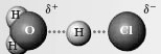 Which letter represents this species?
-In the reaction of HCl with water: HCl(g) + H2O(l) H 3O+(aq) + Cl- (aq)
The following species forms. Which letter represents this species? (Multiple Choice)
4.7/5 (85)
(85) 
Filters
- Essay(0)
- Multiple Choice(0)
- Short Answer(0)
- True False(0)
- Matching(0)