



 Chat with AI
Exam 10: Organic Chemistry

Exam 1: Matter, Energy, and Measurement143 Questions
Exam 2: Atoms133 Questions
Exam 3: Chemical Bonds140 Questions
Exam 4: Chemical Reactions140 Questions
Exam 5: Gases, Liquids, and Solids132 Questions
Exam 6: Solutions and Colloids153 Questions
Exam 7: Reaction Rates and Chemical Equilibrium103 Questions
Exam 8: Acids and Bases197 Questions
Exam 9: Nuclear Chemistry155 Questions
Exam 10: Organic Chemistry70 Questions
Exam 11: Alkanes142 Questions
Exam 12: Alkenes and Alkynes123 Questions
Exam 13: Benzene and Its Derivatives60 Questions
Exam 14: Alcohols, Ethers, and Thiols122 Questions
Exam 15: Chirality: the Handedness of Molecules92 Questions
Exam 16: Amines89 Questions
Exam 17: Aldehydes and Ketones101 Questions
Exam 18: Carboxylic Acids115 Questions
Exam 19: Carboxylic Anhydrides, Esters, and Amides117 Questions
Exam 20: Carbohydrates103 Questions
Exam 21: Lipids132 Questions
Exam 22: Proteins128 Questions
Exam 23: Enzymes62 Questions
Exam 24: Chemical Communications: Neurotransmitters and Hormones89 Questions
Exam 25: Nucleotides, Nucleic Acids, and Heredity121 Questions
Exam 26: Gene Expression and Protein Synthesis129 Questions
Exam 27: Bioenergetics: How the Body Converts Food to Energy140 Questions
Exam 28: Specific Catabolic Pathways: Carbohydrate, Lipid, and Protein Metabolism104 Questions
Exam 29: Biosynthetic Pathways67 Questions
Exam 30: Nutrition73 Questions
Exam 31: Immunochemistry142 Questions
Exam 32: Body Fluids72 Questions
Select questions type


Which element accounts for the largest percentage of the earth's crust?

Free
(Multiple Choice)
4.8/5  (72)
(72) Correct Answer: Verified
C
Which of the following is an example of a carboxylic acid?
Free
(Multiple Choice)
4.7/5 (73)
(73) Correct Answer:Verified
VerifiedD
Which of the following is an example a carboxylic ester?
Free
(Multiple Choice)
4.9/5 (83)
(83) Correct Answer:Verified
VerifiedB
What is the minimum number of hydrogen atoms present in a carboxylic ester?
(Multiple Choice)
4.9/5 (76)
(76) Which of the following classes of compounds can be categorized as primary, secondary, or tertiary?
(Multiple Choice)
4.8/5 (82)
(82) Which of the following is generally true of most organic compounds?
(Multiple Choice)
4.9/5 (85)
(85) Examine the following structure. Atoms other than carbon and hydrogen are labeled with the symbol of the element. 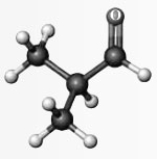 -What type of functional group is present in this compound?
 (Multiple Choice)
4.9/5 (86)
(86) Examine the following models. Atoms other than carbon and hydrogen are labeled with the symbol of the element. 


 A B C D
-Which of the models is in the same functional group as the compound represented below? Atoms other than carbon and hydrogen are labeled with the symbol of the element.
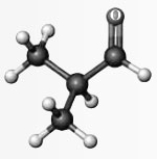
A B C D
-Which of the models is in the same functional group as the compound represented below? Atoms other than carbon and hydrogen are labeled with the symbol of the element. (Multiple Choice)
5.0/5 (84)
(84) How many carboxylic acids have the molecular formula C4H8O2?
(Multiple Choice)
4.7/5 (83)
(83) How many secondary amines have the molecular formula C4H11N?
(Multiple Choice)
4.8/5 (89)
(89) Examine the following models. Atoms other than carbon and hydrogen are labeled with the symbol of the element. A B C D
-Which model represents a derivative of a carboxylic acid?
A B C D
-Which model represents a derivative of a carboxylic acid? (Multiple Choice)
4.7/5 (83)
(83) Examine the following models. Atoms other than carbon and hydrogen are labeled with the symbol of the element. A B C D
-Which model represents a secondary alcohol?
A B C D
-Which model represents a secondary alcohol? (Multiple Choice)
4.8/5 (79)
(79) Approximately how many new organic compounds are reported each year?
(Multiple Choice)
4.9/5 (82)
(82) 
Filters
- Essay(0)
- Multiple Choice(0)
- Short Answer(0)
- True False(0)
- Matching(0)