



 Chat with AI
Exam 22: Transition Metals: Biological and Medical Applications

Exam 1: Matter and Energy: The Origin of the Universe103 Questions
Exam 2: Atoms, Ions, and Molecules: Matter Starts Here144 Questions
Exam 3: Stoichiometry: Mass, Formulas, and Reactions141 Questions
Exam 4: Solution Chemistry: The Hydrosphere148 Questions
Exam 5: Thermochemistry: Energy Changes in Reactions139 Questions
Exam 6: Properties of Gases: The Air We Breathe164 Questions
Exam 7: A Quantum Model of Atoms: Waves and Particles166 Questions
Exam 8: Chemical Bonds: What Makes a Gas a Greenhouse Gas156 Questions
Exam 9: Molecular Geometry: Shape Determines Function188 Questions
Exam 10: Intermolecular Forces: The Uniqueness of Water165 Questions
Exam 11: Solutions: Properties and Behavior150 Questions
Exam 12: Solids: Crystals, Alloys, and Polymers130 Questions
Exam 13: Chemical Kinetics: Reactions in the Atmosphere155 Questions
Exam 14: Chemical Equilibrium: How Much Product Does a Reaction Really Make111 Questions
Exam 15: Acidbase Equilibria: Proton Transfer in Biological Systems122 Questions
Exam 16: Additional Aqueous Equilibria: Chemistry and the Oceans127 Questions
Exam 17: Thermodynamics: Spontaneous and Nonspontaneous Reactions and Processes186 Questions
Exam 18: Electrochemistry: The Quest for Clean Energy167 Questions
Exam 19: Nuclear Chemistry: Applications to Energy and Medicine165 Questions
Exam 20: Organic and Biological Molecules: the Compounds of Life168 Questions
Exam 21: The Main Group Elements: Life and the Periodic Table96 Questions
Exam 22: Transition Metals: Biological and Medical Applications142 Questions
Select questions type


Draw the d orbital splitting diagram for octahedral, tetrahedral, and square planar fields and label the orbitals.
(Essay)
4.9/5  (86)
(86) How many stereoisomers are there for the compound [Fe(NH3)4(Cl)2]NO3?
(Multiple Choice)
4.8/5 (91)
(91) For the coordination compound [Co(NH3)4Cl2]NO3, identify
(1) the coordination number of the metal ion.
(2) the oxidation number of the metal ion.
(3) the charge on the complex ion.
(4) the counter ion.
(Short Answer)
4.8/5 (74)
(74) Consider two complexes: (I) [Fe(CN)6]4, and (II) [Fe(H2O)6]2. In view of the spectrochemical series, which one of the following sets of predictions is most likely correct? Spectrochemical Series 
(Multiple Choice)
4.8/5 (75)
(75) Which statement concerning ligands in transition metal complexes is not correct?
(Multiple Choice)
4.9/5 (88)
(88) CoF63 absorbs light in the red region of the spectrum, while Co(NH3)63 absorbs light in the blue region of the spectrum. This difference means that ________
(Multiple Choice)
4.9/5 (84)
(84) Which statement A-D concerning the crystal field theory of tetrahedral transition metal complexes is not correct?
(Multiple Choice)
4.9/5 (87)
(87) Which d orbital(s) is/are highest in energy in a tetrahedral complex?
(Multiple Choice)
4.9/5 (70)
(70) The correct formula for ammonium tetracyanoplatinate(II) is ________
(Multiple Choice)
4.9/5 (78)
(78) The correct name for the compound [Fe(NH3)5H2O](NO3)2 is ________
(Multiple Choice)
4.9/5 (92)
(92) The coordination number for copper in the compound K2[CuCl4] is ________
(Multiple Choice)
4.8/5 (91)
(91) Chlorophyll a is a pigment in plants that mediates conversion of carbon dioxide to carbohydrates using sunlight. Which metal ion is an important structural component of chlorophyll a?
(Multiple Choice)
4.7/5 (90)
(90) Which of the following metal ions can only have one spin state regardless of the ligand in an octahedral complex?
(Multiple Choice)
4.9/5 (77)
(77) Which d orbital is indicated by the arrow in the crystal field splitting diagram for a square planar field? 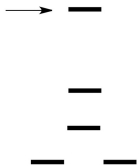
(Multiple Choice)
4.8/5 (81)
(81) What is the oxidation state of the nickel atom in the Ni(CN)53-complex ion?
(Multiple Choice)
5.0/5 (81)
(81) Terpyridine, which is shown below, is an example of a ________ ligand. 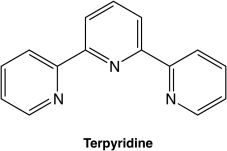
(Multiple Choice)
4.9/5 (78)
(78) Draw the structure of cisplatin and briefly describe the mechanism of the metallodrug.
(Essay)
4.7/5 (92)
(92) A transition metal complex ion with octahedral geometry has a value of 4.4 1019 J for the crystal field splitting, o. What is the wavelength for the absorption maximum, max, for this complex ion?
(Multiple Choice)
4.7/5 (70)
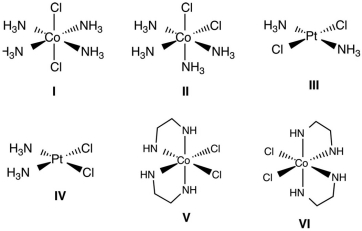
(70) 

Filters
- Essay(0)
- Multiple Choice(0)
- Short Answer(0)
- True False(0)
- Matching(0)