



 Chat with AI
Exam 15: Reactions of Aromatic Compounds

Exam 1: Carbon Compounds and Chemical Bonds134 Questions
Exam 2: Representative Carbon Compounds: Functional Groups, Intermolecular Forces, and Infrared Ir Spectroscopy114 Questions
Exam 3: An Introduction to Organic Reactions: Acids and Bases47 Questions
Exam 4: Alkanes: Nomenclature, Conformational Analysis, and an Introduction to Synthesis125 Questions
Exam 5: Stereochemistry: Chiral Molecules150 Questions
Exam 6: Ionic Reactions - Nucleophilic Substitution and Elimination Reactions of Alkyl Halides146 Questions
Exam 7: Alkenes and Alkynes I: Properties and Synthesis, Elimination Reactions of Alkyl Halides99 Questions
Exam 8: Alkenes and Alkynes Ii: Addition Reactions140 Questions
Exam 9: Nuclear Magnetic Resonance and Mass Spectrometry: Tools for Structure Determination94 Questions
Exam 10: Radical Reactions114 Questions
Exam 11: Alcohols and Ethers172 Questions
Exam 12: Alcohols From Carbonyl Compounds Oxidation-Reduction and Organometallic Compounds147 Questions
Exam 13: Conjugated Unsaturated Systems166 Questions
Exam 14: Aromatic Compounds151 Questions
Exam 15: Reactions of Aromatic Compounds173 Questions
Exam 16: Aldehydes and Ketones I Nucleophilic Addition to the Carbonyl Group165 Questions
Exam 17: Aldehydes and Ketones Ii Aldol Reactions131 Questions
Exam 18: Carboxylic Acids and Their Derivatives Nucleophilic Addition - Elimination at the Acyl Carbon124 Questions
Exam 19: Synthesis and Reactions of Beta-Dicarbonyl Compounds: More Chemistry of Enolate Ions131 Questions
Exam 20: Amines148 Questions
Exam 21: Phenols and Aryl Halides: Nucleophilic Aromatic Substitution87 Questions
Exam 22: Carbohydrates104 Questions
Exam 23: Lipids99 Questions
Exam 24: Amino Acids and Proteins94 Questions
Exam 25: Nucleic Acids and Protein Synthesis89 Questions
Select questions type


In electrophilic aromatic substitution,the attacking species (the electrophile)necessarily is a:
(Multiple Choice)
4.9/5  (82)
(82) What would you expect to be the major product obtained from the following reaction? 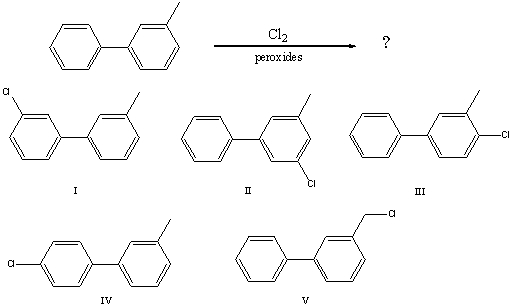
(Multiple Choice)
4.9/5 (87)
(87) The major product(s),C,of the following reaction, 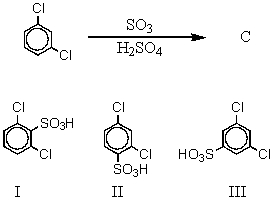 would be:
 (Multiple Choice)
4.8/5 (80)
(80) Which is the best sequence of reactions for the preparation of p-bromostyrene from ethylbenzene?
(Multiple Choice)
4.8/5 (78)
(78) What would you expect to be the major product obtained from the following reaction? 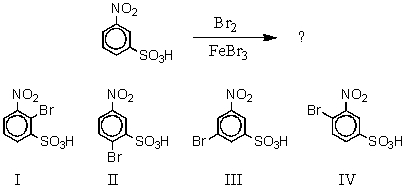
(Multiple Choice)
4.9/5 (78)
(78) What product would result from the following series of reactions, 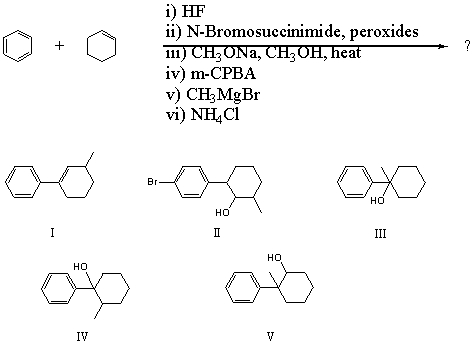
(Multiple Choice)
4.8/5 (83)
(83) Using a potential energy diagram,explain/illustrate the preferential formation of the 2 substituted product instead of the 3 product in the electrophilic aromatic substitution of thiophene. 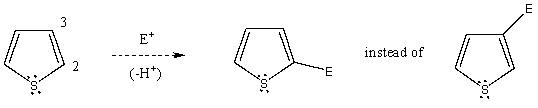
(Essay)
4.8/5 (76)
(76) Which of these is a satisfactory synthesis of 1-chloro-2-phenylethane?
(Multiple Choice)
4.9/5 (76)
(76) Benzoic acid can be prepared by the oxidation of all of the following compounds except this one:
(Multiple Choice)
4.9/5 (99)
(99) Which would be the product of the following reaction sequence? 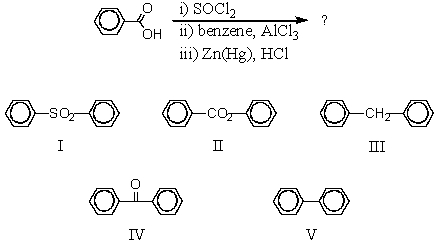
(Multiple Choice)
4.9/5 (73)
(73) Which of these is the rate-determining step in the nitration of benzene?
(Multiple Choice)
4.8/5 (72)
(72) Which reagent(s)would you use to carry out the following transformation? ethylbenzene -- 2- and 4-chloro-1-ethylbenzene
(Multiple Choice)
4.9/5 (84)
(84) What would you expect to be the major product obtained from the following reaction? 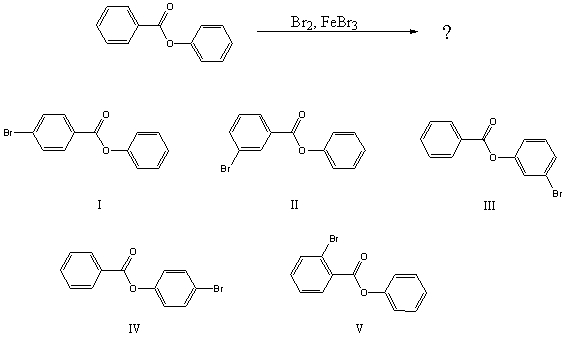
(Multiple Choice)
4.7/5 (75)
(75) What would you expect to be the major product obtained from the following reaction? 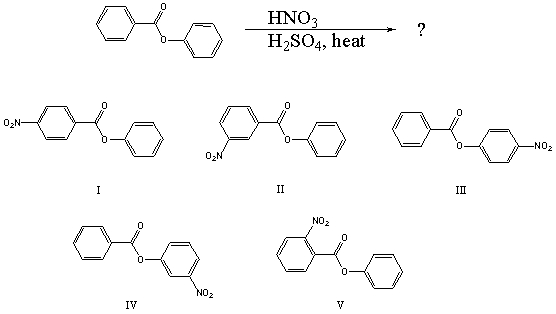
(Multiple Choice)
4.8/5 (68)
(68) When toluene is reacted in turn with 1)Cl2 (large excess),heat,and light and 2)Br2,FeBr3,the chief product is: 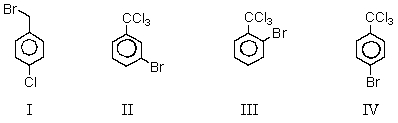
(Multiple Choice)
4.7/5 (76)
(76) Which is the best prediction of the site(s)of substitution when 3-methylphenol is nitrated?
(Multiple Choice)
4.9/5 (88)
(88) Each of the five disubstituted benzenes shown below is nitrated.In which of these cases does the arrow not indicate the chief position of nitration. 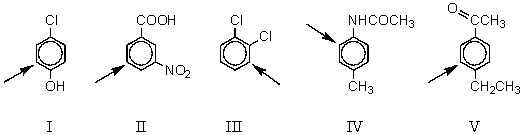
(Multiple Choice)
4.9/5 (81)
(81) What would you expect to be the major product obtained from the following reaction? 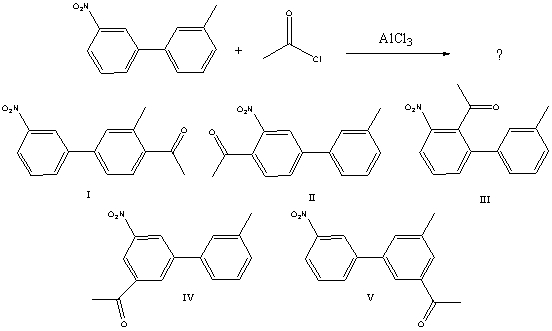
(Multiple Choice)
4.9/5 (62)
(62) Using a potential energy diagram,explain/illustrate the preferential formation of the 1 nitrated product instead of the 2 nitrated product in the electrophilic aromatic nitration of naphthalene. 
(Essay)
4.7/5 (76)
(76) 
Filters
- Essay(0)
- Multiple Choice(0)
- Short Answer(0)
- True False(0)
- Matching(0)