



 Chat with AI
Exam 14: Aromatic Compounds

Exam 1: Carbon Compounds and Chemical Bonds134 Questions
Exam 2: Representative Carbon Compounds: Functional Groups, Intermolecular Forces, and Infrared Ir Spectroscopy114 Questions
Exam 3: An Introduction to Organic Reactions: Acids and Bases47 Questions
Exam 4: Alkanes: Nomenclature, Conformational Analysis, and an Introduction to Synthesis125 Questions
Exam 5: Stereochemistry: Chiral Molecules150 Questions
Exam 6: Ionic Reactions - Nucleophilic Substitution and Elimination Reactions of Alkyl Halides146 Questions
Exam 7: Alkenes and Alkynes I: Properties and Synthesis, Elimination Reactions of Alkyl Halides99 Questions
Exam 8: Alkenes and Alkynes Ii: Addition Reactions140 Questions
Exam 9: Nuclear Magnetic Resonance and Mass Spectrometry: Tools for Structure Determination94 Questions
Exam 10: Radical Reactions114 Questions
Exam 11: Alcohols and Ethers172 Questions
Exam 12: Alcohols From Carbonyl Compounds Oxidation-Reduction and Organometallic Compounds147 Questions
Exam 13: Conjugated Unsaturated Systems166 Questions
Exam 14: Aromatic Compounds151 Questions
Exam 15: Reactions of Aromatic Compounds173 Questions
Exam 16: Aldehydes and Ketones I Nucleophilic Addition to the Carbonyl Group165 Questions
Exam 17: Aldehydes and Ketones Ii Aldol Reactions131 Questions
Exam 18: Carboxylic Acids and Their Derivatives Nucleophilic Addition - Elimination at the Acyl Carbon124 Questions
Exam 19: Synthesis and Reactions of Beta-Dicarbonyl Compounds: More Chemistry of Enolate Ions131 Questions
Exam 20: Amines148 Questions
Exam 21: Phenols and Aryl Halides: Nucleophilic Aromatic Substitution87 Questions
Exam 22: Carbohydrates104 Questions
Exam 23: Lipids99 Questions
Exam 24: Amino Acids and Proteins94 Questions
Exam 25: Nucleic Acids and Protein Synthesis89 Questions
Select questions type


Which reagent(s)would serve as the basis for a simple chemical test that would distinguish between benzene and 1-hexene?

Free
(Multiple Choice)
4.8/5  (84)
(84) Correct Answer: Verified
B
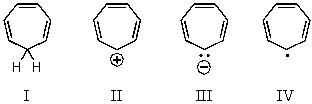
Which annulene would you NOT expect to be aromatic?
Free
(Multiple Choice)
4.9/5 (87)
(87) Correct Answer:Verified
VerifiedC
Which of these compounds absorbs at the longest wavelength in the UV-visible region? 
Free
(Multiple Choice)
5.0/5 (73)
(73) Correct Answer:Verified
VerifiedB
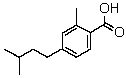
How many resonances would be expected in the broad-band decoupled C-13 spectra of: 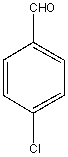
(Multiple Choice)
4.9/5 (88)
(88) 
Which of the following statements regarding the cycloheptatrienyl anion is correct?
(Multiple Choice)
4.7/5 (71)
(71) In the molecular orbital model of benzene,how many -bonding molecular orbitals are there?
(Multiple Choice)
4.9/5 (67)
(67) Molecular orbitals of equal energy are referred to as _________ orbitals.
(Short Answer)
5.0/5 (85)
(85) 
Consider the molecular orbital model of cyclopentadienyl anion.In the ground state how many molecular orbitals are filled with electrons?
(Multiple Choice)
4.9/5 (85)
(85) Pyrrole is not particularly basic,because the lone pair on the nitrogen is ______________.
(Essay)
4.9/5 (78)
(78) Recalling that benzene has a resonance energy of 152 kJ mol-1 and naphthalene has a resonance energy of 255 kJ mol-1,predict the positions which would be occupied by bromine when phenanthrene (below)undergoes addition of Br2. 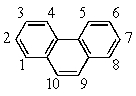
(Multiple Choice)
4.9/5 (86)
(86) In the molecular orbital model of the cyclopentadienyl cation,how many pairs of degenerate -bonding molecular orbitals are there?
(Multiple Choice)
4.7/5 (74)
(74) Draw the structure corresponding to the following name: 2-bromo-5-nitrophenol
(Essay)
4.8/5 (75)
(75) In the molecular orbital model of the cyclopentadienyl cation,how many non-bonding molecular orbitals are there?
(Multiple Choice)
4.9/5 (78)
(78) Which of the following substances,C9H10O,would exhibit seven signals in its 13C NMR spectrum? 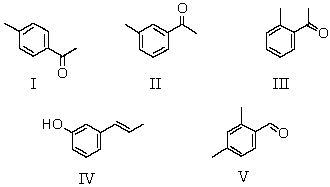
(Multiple Choice)
4.9/5 (66)
(66) Which of these would you expect to have significant resonance stabilization energy? 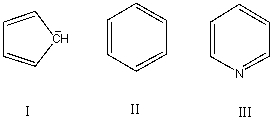
(Multiple Choice)
4.9/5 (79)
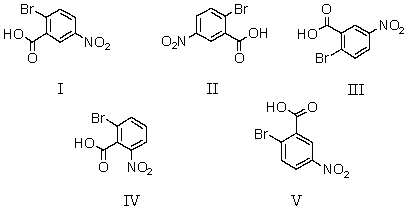
(79) 

Filters
- Essay(0)
- Multiple Choice(0)
- Short Answer(0)
- True False(0)
- Matching(0)