



 Chat with AI
Exam 14: Aromatic Compounds

Exam 1: Carbon Compounds and Chemical Bonds134 Questions
Exam 2: Representative Carbon Compounds: Functional Groups, Intermolecular Forces, and Infrared Ir Spectroscopy114 Questions
Exam 3: An Introduction to Organic Reactions: Acids and Bases47 Questions
Exam 4: Alkanes: Nomenclature, Conformational Analysis, and an Introduction to Synthesis125 Questions
Exam 5: Stereochemistry: Chiral Molecules150 Questions
Exam 6: Ionic Reactions - Nucleophilic Substitution and Elimination Reactions of Alkyl Halides146 Questions
Exam 7: Alkenes and Alkynes I: Properties and Synthesis, Elimination Reactions of Alkyl Halides99 Questions
Exam 8: Alkenes and Alkynes Ii: Addition Reactions140 Questions
Exam 9: Nuclear Magnetic Resonance and Mass Spectrometry: Tools for Structure Determination94 Questions
Exam 10: Radical Reactions114 Questions
Exam 11: Alcohols and Ethers172 Questions
Exam 12: Alcohols From Carbonyl Compounds Oxidation-Reduction and Organometallic Compounds147 Questions
Exam 13: Conjugated Unsaturated Systems166 Questions
Exam 14: Aromatic Compounds151 Questions
Exam 15: Reactions of Aromatic Compounds173 Questions
Exam 16: Aldehydes and Ketones I Nucleophilic Addition to the Carbonyl Group165 Questions
Exam 17: Aldehydes and Ketones Ii Aldol Reactions131 Questions
Exam 18: Carboxylic Acids and Their Derivatives Nucleophilic Addition - Elimination at the Acyl Carbon124 Questions
Exam 19: Synthesis and Reactions of Beta-Dicarbonyl Compounds: More Chemistry of Enolate Ions131 Questions
Exam 20: Amines148 Questions
Exam 21: Phenols and Aryl Halides: Nucleophilic Aromatic Substitution87 Questions
Exam 22: Carbohydrates104 Questions
Exam 23: Lipids99 Questions
Exam 24: Amino Acids and Proteins94 Questions
Exam 25: Nucleic Acids and Protein Synthesis89 Questions
Select questions type


Draw the structure corresponding to the following name: 2-hydroxy-4-(3-methylcyclopentyl)benzoic acid
(Essay)
4.9/5  (73)
(73) Which of these would you expect to have significant resonance stabilization energy? 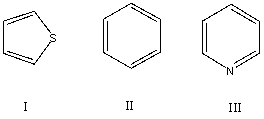
(Multiple Choice)
4.8/5 (88)
(88) Which of the following statements regarding the cyclopropenyl radical is correct?
(Multiple Choice)
4.8/5 (89)
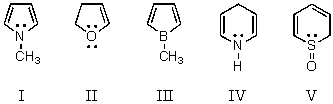
(89) 
Cyclohepatriene is found to readily undergo a hydride transfer with triphenylmethyl
carbocation to generate the cycloheptatrienyl cation and triphenylmethane.Explain why
this transformation is facile. 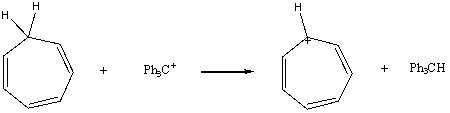
(Essay)
4.9/5 (77)
(77) In the 1H NMR spectra of which of the following substances,C9H10O,would you expect to see two singlets in the range of 2.0-2.5 ppm? 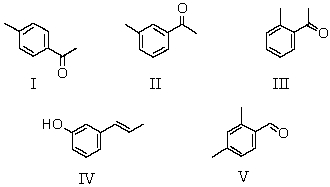
(Multiple Choice)
4.9/5 (79)
(79) On the basis of molecular orbital theory and Hückel's rule,which molecules and/or ions should be antiaromatic? 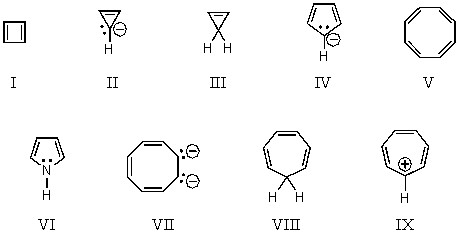
(Multiple Choice)
4.9/5 (80)
(80) Which of the following would you expect to be antiaromatic? 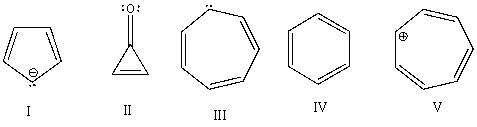
(Multiple Choice)
4.9/5 (80)
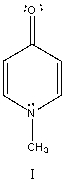
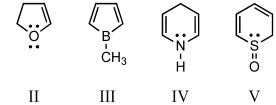
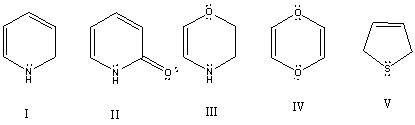
(80) 

Filters
- Essay(0)
- Multiple Choice(0)
- Short Answer(0)
- True False(0)
- Matching(0)