



 Chat with AI
Exam 14: Aromatic Compounds

Exam 1: Carbon Compounds and Chemical Bonds134 Questions
Exam 2: Representative Carbon Compounds: Functional Groups, Intermolecular Forces, and Infrared Ir Spectroscopy114 Questions
Exam 3: An Introduction to Organic Reactions: Acids and Bases47 Questions
Exam 4: Alkanes: Nomenclature, Conformational Analysis, and an Introduction to Synthesis125 Questions
Exam 5: Stereochemistry: Chiral Molecules150 Questions
Exam 6: Ionic Reactions - Nucleophilic Substitution and Elimination Reactions of Alkyl Halides146 Questions
Exam 7: Alkenes and Alkynes I: Properties and Synthesis, Elimination Reactions of Alkyl Halides99 Questions
Exam 8: Alkenes and Alkynes Ii: Addition Reactions140 Questions
Exam 9: Nuclear Magnetic Resonance and Mass Spectrometry: Tools for Structure Determination94 Questions
Exam 10: Radical Reactions114 Questions
Exam 11: Alcohols and Ethers172 Questions
Exam 12: Alcohols From Carbonyl Compounds Oxidation-Reduction and Organometallic Compounds147 Questions
Exam 13: Conjugated Unsaturated Systems166 Questions
Exam 14: Aromatic Compounds151 Questions
Exam 15: Reactions of Aromatic Compounds173 Questions
Exam 16: Aldehydes and Ketones I Nucleophilic Addition to the Carbonyl Group165 Questions
Exam 17: Aldehydes and Ketones Ii Aldol Reactions131 Questions
Exam 18: Carboxylic Acids and Their Derivatives Nucleophilic Addition - Elimination at the Acyl Carbon124 Questions
Exam 19: Synthesis and Reactions of Beta-Dicarbonyl Compounds: More Chemistry of Enolate Ions131 Questions
Exam 20: Amines148 Questions
Exam 21: Phenols and Aryl Halides: Nucleophilic Aromatic Substitution87 Questions
Exam 22: Carbohydrates104 Questions
Exam 23: Lipids99 Questions
Exam 24: Amino Acids and Proteins94 Questions
Exam 25: Nucleic Acids and Protein Synthesis89 Questions
Select questions type


In which case is the indicated unshared pair of electrons NOT a contributor to the aromatic system? 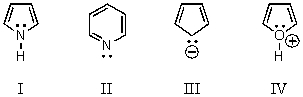
(Multiple Choice)
4.7/5  (85)
(85) How many resonances would be expected in the broad-band decoupled C-13 spectra of: 
(Multiple Choice)
4.8/5 (75)
(75) Which of the following substances,C8H9Cl,would exhibit five signals in its 13C NMR spectrum? 
(Multiple Choice)
4.8/5 (70)
(70) Which of these would you expect to have significant resonance stabilization energy? 
(Multiple Choice)
4.8/5 (84)
(84) Which of these is the single best representation for naphthalene? 
(Multiple Choice)
4.9/5 (86)
(86) On the basis of molecular orbital theory and Hückel's rule,which of these compounds should be aromatic? 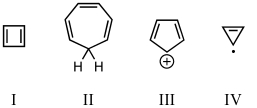
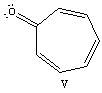
(Multiple Choice)
4.9/5 (77)
(77) In the molecular orbital model of cyclobutadiene,how many pairs of degenerate -molecular orbitals are there?
(Multiple Choice)
4.8/5 (60)
(60) Which of the following substances,formula C8H9Br,might exhibit the following 1H NMR spectrum ?
singlet, 2.45
Singlet, 2.5
Multiplet, 7.35 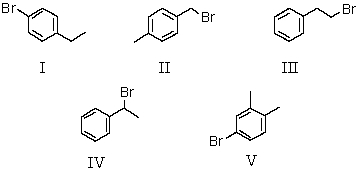
(Multiple Choice)
4.8/5 (90)
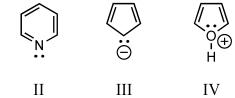
(90) In which case is the indicated unshared pair of electrons NOT a contributor to the aromatic system? 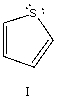
(Multiple Choice)
4.9/5 (88)
(88) Of the following C-10 compounds,which is expected to possess the greatest resonance (delocalization)energy? 
(Multiple Choice)
4.8/5 (89)
(89) On the basis of molecular orbital theory and Hückel's rule,which molecules and/or ions should be non-aromatic? 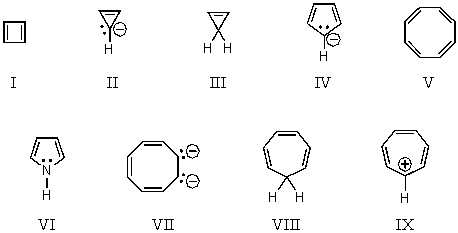
(Multiple Choice)
4.8/5 (84)
(84) A compound that reacts like an alkane,alkene,alkyne,or one of their derivatives,is called an _____________ compound,while one that reacts like benzene is called an _____________ compound.
(Short Answer)
4.8/5 (84)
(84) Which dihydroxybenzene can yield only one mononitro derivative?
(Multiple Choice)
4.8/5 (88)
(88) Humans do not have the biochemical ability to synthesize the benzene ring.Therefore,two amino acids,_____________ and ___________,are essential to the human diet.
(Essay)
4.8/5 (94)
(94) Which reagent(s)/technique would serve to distinguish between azulene and bicyclo[5.3.0]decane? 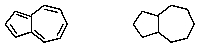
(Multiple Choice)
4.9/5 (67)
(67) Briefly explain why the aromatic hydrocarbon shown possesses a significant dipole moment.Use diagrams as needed to illustrate/clarify your answer. 
(Essay)
4.8/5 (75)
(75) Which of the following would you expect to be antiaromatic? 
(Multiple Choice)
4.9/5 (92)
(92) In the molecular orbital model of benzene,how many pairs of degenerate -molecular orbitals are there?
(Multiple Choice)
4.9/5 (71)
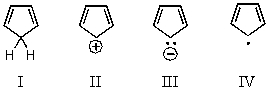
(71) 

Filters
- Essay(0)
- Multiple Choice(0)
- Short Answer(0)
- True False(0)
- Matching(0)