



 Chat with AI
Exam 15: Reactions of Aromatic Compounds

Exam 1: Carbon Compounds and Chemical Bonds134 Questions
Exam 2: Representative Carbon Compounds: Functional Groups, Intermolecular Forces, and Infrared Ir Spectroscopy114 Questions
Exam 3: An Introduction to Organic Reactions: Acids and Bases47 Questions
Exam 4: Alkanes: Nomenclature, Conformational Analysis, and an Introduction to Synthesis125 Questions
Exam 5: Stereochemistry: Chiral Molecules150 Questions
Exam 6: Ionic Reactions - Nucleophilic Substitution and Elimination Reactions of Alkyl Halides146 Questions
Exam 7: Alkenes and Alkynes I: Properties and Synthesis, Elimination Reactions of Alkyl Halides99 Questions
Exam 8: Alkenes and Alkynes Ii: Addition Reactions140 Questions
Exam 9: Nuclear Magnetic Resonance and Mass Spectrometry: Tools for Structure Determination94 Questions
Exam 10: Radical Reactions114 Questions
Exam 11: Alcohols and Ethers172 Questions
Exam 12: Alcohols From Carbonyl Compounds Oxidation-Reduction and Organometallic Compounds147 Questions
Exam 13: Conjugated Unsaturated Systems166 Questions
Exam 14: Aromatic Compounds151 Questions
Exam 15: Reactions of Aromatic Compounds173 Questions
Exam 16: Aldehydes and Ketones I Nucleophilic Addition to the Carbonyl Group165 Questions
Exam 17: Aldehydes and Ketones Ii Aldol Reactions131 Questions
Exam 18: Carboxylic Acids and Their Derivatives Nucleophilic Addition - Elimination at the Acyl Carbon124 Questions
Exam 19: Synthesis and Reactions of Beta-Dicarbonyl Compounds: More Chemistry of Enolate Ions131 Questions
Exam 20: Amines148 Questions
Exam 21: Phenols and Aryl Halides: Nucleophilic Aromatic Substitution87 Questions
Exam 22: Carbohydrates104 Questions
Exam 23: Lipids99 Questions
Exam 24: Amino Acids and Proteins94 Questions
Exam 25: Nucleic Acids and Protein Synthesis89 Questions
Select questions type


Arrange the following compounds in order of decreasing reactivity in electrophilic substitution: 
(Multiple Choice)
4.7/5  (84)
(84) Benzene is susceptible to electrophilic attack primarily because of its _____________.
(Short Answer)
4.7/5 (84)
(84) What would be the product of the following reaction sequence? 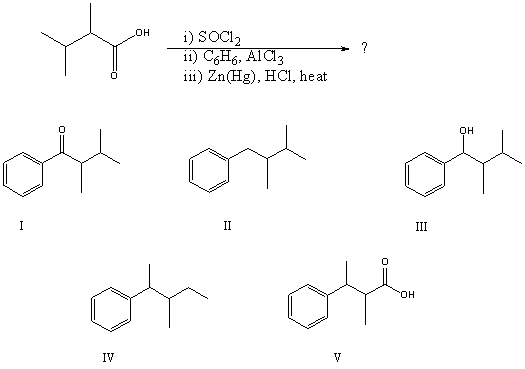
(Multiple Choice)
4.8/5 (78)
(78) Draw a mechanism that explains the formation of the following product in this Friedel-Crafts alkylation: 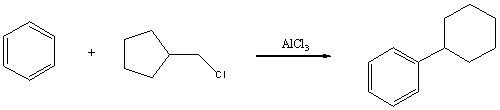
(Essay)
4.9/5 (76)
(76) Based on your knowledge of electrophilic aromatic substitution,and assuming the pyrrole ring of indole (shown)is activated toward electrophilic aromatic substituted more so than the benzenoid ring,predict the preferential position of attack of an electrophile,i.e. ,does the electrophile E+ attack carbon 2,or 3? Explain your answer. 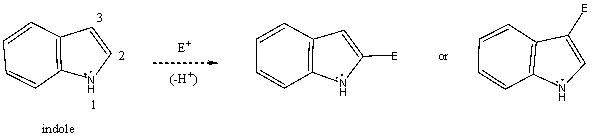 Which substitution product forms preferentially and why?
 (Essay)
4.9/5 (82)
(82) Acid-catalyzed hydration of 1-phenyl-1-pentene gives 1-phenyl-1-pentanol almost exclusively;the other possible hydration product,1-phenyl-2-pentanol,is not detected at all.Explain clearly.
(Essay)
4.8/5 (87)
(87) Which of the following is not a meta-directing substituent when present on the benzene ring?
(Multiple Choice)
4.8/5 (69)
(69) What is the chief product of the Friedel-Crafts alkylation of benzene with 1-butene and HF?
(Multiple Choice)
4.7/5 (81)
(81) What is the chief product of the Friedel-Crafts alkylation of benzene with 1-butene and AlCl3?
(Multiple Choice)
4.7/5 (72)
(72) 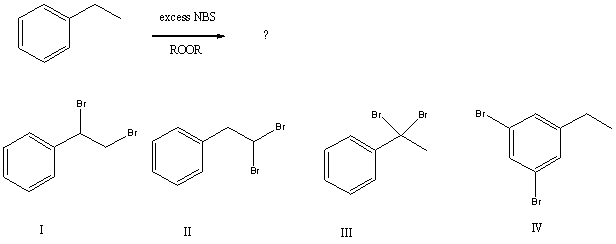
What would be the major product(s)of the following reaction? 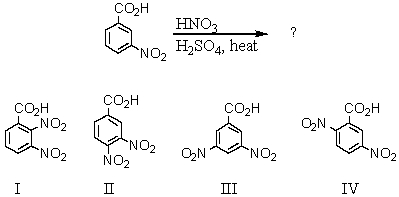
(Multiple Choice)
4.8/5 (68)
(68) Which reagent(s)would you use to carry out the following transformation? cumene -- 2- and 4-chlorocumene
(Multiple Choice)
4.8/5 (82)
(82) Which of the following reactions would produce isopropylbenzene?
(Multiple Choice)
4.7/5 (82)
(82) Based on your knowledge of electrophilic aromatic substitution,predict the preferential
position of attack of an electrophile on furan,i.e. ,does the electrophile E+ attack carbon
2,or 3? Explain your answer. 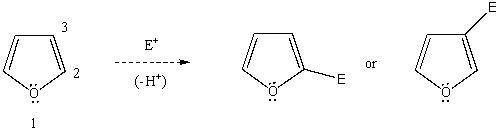 Which substitution product forms preferentially and why?
 (Essay)
4.9/5 (73)
(73) The major product(s),A,of the following reaction, 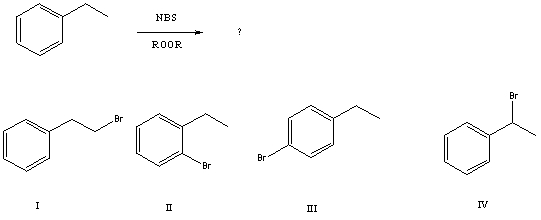 would be:
 (Multiple Choice)
4.9/5 (86)
(86) Which of the following reactions would give the product(s)indicated in substantial amounts (i.e. ,in greater than 50% yield)? 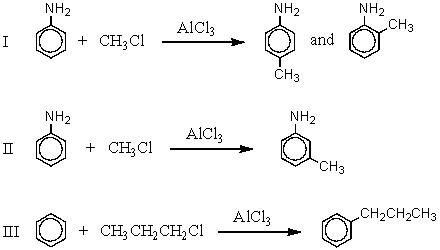
(Multiple Choice)
5.0/5 (73)
(73) Which of the following compounds would be most reactive toward ring bromination? 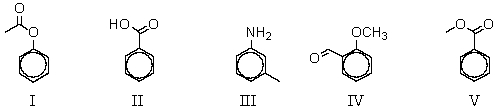
(Multiple Choice)
5.0/5 (80)
(80) Suggest a reasonable synthetic strategy for the synthesis of 3,5-dinitrobenzyl alcohol from benzaldehyde.
(Essay)
4.9/5 (86)
(86) What would be the major product(s)of the following reaction? 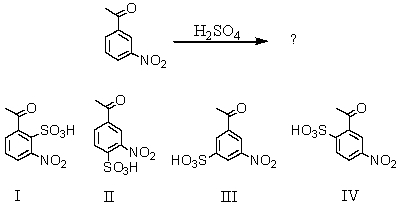
(Multiple Choice)
4.8/5 (77)
(77) Which would be the major product(s)of the following reaction? 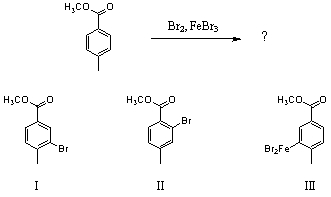
(Multiple Choice)
4.8/5 (97)
(97) 
Filters
- Essay(0)
- Multiple Choice(0)
- Short Answer(0)
- True False(0)
- Matching(0)