



 Chat with AI
Exam 15: Reactions of Aromatic Compounds

Exam 1: Carbon Compounds and Chemical Bonds134 Questions
Exam 2: Representative Carbon Compounds: Functional Groups, Intermolecular Forces, and Infrared Ir Spectroscopy114 Questions
Exam 3: An Introduction to Organic Reactions: Acids and Bases47 Questions
Exam 4: Alkanes: Nomenclature, Conformational Analysis, and an Introduction to Synthesis125 Questions
Exam 5: Stereochemistry: Chiral Molecules150 Questions
Exam 6: Ionic Reactions - Nucleophilic Substitution and Elimination Reactions of Alkyl Halides146 Questions
Exam 7: Alkenes and Alkynes I: Properties and Synthesis, Elimination Reactions of Alkyl Halides99 Questions
Exam 8: Alkenes and Alkynes Ii: Addition Reactions140 Questions
Exam 9: Nuclear Magnetic Resonance and Mass Spectrometry: Tools for Structure Determination94 Questions
Exam 10: Radical Reactions114 Questions
Exam 11: Alcohols and Ethers172 Questions
Exam 12: Alcohols From Carbonyl Compounds Oxidation-Reduction and Organometallic Compounds147 Questions
Exam 13: Conjugated Unsaturated Systems166 Questions
Exam 14: Aromatic Compounds151 Questions
Exam 15: Reactions of Aromatic Compounds173 Questions
Exam 16: Aldehydes and Ketones I Nucleophilic Addition to the Carbonyl Group165 Questions
Exam 17: Aldehydes and Ketones Ii Aldol Reactions131 Questions
Exam 18: Carboxylic Acids and Their Derivatives Nucleophilic Addition - Elimination at the Acyl Carbon124 Questions
Exam 19: Synthesis and Reactions of Beta-Dicarbonyl Compounds: More Chemistry of Enolate Ions131 Questions
Exam 20: Amines148 Questions
Exam 21: Phenols and Aryl Halides: Nucleophilic Aromatic Substitution87 Questions
Exam 22: Carbohydrates104 Questions
Exam 23: Lipids99 Questions
Exam 24: Amino Acids and Proteins94 Questions
Exam 25: Nucleic Acids and Protein Synthesis89 Questions
Select questions type


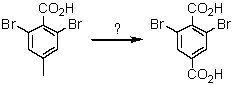
What product would result from the following series of reactions, 
(Multiple Choice)
4.8/5  (81)
(81) Based on your knowledge of electrophilic aromatic substitution,predict the preferential position of nitration of naphthalene,i.e. ,does the NO2+ attack carbon 1,or 2? Explain your answer.  Which substitution product forms preferentially and why?
 (Essay)
4.7/5 (76)
(76) Using a potential energy diagram,explain/illustrate the preferential formation of the 3 substituted product instead of the 2 product in the electrophilic aromatic substitution of benzo[b] furane (shown). 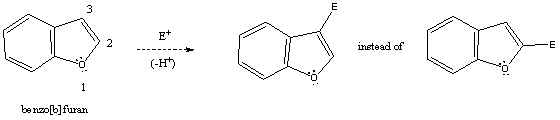
(Essay)
4.9/5 (75)
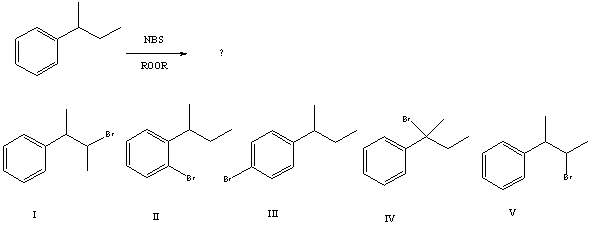
(75) 
What would be the product of the following reaction sequence? 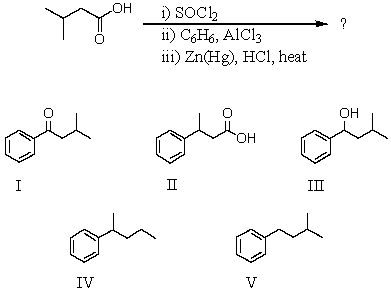
(Multiple Choice)
4.8/5 (81)
(81) Which of these is a satisfactory synthesis of 1-chloro-2-phenylethane?
(Multiple Choice)
4.9/5 (85)
(85) This molecule does not normally participate as a reactant in a Friedel-Crafts reaction.
(Multiple Choice)
4.8/5 (72)
(72) Which alkyl halide would be most reactive in an SN1 reaction?
(Multiple Choice)
4.8/5 (78)
(78) Which is the best sequence of reactions for the following transformation? 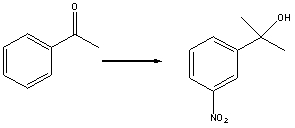
(Multiple Choice)
4.8/5 (79)
(79) Which of the following structures contribute(s)to the resonance hybrid of the intermediate formed when acetanilide undergoes para-bromination? 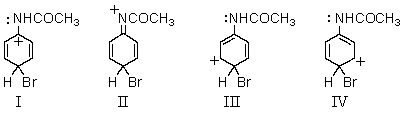
(Multiple Choice)
5.0/5 (84)
(84) Which of the following reactions would yield cumene as the major product?
(Multiple Choice)
4.8/5 (75)
(75) Based on your knowledge of electrophilic aromatic substitution,predict the position of attack of an electrophile on pyridine,i.e. ,does the electrophile E+ attack carbon 2,3,or 4? Explain your answer. 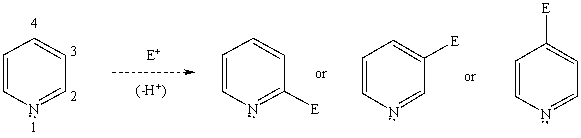 Which substitution product(s)forms and why?
 (Essay)
4.8/5 (79)
(79) What product would result from the following series of reactions, 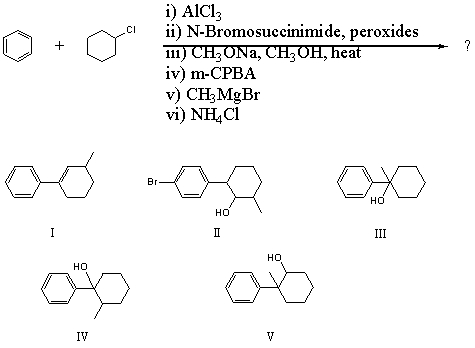
(Multiple Choice)
4.8/5 (74)
(74) Which of the following structures does not contribute to the resonance hybrid of the intermediate formed when nitrobenzene undergoes meta-chlorination? 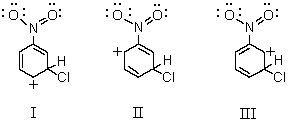
(Multiple Choice)
4.9/5 (83)
(83) 
Which of the following structures contribute(s)to the resonance hybrid of the intermediate formed when bromobenzene undergoes para-chlorination? 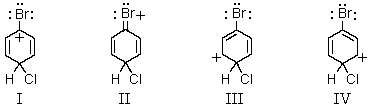
(Multiple Choice)
4.8/5 (81)
(81) Although benzene is susceptible to electrophilic attack,its special stability causes it to undergo ______________ rather than ____________ reactions.
(Short Answer)
4.8/5 (78)
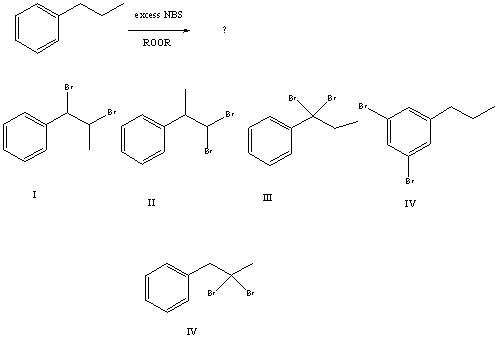
(78) 
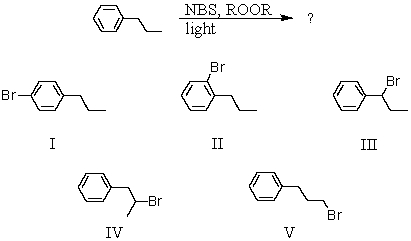

Filters
- Essay(0)
- Multiple Choice(0)
- Short Answer(0)
- True False(0)
- Matching(0)