



 Chat with AI
Exam 19: Nuclear Chemistry

Exam 1: Chemistry: the Study of Change168 Questions
Exam 2: Atoms, Molecules, and Ions156 Questions
Exam 3: Mass Relationships in Chemical Reactions194 Questions
Exam 4: Reactions in Aqueous Solutions186 Questions
Exam 5: Gases121 Questions
Exam 6: Thermochemistry118 Questions
Exam 7: Quantum Theory and the Electronic Structure of Atoms136 Questions
Exam 8: Periodic Relationships Among the Elements144 Questions
Exam 9: Chemical Bonding I: Basic Concepts137 Questions
Exam 10: Chemical Bonding Ii: Molecular Geometry and Hybridization of Atomic Orbitals147 Questions
Exam 11: Intermolecular Forces and Liquids and Solids149 Questions
Exam 12: Physical Properties of Solutions122 Questions
Exam 13: Chemical Kinetics130 Questions
Exam 14: Chemical Equilibrium109 Questions
Exam 15: Acids and Bases178 Questions
Exam 16: Acid-Base Equilibria and Solubility Equilibria131 Questions
Exam 17: Entropy Free Energy and Equilibrium128 Questions
Exam 18: Electrochemistry154 Questions
Exam 19: Nuclear Chemistry133 Questions
Exam 20: Chemistry in the Atmosphere50 Questions
Exam 21: Metallurgy and the Chemistry of Metals63 Questions
Exam 22: Nonmetallic Elements and Their Compounds52 Questions
Exam 23: Transition Metal Chemistry and Coordination Compounds92 Questions
Exam 24: Organic Chemistry67 Questions
Exam 25: Synthetic and Natural Organic Polymers50 Questions
Select questions type


Radium-226 decays by alpha emission.What is its decay product?
(Multiple Choice)
4.7/5  (74)
(74) Tritium is a radioisotope of hydrogen having a half-life of 12.3 years.If you initially had 1.0 × 10⁻⁷ mole of tritium, calculate the decay rate of the sample.
(Short Answer)
4.7/5 (66)
(66) Estimate the age of a bottled wine that has a tritium, 3H, content 60% that of freshly bottled wine.Tritium decays by beta decay and has a half-life of 12.3 yr. 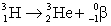
(Multiple Choice)
4.8/5 (77)
(77) Which one of the following statements about fission and fusion is false?
(Multiple Choice)
4.9/5 (75)
(75) Which isotope, when bombarded with oxygen-18, yields the artificial isotope seaborgium-263 plus 4 neutrons?
(Multiple Choice)
4.9/5 (69)
(69) Naturally occurring uranium contains approximately 1% U-235 and 99% U-238.Of these, the isotope that undergoes fission in a nuclear reactor is U-238.
(True/False)
4.8/5 (88)
(88) 
The rates of radioactive decay processes, like the rates of chemical reactions, are sensitive to temperature changes.
(True/False)
4.9/5 (60)
(60) 
Present-day plant life has a carbon-14 decay rate of 16 disintegrations per minute (dpm)per gram of carbon.If a contemporary wooden chair were somehow preserved for the next 3,900 years, what 14C decay rate should be expected from the wood used to make the chair? (t1/2 = 5,730 yr)
(Multiple Choice)
4.9/5 (88)
(88)  or
 .
Rubidium-87 decays by beta decay with a half-life of 4.9 × 10¹⁰ yr.How many 87Rb atoms are in a moon rock sample that has a rubidium decay rate of 3,500 disintegrations per hour?
(Multiple Choice)
4.8/5 (80)
(80) When atoms of aluminum-27 are bombarded with alpha particles, a neutron and an element are produced.The particular isotope formed is  He +
 Al

 n + ____
He + Al n + ____ (Multiple Choice)
4.8/5 (81)
(81) The only stable isotope of iodine is iodine-127.Predict the mode of decay of  I.
I. (Multiple Choice)
4.7/5 (69)
(69) List the given types of nuclear radiation (cosmic rays, medical and dental X rays, and nuclear waste) in order of how much each contributes to the average yearly dose of nuclear radiation for AmericAns :
(Multiple Choice)
4.9/5 (78)
(78) Calculate the energy released in joules when one mole of polonium-214 decays according to the equation  Po

 Pb +
 He. [Atomic masses: Pb-210 = 209.98284 amu, Po-214 = 213.99519 amu, He-4 = 4.00260 amu.]
Po Pb + He. [Atomic masses: Pb-210 = 209.98284 amu, Po-214 = 213.99519 amu, He-4 = 4.00260 amu.] (Multiple Choice)
4.9/5 (78)
(78) If 24% of a certain radioisotope decays in 6.5 years, what is the half-life of this isotope?
(Multiple Choice)
5.0/5 (88)
(88) 
Filters
- Essay(0)
- Multiple Choice(0)
- Short Answer(0)
- True False(0)
- Matching(0)