



 Chat with AI
Exam 2: The Chemistry of Microbiology

Exam 1: A Brief History of Microbiology73 Questions
Exam 2: The Chemistry of Microbiology76 Questions
Exam 3: Cell Structure and Function80 Questions
Exam 4: Microscopy, Staining, and Classification80 Questions
Exam 5: Microbial Metabolism77 Questions
Exam 6: Microbial Nutrition and Growth75 Questions
Exam 7: Microbial Genetics75 Questions
Exam 8: Recombinant DNA Technology75 Questions
Exam 9: Controlling Microbial Growth in the Environment75 Questions
Exam 10:Controlling Microbial Growth in the Body: Antimicrobial Drugs75 Questions
Exam 11: Characterizing and Classifying Prokaryotes75 Questions
Exam 12: Characterizing and Classifying Eukaryotes75 Questions
Exam 13: Characterizing and Classifying Viruses, Viroids, and Prions75 Questions
Exam 14: Infection, Infectious Diseases, and Epidemiology76 Questions
Exam 15: Innate Immunity75 Questions
Exam 16: Adaptive Immunity75 Questions
Exam 17: Immunization and Immune Testing75 Questions
Exam 18: Immune Disorders75 Questions
Exam 19: Microbial Diseases of the Skin and Wounds72 Questions
Exam 20: Microbial Diseases of the Nervous System and Eyes71 Questions
Exam 21: Microbial Cardiovascular and Systemic Diseases71 Questions
Exam 22: Microbial Diseases of the Respiratory System70 Questions
Exam 23: Microbial Diseases of the Digestive System70 Questions
Exam 24: Microbial Diseases of the Urinary and Reproductive Systems65 Questions
Exam 25: Applied and Industrial Microbiology73 Questions
Exam 26: Microbial Ecology and Microbiomes73 Questions
Select questions type


The carbon atoms in organic compounds typically form ________ with other atoms.
(Multiple Choice)
4.7/5  (77)
(77) A(n) ________ is a compound that dissolves into anions and cations in water.
(Multiple Choice)
4.8/5 (80)
(80) All of the following bases are found in RNA molecules EXCEPT
(Multiple Choice)
4.8/5 (75)
(75) The DNA double helix is held together by (covalent/ionic/hydrogen) bonds.
(Short Answer)
4.9/5 (82)
(82) 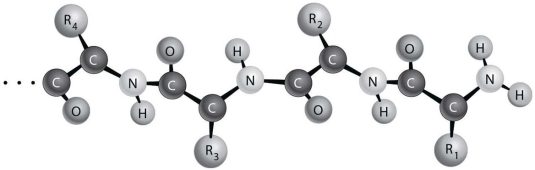 Figure 2.2 depicts the (primary/secondary/tertiary) structure of a protein.
 (Short Answer)
4.9/5 (78)
(78) The type(s) of bond(s) produced when atoms share electrons equally is/are
(Multiple Choice)
4.8/5 (91)
(91) Cell walls containing ________ provide the best protection from drying.
(Multiple Choice)
4.9/5 (75)
(75) Discuss the importance of hydrogen bonds in the chemistry of the cell.
(Essay)
4.8/5 (73)
(73) A(n) (catalyst/enzyme) is any molecule that speeds up a chemical reaction.
(Short Answer)
4.8/5 (83)
(83) 
Filters
- Essay(0)
- Multiple Choice(0)
- Short Answer(0)
- True False(0)
- Matching(0)