



 Chat with AI
Exam 21: Microbial Cardiovascular and Systemic Diseases

Exam 1: A Brief History of Microbiology73 Questions
Exam 2: The Chemistry of Microbiology76 Questions
Exam 3: Cell Structure and Function80 Questions
Exam 4: Microscopy, Staining, and Classification80 Questions
Exam 5: Microbial Metabolism77 Questions
Exam 6: Microbial Nutrition and Growth75 Questions
Exam 7: Microbial Genetics75 Questions
Exam 8: Recombinant DNA Technology75 Questions
Exam 9: Controlling Microbial Growth in the Environment75 Questions
Exam 10:Controlling Microbial Growth in the Body: Antimicrobial Drugs75 Questions
Exam 11: Characterizing and Classifying Prokaryotes75 Questions
Exam 12: Characterizing and Classifying Eukaryotes75 Questions
Exam 13: Characterizing and Classifying Viruses, Viroids, and Prions75 Questions
Exam 14: Infection, Infectious Diseases, and Epidemiology76 Questions
Exam 15: Innate Immunity75 Questions
Exam 16: Adaptive Immunity75 Questions
Exam 17: Immunization and Immune Testing75 Questions
Exam 18: Immune Disorders75 Questions
Exam 19: Microbial Diseases of the Skin and Wounds72 Questions
Exam 20: Microbial Diseases of the Nervous System and Eyes71 Questions
Exam 21: Microbial Cardiovascular and Systemic Diseases71 Questions
Exam 22: Microbial Diseases of the Respiratory System70 Questions
Exam 23: Microbial Diseases of the Digestive System70 Questions
Exam 24: Microbial Diseases of the Urinary and Reproductive Systems65 Questions
Exam 25: Applied and Industrial Microbiology73 Questions
Exam 26: Microbial Ecology and Microbiomes73 Questions
Select questions type


Which of the following is/are a reservoir for Francisella tularensis?

Free
(Multiple Choice)
4.8/5  (68)
(68) Correct Answer: Verified
D
The zoonosis known as (ehrlichiosis/plague/tularemia) is transmitted to humans by fleas.
Free
(Short Answer)
4.7/5 (74)
(74) Correct Answer:Verified
Verifiedplague
Which of the following diseases is currently vaccine-preventable in humans?
Free
(Multiple Choice)
5.0/5 (81)
(81) Correct Answer:Verified
VerifiedE
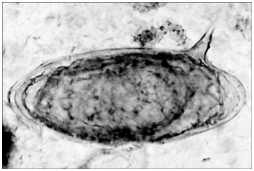 A person reports to a clinic complaining of fever and abdominal pain. The abdomen is swollen, and blood tests indicate kidney damage. A stool sample is examined under a microscope and found to contain the egg shown in the figure. The indications are consistent with infection with
 (Multiple Choice)
4.7/5 (76)
(76) Cytomegalovirus infection of the retina is now treated with (interferon/fomivirsen/ganciclovir), the first antisense RNA drug.
(Short Answer)
4.9/5 (78)
(78) True bugs in the genus (Aedes/Ixodes/Triatoma) transmit Chagas' disease. (Be sure to use proper nomenclature form.)
(Short Answer)
4.7/5 (81)
(81) The intermediate host for Schistosoma mansoni is a (mosquito/tick/snail).
(Short Answer)
4.8/5 (84)
(84) How does the age of the infected individual play a role in the development of Epstein-Barr virus (HHV-4) infections such as infectious mononucleosis?
(Essay)
4.9/5 (67)
(67) Vegetations are associated with which of the following disease processes?
(Multiple Choice)
4.8/5 (79)
(79) The final stage of Chagas' disease is typically fatal because the parasite infects cells of the (blood/heart/liver).
(Short Answer)
4.9/5 (81)
(81) Which of the following is/are transmitted by Aedes mosquitoes?
(Multiple Choice)
4.8/5 (80)
(80) When bacteria in the bloodstream invade the bones, this leads to a painful condition called (endocarditis/osteomyelitis/lymphangitis).
(Short Answer)
4.9/5 (74)
(74) A large number of people in an African village become ill a couple of weeks after sharing a feast of stew made from the meat of jungle animals. They initially have fever, headache and fatigue, and develop petechiae. Most then experience bloody diarrhea and vomiting, and a few days later begin bleeding from the mouth and eyes. What is the most likely preliminary diagnosis?
(Multiple Choice)
4.9/5 (75)
(75) Compare and contrast dengue hemorrhagic fever and Ebola hemorrhagic fever. Discuss both the pathogens and the pathology.
(Essay)
4.9/5 (80)
(80) Anaplasma primarily infects (erythrocytes/monocytes/neutrophils).
(Short Answer)
4.8/5 (78)
(78) 
Filters
- Essay(0)
- Multiple Choice(0)
- Short Answer(0)
- True False(0)
- Matching(0)