



 Chat with AI
Exam 2: Water

Exam 1: The Foundations of Biochemistry109 Questions
Exam 2: Water87 Questions
Exam 3: Amino Acids, Peptides, and Proteins112 Questions
Exam 4: The Three-Dimensional Structure of Proteins100 Questions
Exam 5: Protein Function101 Questions
Exam 6: Enzymes106 Questions
Exam 7: Carbohydrates and Glycobiology109 Questions
Exam 8: Nucleotides and Nucleic Acids98 Questions
Exam 9: DNA-Based Information Technologies102 Questions
Exam 10: Lipids102 Questions
Exam 11: Biological Membranes and Transport105 Questions
Exam 12: Biosignaling98 Questions
Exam 13: Bioenergetics and Biochemical Reaction Types105 Questions
Exam 14: Glycolysis, Gluconeogenesis, and the Pentose Phosphate Pathway112 Questions
Exam 15: Principles of Metabolic Regulation101 Questions
Exam 16: The Citric Acid Cycle105 Questions
Exam 17: Fatty Acid Catabolism97 Questions
Exam 18: Amino Acid Oxidation and the Production of Urea98 Questions
Exam 19: Oxidative Phosphorylation and Photophosphorylation96 Questions
Exam 20: Carbohydrate Biosynthesis in Plants and Bacteria94 Questions
Exam 21: Lipid Biosynthesis100 Questions
Exam 22: Biosynthesis of Amino Acids, Nucleotides, and Related Molecules98 Questions
Exam 23: Hormonal Regulation and Integration of Mammalian Metabolism100 Questions
Exam 24: Genes and Chromosomes99 Questions
Exam 25: DNA Metabolism101 Questions
Exam 26: RNA Metabolism101 Questions
Exam 27: Protein Metabolism99 Questions
Exam 28: Regulation of Gene Expression99 Questions
Select questions type


Explain with an appropriate diagram why amphipathic molecules tend to form micelles in water. What force drives micelle formation?
(Essay)
4.9/5  (86)
(86) Which factor contributes to the bent shape of a water molecule?
(Multiple Choice)
4.9/5 (83)
(83) In which reaction does water NOT participate as a reactant (rather than as a product)?
(Multiple Choice)
4.8/5 (70)
(70) Which compound would result in the formation of a clathrate structure?
(Multiple Choice)
5.0/5 (84)
(84) Which statement is TRUE about the properties of aqueous solutions?
(Multiple Choice)
4.8/5 (85)
(85) If a person is suffering from acidosis, which treatment/action would NOT be a wise choice?
(Multiple Choice)
4.8/5 (67)
(67) Consider an acetate buffer, initially at the same pH as its pKa (4.76). When sodium hydroxide (NaOH) is mixed with this buffer, the:
(Multiple Choice)
4.9/5 (78)
(78) According to the titration curve to the right, acid A has a pKa of:
(Multiple Choice)
4.9/5 (88)
(88) Hydrophobic interactions make important energetic contributions to:
(Multiple Choice)
4.9/5 (80)
(80) The dipole moment in a water molecule Which statement about hydrogen bonds is NOT true?
(Multiple Choice)
4.9/5 (90)
(90) A 0.6 M solution of a weak acid had a pH of 5.8. What is the pKa of the solution?
(Multiple Choice)
4.7/5 (82)
(82) For a weak acid with a pKa of 6.0, show how you would calculate the ratio of acid to salt at pH 5.
(Short Answer)
4.8/5 (75)
(75) Which statement CORRECTLY describes the situation of the cell in the diagram? The black dots represent solute molecules. 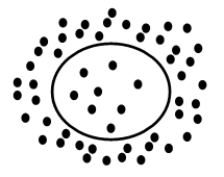
(Multiple Choice)
4.8/5 (78)
(78) Which property of water does NOT contribute to the fitness of the aqueous environment for living organisms?
(Multiple Choice)
4.8/5 (61)
(61) Three buffers are made by combining a 1 M solution of acetic acid with a 1 M solution of sodium acetate in the ratios shown below. 1 M acetic acid
1 M sodium acetate
Buffer 1:
10 mL
90 mL
Buffer 2:
50 mL
50 mL
Buffer 3:
90 mL
10 mL
Which statement is TRUE of the resulting buffers?
(Multiple Choice)
5.0/5 (78)
(78) Suppose you have just added 100 mL of a solution containing 0.5 mol of acetic acid per liter to 400 mL of 0.5 M NaOH. What is the final pH? (The pKa of acetic acid is 4.7.)
(Short Answer)
4.7/5 (83)
(83) Define pKa for a weak acid in the following two ways: (1) in relation to its acid dissociation constant, Ka, and (2) by reference to a titration curve for the weak acid.
(Short Answer)
4.8/5 (82)
(82) Which process would NOT disrupt the weak interactions between two biomolecules in solution?
(Multiple Choice)
4.8/5 (82)
(82) You want to maintain pH = 7.0 for an enzyme-catalyzed reaction that will produce hydrogen ions along with the desired product. At equal concentrations, which weak acid, if any, will serve as the better buffer for the reaction: acid A, with pKa = 6.5, or acid B, with pKa = 7.5?
(Multiple Choice)
4.9/5 (74)
(74) 
Filters
- Essay(0)
- Multiple Choice(0)
- Short Answer(0)
- True False(0)
- Matching(0)