



 Chat with AI
Exam 20: Income Inequality and Poverty

Exam 1: Ten Principles of Economics439 Questions
Exam 2: Thinking Like an Economist617 Questions
Exam 3: Interdependence and the Gains From Trade527 Questions
Exam 4: The Market Forces of Supply and Demand697 Questions
Exam 5: Elasticity and Its Application594 Questions
Exam 6: Supply, Demand, and Government Policies645 Questions
Exam 7: Consumers, Producers, and the Efficiency of Markets549 Questions
Exam 8: Application: the Costs of Taxation513 Questions
Exam 9: Application: International Trade492 Questions
Exam 10: Externalities524 Questions
Exam 11: Public Goods and Common Resources433 Questions
Exam 12: The Design of the Tax System549 Questions
Exam 13: The Costs of Production420 Questions
Exam 14: Firms in Competitive Markets543 Questions
Exam 15: Monopoly637 Questions
Exam 16: Monopolistic Competition580 Questions
Exam 17: Oligopoly488 Questions
Exam 18: The Markets for the Factors of Production564 Questions
Exam 19: Earnings and Discrimination490 Questions
Exam 20: Income Inequality and Poverty455 Questions
Exam 21: The Theory of Consumer Choice431 Questions
Exam 22: Frontiers of Microeconomics440 Questions
Exam 23: Measuring a Nations Income520 Questions
Exam 24: Measuring the Cost of Living529 Questions
Exam 25: Production and Growth505 Questions
Exam 26: Saving, Investment, and the Financial System564 Questions
Exam 27: The Basic Tools of Finance500 Questions
Exam 28: Unemployment678 Questions
Exam 29: The Monetary System515 Questions
Exam 30: Money Growth and Inflation481 Questions
Exam 31: Open-Economy Macroeconomics: Basic Concepts522 Questions
Exam 32: A Macroeconomic Theory of the Open Economy475 Questions
Exam 33: Aggregate Demand and Aggregate Supply562 Questions
Exam 34: The Influence of Monetary and Fiscal Policy on Aggregate Demand508 Questions
Exam 35: The Short-Run Trade-Off Between Inflation and Unemployment491 Questions
Exam 36: Six Debates Over Macroeconomic Policy372 Questions
Select questions type


In the US, is it more likely that someone will become a millionaire by making money on his/her own or by inheriting a fortune?
(Short Answer)
5.0/5  (76)
(76) Figure 20-2 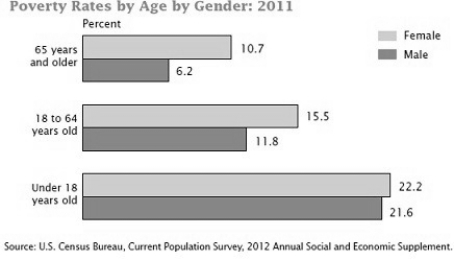 -Refer to Figure 20-2. Which of the following is consistent with the data reported in the figure?
 (Multiple Choice)
4.9/5 (80)
(80) In 2011 the top 20% of income earners accounted for over 80% of all income received by United States' families.
(True/False)
4.9/5 (81)
(81) Which of the following explains the rise in income inequality in the United States from 1970 to 2011?
(Multiple Choice)
4.7/5 (83)
(83) What is the term for a measure of happiness or satisfaction a person receives from his or her circumstances?
(Short Answer)
4.8/5 (89)
(89) John Rawls, who developed the way of thinking called liberalism, argued that government policies should be aimed at maximizing the sum of utility of everyone in society.
(True/False)
4.9/5 (85)
(85) "The government should choose policies to maximize the total utility of society." This statement is most closely associated with which political philosophy?
(Multiple Choice)
4.8/5 (72)
(72) Table 20-4  Source: U.S. Bureau of Census
-Refer to Table 20-4. In 2011, the top fifth of families have
Source: U.S. Bureau of Census
-Refer to Table 20-4. In 2011, the top fifth of families have (Multiple Choice)
4.8/5 (96)
(96) Jermaine believes that it is important to maximize the well-being of the worst-off person in society. He believes in the principle called the .
(Short Answer)
4.8/5 (82)
(82) The 2011 U.S. distribution of income shows that the top 5 percent of families have approximately what share of income?
(Multiple Choice)
4.9/5 (72)
(72) Which of the Ten Principles of Economics do governments run into when they redistribute income to achieve greater equality?
(Multiple Choice)
4.8/5 (88)
(88) If a father earns 20% above his generation's average income, his son will most likely earn what percent above his generation's average income? What does this statistic indicate?
(Essay)
4.8/5 (70)
(70) Which philosopher claimed that the government should aim to maximize the well-being of the worst-off person in society?
(Short Answer)
4.8/5 (90)
(90) Temporary Assistance for Needy Families (TANF) is an example of a negative income tax program.
(True/False)
4.8/5 (80)
(80) Table 20-11
Poverty Thresholds in 2011, by Size of Family and Number of Related Children Under 18 Years [Dollars]  Source: U. S. Bureau of the Census, Current Population Survey.
-Refer to Table 20-11. What is the poverty line for a family of three with one child?
Source: U. S. Bureau of the Census, Current Population Survey.
-Refer to Table 20-11. What is the poverty line for a family of three with one child? (Multiple Choice)
4.9/5 (76)
(76) Raising total utility is the prime objective of which political philosophy?
(Multiple Choice)
4.9/5 (87)
(87) 
Filters
- Essay(0)
- Multiple Choice(0)
- Short Answer(0)
- True False(0)
- Matching(0)