



 Chat with AI
Exam 2: Thinking Like an Economist

Exam 1: Ten Principles of Economics439 Questions
Exam 2: Thinking Like an Economist617 Questions
Exam 3: Interdependence and the Gains From Trade527 Questions
Exam 4: The Market Forces of Supply and Demand697 Questions
Exam 5: Elasticity and Its Application594 Questions
Exam 6: Supply, Demand, and Government Policies645 Questions
Exam 7: Consumers, Producers, and the Efficiency of Markets549 Questions
Exam 8: Application: the Costs of Taxation513 Questions
Exam 9: Application: International Trade492 Questions
Exam 10: Externalities524 Questions
Exam 11: Public Goods and Common Resources433 Questions
Exam 12: The Design of the Tax System549 Questions
Exam 13: The Costs of Production420 Questions
Exam 14: Firms in Competitive Markets543 Questions
Exam 15: Monopoly637 Questions
Exam 16: Monopolistic Competition580 Questions
Exam 17: Oligopoly488 Questions
Exam 18: The Markets for the Factors of Production564 Questions
Exam 19: Earnings and Discrimination490 Questions
Exam 20: Income Inequality and Poverty455 Questions
Exam 21: The Theory of Consumer Choice431 Questions
Exam 22: Frontiers of Microeconomics440 Questions
Exam 23: Measuring a Nations Income520 Questions
Exam 24: Measuring the Cost of Living529 Questions
Exam 25: Production and Growth505 Questions
Exam 26: Saving, Investment, and the Financial System564 Questions
Exam 27: The Basic Tools of Finance500 Questions
Exam 28: Unemployment678 Questions
Exam 29: The Monetary System515 Questions
Exam 30: Money Growth and Inflation481 Questions
Exam 31: Open-Economy Macroeconomics: Basic Concepts522 Questions
Exam 32: A Macroeconomic Theory of the Open Economy475 Questions
Exam 33: Aggregate Demand and Aggregate Supply562 Questions
Exam 34: The Influence of Monetary and Fiscal Policy on Aggregate Demand508 Questions
Exam 35: The Short-Run Trade-Off Between Inflation and Unemployment491 Questions
Exam 36: Six Debates Over Macroeconomic Policy372 Questions
Select questions type


Normative statements describe how the world is, while positive statements prescribe how the world should be.

Free
(True/False)
4.9/5  (86)
(86) Correct Answer: Verified
False
Which of the following statements is an example of a positive, as opposed to normative, statement?
Free
(Multiple Choice)
4.9/5 (87)
(87) Correct Answer:Verified
VerifiedB
Sometimes economists disagree because their values differ. Which of the following instances best reflects this source of disagreement?
Free
(Multiple Choice)
4.9/5 (78)
(78) Correct Answer:Verified
VerifiedC
When two variables move in the same direction, the curve relating them is
(Multiple Choice)
4.9/5 (72)
(72) Sir Isaac Newton's development of the theory of gravity after observing an apple fall from a tree is an example of
(Multiple Choice)
5.0/5 (83)
(83) Figure 2-19
In the following graph the x-axis shows the number of times a commuter rail train stops at a station per hour and the y-axis shows the number of commuter rail passengers per hour.
Commuter Rail Passengers by Frequency of Service 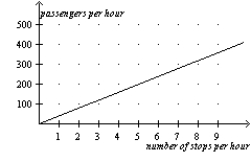 -Refer to Figure 2-19. A policymaker observes this graph and concludes that increasing the frequency of commuter rail service is a certain way to get more commuters to choose the commuter rail instead of driving their own cars. You warn the policymaker about making a reverse causality mistake with which of the following statements?
 (Multiple Choice)
5.0/5 (82)
(82) The slope of a line is equal to the change in the x-variable divided by the change in the y-variable.
(True/False)
4.8/5 (74)
(74) Which of the following concepts cannot be illustrated by the production possibilities frontier?
(Multiple Choice)
4.8/5 (81)
(81) If new government regulations designed to protect wetlands remove very productive farmland from production, then the production possibilities frontier will shift inward.
(True/False)
4.9/5 (71)
(71) Figure 2-17  -Refer to Figure 2-17. The movement from point A to point B is a(n)
 (Multiple Choice)
4.7/5 (87)
(87) In the ordered pair (10,30), 10 is the horizontal location of the point and 30 is the vertical location of the point.
(True/False)
4.9/5 (83)
(83) Figure 2-23  -Refer to Figure 2-23. It is possible for this economy to produce 30 doghouses and 20 dishwashers.
 (True/False)
4.9/5 (69)
(69) Graphs such as bar graphs and pie charts are limited in that they
(Multiple Choice)
4.8/5 (73)
(73) In the circular-flow diagram, which of the following items does not flow from firms to households?
(Multiple Choice)
4.9/5 (85)
(85) President Ronald Reagan once joked that a Trivial Pursuit game designed for economists would
(Multiple Choice)
4.7/5 (80)
(80) When an economy is operating inside its production possibilities frontier, we know that
(Multiple Choice)
4.7/5 (70)
(70) 
Filters
- Essay(0)
- Multiple Choice(0)
- Short Answer(0)
- True False(0)
- Matching(0)