



 Chat with AI
Exam 2: Thinking Like an Economist

Exam 1: Ten Principles of Economics439 Questions
Exam 2: Thinking Like an Economist617 Questions
Exam 3: Interdependence and the Gains From Trade527 Questions
Exam 4: The Market Forces of Supply and Demand697 Questions
Exam 5: Elasticity and Its Application594 Questions
Exam 6: Supply, Demand, and Government Policies645 Questions
Exam 7: Consumers, Producers, and the Efficiency of Markets549 Questions
Exam 8: Application: the Costs of Taxation513 Questions
Exam 9: Application: International Trade492 Questions
Exam 10: Externalities524 Questions
Exam 11: Public Goods and Common Resources433 Questions
Exam 12: The Design of the Tax System549 Questions
Exam 13: The Costs of Production420 Questions
Exam 14: Firms in Competitive Markets543 Questions
Exam 15: Monopoly637 Questions
Exam 16: Monopolistic Competition580 Questions
Exam 17: Oligopoly488 Questions
Exam 18: The Markets for the Factors of Production564 Questions
Exam 19: Earnings and Discrimination490 Questions
Exam 20: Income Inequality and Poverty455 Questions
Exam 21: The Theory of Consumer Choice431 Questions
Exam 22: Frontiers of Microeconomics440 Questions
Exam 23: Measuring a Nations Income520 Questions
Exam 24: Measuring the Cost of Living529 Questions
Exam 25: Production and Growth505 Questions
Exam 26: Saving, Investment, and the Financial System564 Questions
Exam 27: The Basic Tools of Finance500 Questions
Exam 28: Unemployment678 Questions
Exam 29: The Monetary System515 Questions
Exam 30: Money Growth and Inflation481 Questions
Exam 31: Open-Economy Macroeconomics: Basic Concepts522 Questions
Exam 32: A Macroeconomic Theory of the Open Economy475 Questions
Exam 33: Aggregate Demand and Aggregate Supply562 Questions
Exam 34: The Influence of Monetary and Fiscal Policy on Aggregate Demand508 Questions
Exam 35: The Short-Run Trade-Off Between Inflation and Unemployment491 Questions
Exam 36: Six Debates Over Macroeconomic Policy372 Questions
Select questions type


An economic model can accurately explain how the economy is organized because it is designed to include, to the extent possible, all features of the real world.
(True/False)
4.9/5  (73)
(73) Figure 2-9
Panel (a) Panel (b) 
 -Refer to Figure 2-9, Panel (a). The opportunity cost of moving from point J to point L is
 (Multiple Choice)
4.9/5 (81)
(81) Indiadesh is a country that produces two goods, textiles and computers. Last year, Indiadesh produced 50,000 textiles and 1300 computers. This year it produced 45,000 textiles and 1100 computers. Given no further information, which of the following events could explain this change?
(Multiple Choice)
4.8/5 (100)
(100) Who would be more likely to study the effects of government spending on the unemployment rate, a macroeconomist or a microeconomist?
(Short Answer)
4.9/5 (76)
(76) Figure 2-6  -Refer to Figure 2-6. The opportunity cost of this economy moving from point I to point H is
 (Multiple Choice)
4.8/5 (93)
(93) Figure 2-16 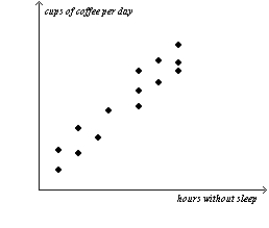 -Refer to Figure 2-16. The graph shown is known as a
 (Multiple Choice)
4.8/5 (83)
(83) Figure 2-5  -Refer to Figure 2-5. The opportunity cost of this economy moving from point A to point B is
 (Multiple Choice)
4.9/5 (75)
(75) Which of the following statements is correct about the roles of economists?
(Multiple Choice)
4.8/5 (87)
(87) Like biologists and physicists, economists use the dispassionate development and testing of how the world works known as the
(Short Answer)
4.8/5 (72)
(72) Suppose a war in the Middle East interrupts the flow of crude oil and oil prices skyrocket around the world. For economists, this historical episode serves as a
(Short Answer)
4.9/5 (64)
(64) Figure 2-20
Relationship Between Years of Education and Annual Income  -Refer to Figure 2-20. The graph above is a
 (Multiple Choice)
4.9/5 (81)
(81) In the markets for factors of production in the circular-flow diagram,
(Multiple Choice)
4.9/5 (65)
(65) It is possible for an economy to increase its production of both goods if the economy
(Multiple Choice)
4.9/5 (83)
(83) Figure 2-21  -Refer to Figure 2-21. According to the graph, snowstorms
 (Multiple Choice)
4.9/5 (72)
(72) If a major union goes on strike, then the country would be operating inside its production possibilities frontier.
(True/False)
5.0/5 (84)
(84) Home is a country that produces two goods, pears and cellular phones. Last year, Home produced 450 bushels of pears and 1050 cellular phones. This year it produced 450 bushels of pears and 2000 cellular phones. Given no other information, which of the following events could explain this change?
(Multiple Choice)
4.8/5 (89)
(89) 
Filters
- Essay(0)
- Multiple Choice(0)
- Short Answer(0)
- True False(0)
- Matching(0)