



 Chat with AI
Exam 16: Unsafe Ground: Landslides and Other Mass Movements

Exam 1: Cosmology and the Birth of the Earth60 Questions
Exam 2: Journey to the Center of the Earth60 Questions
Exam 3: Drifting Continents and Spreading Seas60 Questions
Exam 4: The Way the Earth Works: Plate Tectonics63 Questions
Exam 5: Patterns in Nature: Minerals60 Questions
Exam 6: Up From the Inferno: Magma and Igneous Rocks60 Questions
Exam 7: Pages of Earths Past: Sedimentary Rocks60 Questions
Exam 8: Metamorphism: a Process of Change60 Questions
Exam 9: The Wrath of Vulcan: Volcanic Eruptions60 Questions
Exam 10: A Violent Pulse: Earthquakes60 Questions
Exam 11: Crags,cracks,and Crumples: Crustal Deformation and Mountain Building60 Questions
Exam 12: Deep Time: How Old Is Old60 Questions
Exam 13: A Biography of the Earth60 Questions
Exam 14: Squeezing Power From a Stone: Energy Resources63 Questions
Exam 15: Riches in Rock: Mineral Resources61 Questions
Exam 16: Unsafe Ground: Landslides and Other Mass Movements60 Questions
Exam 17: Streams and Floods: the Geology of Running Water60 Questions
Exam 18: Restless Realm: Oceans and Coasts60 Questions
Exam 19: A Hidden Reserve: Groundwater60 Questions
Exam 20: An Envelope of Gas: the Earths Atmosphere and Climate60 Questions
Exam 21: Dry Regions: the Geology of Deserts60 Questions
Exam 22: Amazing Ice: Glaciers and Ice Ages60 Questions
Exam 23: Global Change in the Earth System59 Questions
Exam 24: Introducing Rocks30 Questions
Exam 25: a Surface Veneer: Sediments and Soils31 Questions
Exam 26: the Rock Cycle in the Earth System30 Questions
Exam 27: the Earths Interior, Revisited: Seismic Layering, Gravity, and the Magnetic Field30 Questions
Exam 28: Memories of Past Life: Fossils and Evolution30 Questions
Exam 29: Ever-Changing Landscapes and the Hydrologic Cycle30 Questions
Exam 30: Prelude: and Just What Is Geology30 Questions
Select questions type


What is the most effective means of mitigating the risk of a slope failure for slope shown in the figure below? 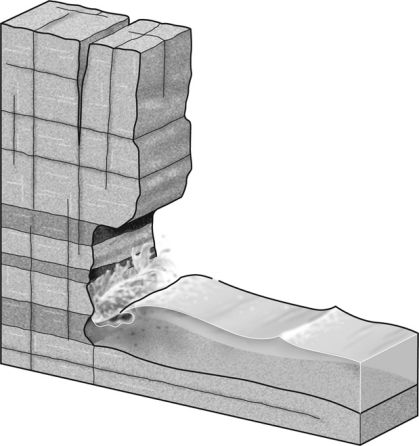
(Multiple Choice)
4.8/5  (80)
(80) Describe two factors that affect the resistance force and explain how they affect the stability of the slope.
(Essay)
4.9/5 (92)
(92) The downslope movement of which of the following materials does NOT constitute a mass wasting event?
(Multiple Choice)
4.7/5 (69)
(69) Why does the removal of material at the base of a slope decrease its stability?
(Multiple Choice)
4.7/5 (79)
(79) Geologists distinguish among different types of mass wasting based on factors such as the ________ of the moving material and the rate of movement.
(Multiple Choice)
4.9/5 (72)
(72) How can the amount of water play a role in slope stability and slope failure?
(Essay)
4.9/5 (76)
(76) Notice the cliff in the image below.Is this cliff stable? Why or why not? What could be done to increase the stability of the cliff? 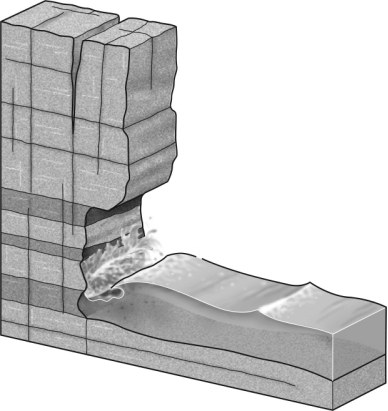
(Essay)
5.0/5 (80)
(80) Which of the following types of mass movement takes place most gradually?
(Multiple Choice)
4.8/5 (85)
(85) What is the resistance force and how is it derived? What happens when the resistance force exceeds the downslope force? What happens when the downslope force exceeds the resistance force?
(Essay)
4.9/5 (72)
(72) Which of the following situations would be the most susceptible to slope failure?
(Multiple Choice)
4.8/5 (78)
(78) The ________ in the sequence of sedimentary rocks shown below may become a failure surface. 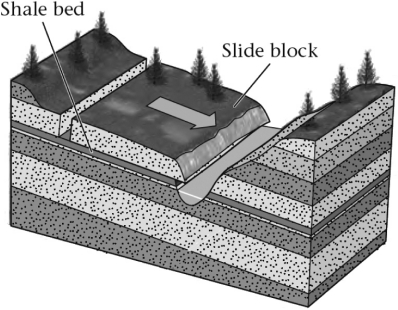
(Multiple Choice)
4.8/5 (68)
(68) Examine the photograph below.What type of mass wasting event is beginning to take place here? How can you tell? 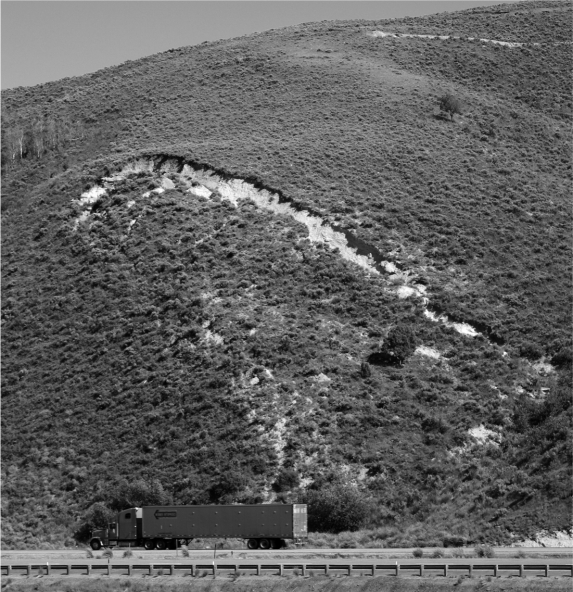
(Essay)
4.8/5 (88)
(88) You are a geologist trying to determine if the slope your client's house sits on is stable.You determine that the angle of repose of the hillside is 35°.Which of the following situations would be considered stable?
(Multiple Choice)
5.0/5 (71)
(71) 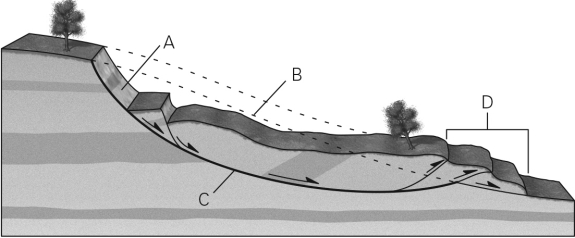
Which of the following types of mass movement often travels down a curved surface?
(Multiple Choice)
4.7/5 (74)
(74) Why do submarine slumps pose a hazard to people living in coastal areas?
(Multiple Choice)
4.8/5 (82)
(82) 
Filters
- Essay(0)
- Multiple Choice(0)
- Short Answer(0)
- True False(0)
- Matching(0)