



 Chat with AI
Exam 21: Dry Regions: the Geology of Deserts

Exam 1: Cosmology and the Birth of the Earth60 Questions
Exam 2: Journey to the Center of the Earth60 Questions
Exam 3: Drifting Continents and Spreading Seas60 Questions
Exam 4: The Way the Earth Works: Plate Tectonics63 Questions
Exam 5: Patterns in Nature: Minerals60 Questions
Exam 6: Up From the Inferno: Magma and Igneous Rocks60 Questions
Exam 7: Pages of Earths Past: Sedimentary Rocks60 Questions
Exam 8: Metamorphism: a Process of Change60 Questions
Exam 9: The Wrath of Vulcan: Volcanic Eruptions60 Questions
Exam 10: A Violent Pulse: Earthquakes60 Questions
Exam 11: Crags,cracks,and Crumples: Crustal Deformation and Mountain Building60 Questions
Exam 12: Deep Time: How Old Is Old60 Questions
Exam 13: A Biography of the Earth60 Questions
Exam 14: Squeezing Power From a Stone: Energy Resources63 Questions
Exam 15: Riches in Rock: Mineral Resources61 Questions
Exam 16: Unsafe Ground: Landslides and Other Mass Movements60 Questions
Exam 17: Streams and Floods: the Geology of Running Water60 Questions
Exam 18: Restless Realm: Oceans and Coasts60 Questions
Exam 19: A Hidden Reserve: Groundwater60 Questions
Exam 20: An Envelope of Gas: the Earths Atmosphere and Climate60 Questions
Exam 21: Dry Regions: the Geology of Deserts60 Questions
Exam 22: Amazing Ice: Glaciers and Ice Ages60 Questions
Exam 23: Global Change in the Earth System59 Questions
Exam 24: Introducing Rocks30 Questions
Exam 25: a Surface Veneer: Sediments and Soils31 Questions
Exam 26: the Rock Cycle in the Earth System30 Questions
Exam 27: the Earths Interior, Revisited: Seismic Layering, Gravity, and the Magnetic Field30 Questions
Exam 28: Memories of Past Life: Fossils and Evolution30 Questions
Exam 29: Ever-Changing Landscapes and the Hydrologic Cycle30 Questions
Exam 30: Prelude: and Just What Is Geology30 Questions
Select questions type


Very hot air just above the ground creates a wavering pool of light on the ground known as a(n)________.

Free
(Multiple Choice)
4.8/5  (77)
(77) Correct Answer: Verified
D
Fine-grained,wind-blown sediments are eventually deposited as ________.
Free
(Multiple Choice)
4.9/5 (74)
(74) Correct Answer:Verified
VerifiedA
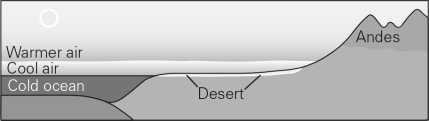
Calcrete (caliche)forms in a desert climate through the dissolution and the re-precipitation of ________ during and after rainstorms.
(Multiple Choice)
4.9/5 (81)
(81) During heavy rainstorms,rates of physical weathering and erosion are ________.
(Multiple Choice)
4.9/5 (85)
(85) Conversion of productive land to desert is known as ________.
(Multiple Choice)
4.9/5 (73)
(73) The geometry of sand dunes is NOT strongly influenced by the ________.
(Multiple Choice)
4.8/5 (78)
(78) Imagine you are a farmer moving into the Great Plains area after the Dust Bowl of 1933.What can you do to make the land fertile enough for farming again? What can be done to prevent a similar disaster from happening again?
(Essay)
4.8/5 (81)
(81) The Gobi in Mongolia is a desert primarily because it is located ________.
(Multiple Choice)
4.8/5 (79)
(79) Most of the erosion in desert environments is caused by ________.
(Multiple Choice)
4.9/5 (90)
(90) A(n)________ consists of sand and gravel deposited by ephemeral distributary channels that occur where a gully or a canyon discharges from its mouth.
(Multiple Choice)
5.0/5 (85)
(85) The process of lowering the land surface by wind erosion is known as ________.
(Multiple Choice)
4.7/5 (92)
(92) At 30° north latitude,at the northern edge of tropical (Hadley)cell convection in the northern hemisphere,________.
(Multiple Choice)
4.8/5 (80)
(80) Fine-grained sediment,such as dust and silt,can stay in the air and be transported by wind in ________.
(Multiple Choice)
4.9/5 (89)
(89) The Sahara is a desert primarily because it is located ________.
(Multiple Choice)
4.8/5 (83)
(83) The measured rainfall shown in the figure below is characteristic of a ________. 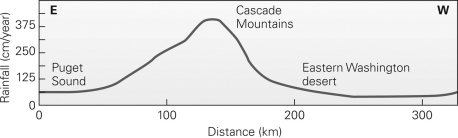
(Multiple Choice)
4.8/5 (79)
(79) 
Filters
- Essay(0)
- Multiple Choice(0)
- Short Answer(0)
- True False(0)
- Matching(0)