



 Chat with AI
Exam 11: Technology, Production, and Costs

Exam 1: Economics: Foundations and Models444 Questions
Exam 2: Trade-Offs, Comparative Advantage, and the Market System498 Questions
Exam 3: Where Prices Come From: the Interaction of Demand and Supply475 Questions
Exam 4: Economic Efficiency, Government Price Setting, and Taxes419 Questions
Exam 5: Externalities, Environmental Policy, and Public Goods266 Questions
Exam 6: Elasticity: the Responsiveness of Demand and Supply295 Questions
Exam 7: The Economics of Health Care334 Questions
Exam 8: Firms, the Stock Market, and Corporate Governance278 Questions
Exam 9: Comparative Advantage and the Gains From International Trade379 Questions
Exam 10: Consumer Choice and Behavioral Economics302 Questions
Exam 11: Technology, Production, and Costs330 Questions
Exam 12: Firms in Perfectly Competitive Markets298 Questions
Exam 13: Monopolistic Competition: the Competitive Model in a More Realistic Setting276 Questions
Exam 14: Oligopoly: Firms in Less Competitive Markets262 Questions
Exam 15: Monopoly and Antitrust Policy271 Questions
Exam 16: Pricing Strategy263 Questions
Exam 17: The Markets for Labor and Other Factors of Production286 Questions
Exam 18: Public Choice, Taxes, and the Distribution of Income258 Questions
Exam 19: GDP: Measuring Total Production and Income266 Questions
Exam 20: Unemployment and Inflation292 Questions
Exam 21: Economic Growth, the Financial System, and Business Cycles257 Questions
Exam 22: Long-Run Economic Growth: Sources and Policies268 Questions
Exam 23: Aggregate Expenditure and Output in the Short Run306 Questions
Exam 24: Aggregate Demand and Aggregate Supply Analysis284 Questions
Exam 25: Money, Banks, and the Federal Reserve System280 Questions
Exam 26: Monetary Policy277 Questions
Exam 27: Fiscal Policy303 Questions
Exam 28: Inflation, Unemployment, and Federal Reserve Policy257 Questions
Exam 29: Macroeconomics in an Open Economy278 Questions
Exam 30: The International Financial System262 Questions
Select questions type


Table 11-3
 -Refer to Table 11-3. The table above refers to the relationship between the quantity of workers employed and the number of cardboard boxes produced per day by Manny's House of Boxes. The capital used to produce the boxes is fixed. Diminishing returns to labor are first observed in this example after Manny hires the ________ worker.
 (Multiple Choice)
4.8/5  (81)
(81) As the level of output increases, what happens to the value of average fixed cost, and what happens to the difference between the value of average total cost and average variable cost?
(Essay)
4.8/5 (88)
(88) Figure 11-6 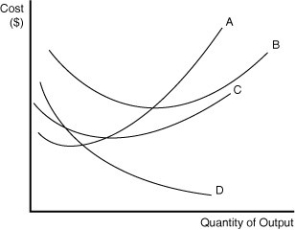 Figure 11-6 contains information about the short-run cost structure of a firm.
-Refer to Figure 11-6. In the figure above, which letter represents the average fixed cost curve?
Figure 11-6 contains information about the short-run cost structure of a firm.
-Refer to Figure 11-6. In the figure above, which letter represents the average fixed cost curve? (Multiple Choice)
4.8/5 (88)
(88) What is the difference between between total costs, variable costs, and fixed costs?
(Essay)
4.7/5 (91)
(91) Table 11-1
 Table 11-1 shows the technology of production at the Matsuko's Mushroom Farm for the month of May.
-Refer to Table 11-1. Diminishing marginal returns sets in when the ________ worker is hired.
Table 11-1 shows the technology of production at the Matsuko's Mushroom Farm for the month of May.
-Refer to Table 11-1. Diminishing marginal returns sets in when the ________ worker is hired. (Multiple Choice)
4.7/5 (83)
(83) A curve showing the lowest cost at which a firm is able to produce a given level of output in the long run is
(Multiple Choice)
4.7/5 (84)
(84) What is the difference between explicit costs and implicit costs? List three examples each of explicit costs and implicit costs that may be experienced by a small business.
(Essay)
4.8/5 (77)
(77) Figure 11-13  -Refer to Figure 11-13. The lines shown in the diagram are isocost lines. If the price of labor is $50 per unit, then along the isocost AF, the total cost
 (Multiple Choice)
4.9/5 (85)
(85) In the world oil market, oil is supplied up to the point where
(Multiple Choice)
4.7/5 (83)
(83) Which of the following is a reason why a firm would experience diseconomies of scale?
(Multiple Choice)
4.8/5 (74)
(74) Figure 11-7  Figure 11-7 shows the cost structure for a firm.
-Refer to Figure 11-7. If output is 100 units, what is the fixed cost of production?
Figure 11-7 shows the cost structure for a firm.
-Refer to Figure 11-7. If output is 100 units, what is the fixed cost of production? (Multiple Choice)
4.8/5 (74)
(74) Figure 11-13
-Refer to Figure 11-13. The lines shown in the diagram are isocost lines. Which of the following shows an increase in the price of labor while the price of capital remains unchanged?
-Refer to Figure 11-13. The lines shown in the diagram are isocost lines. Which of the following shows an increase in the price of labor while the price of capital remains unchanged? (Multiple Choice)
5.0/5 (76)
(76) Stan owns a software design business. He obtained a bank loan to buy computer equipment for his business. He pays $1,000 per month for interest on the loan. He has 10 employees, each of whom is paid $4,000 per month. Because his business has been successful, next month he will increase employee wages to $5,000. If the revenue from his business remains at its current level, Stan is considering an addition to his office. Which of the following statements regarding Stan's business is false?
(Multiple Choice)
4.8/5 (81)
(81) Ford Motor Company started producing the Model A at plants scattered around the United States
(Multiple Choice)
4.8/5 (93)
(93) Figure 11-14  Figure 11-14 shows the optimal input combinations for the production of a given quantity of cotton in the United States and in China.
-Refer to Figure 11-14. Consider the following statements: a. For each country, the marginal product per dollar spent on labor equals to the marginal product per dollar spent on capital.
B. The price of labor is relatively higher in the United States than in China and the price of capital is relatively lower in the United States than in China.
C. The price of labor and the price of capital are relatively higher in the United States than in China. Based on the figure, which of the statements above is true?
Figure 11-14 shows the optimal input combinations for the production of a given quantity of cotton in the United States and in China.
-Refer to Figure 11-14. Consider the following statements: a. For each country, the marginal product per dollar spent on labor equals to the marginal product per dollar spent on capital.
B. The price of labor is relatively higher in the United States than in China and the price of capital is relatively lower in the United States than in China.
C. The price of labor and the price of capital are relatively higher in the United States than in China. Based on the figure, which of the statements above is true? (Multiple Choice)
4.8/5 (94)
(94) What is the difference between total cost and variable cost in the long run?
(Essay)
4.9/5 (78)
(78) Table 11-8
 Elegant Settings manufactures stainless steel cutlery. Table 11-8 shows the company's cost data.
-The River Rouge plant was built by the Ford Motor Company in the 1920s to produce the company's Model A car. Which of the following is evidence that the River Rouge plant suffered from diseconomies of scale?
Elegant Settings manufactures stainless steel cutlery. Table 11-8 shows the company's cost data.
-The River Rouge plant was built by the Ford Motor Company in the 1920s to produce the company's Model A car. Which of the following is evidence that the River Rouge plant suffered from diseconomies of scale? (Multiple Choice)
4.8/5 (81)
(81) Which of the following is the best example of a short-run adjustment?
(Multiple Choice)
4.8/5 (80)
(80) 
Filters
- Essay(0)
- Multiple Choice(0)
- Short Answer(0)
- True False(0)
- Matching(0)