



 Chat with AI
Exam 13: Nuclear Magnetic Resonance Spectroscopy

Exam 1: Covalent Bonding and Shapes of Molecules115 Questions
Exam 2: Alkanes and Cycloalkanes95 Questions
Exam 3: Stereoisomerism and Chirality93 Questions
Exam 4: Acids and Bases94 Questions
Exam 5: Alkenes: Bonding, Nomenclature, and Properties86 Questions
Exam 6: Reactions of Alkenes98 Questions
Exam 7: Alkynes100 Questions
Exam 8: Haloalkanes, Halogenation, and Radical Reactions76 Questions
Exam 9: Nucleophilic Substitution and Beta-Elimination111 Questions
Exam 10: Alcohols98 Questions
Exam 11: Ethers, Epoxides, and Sulfides93 Questions
Exam 12: Infrared Spectroscopy67 Questions
Exam 13: Nuclear Magnetic Resonance Spectroscopy102 Questions
Exam 14: Mass Spectrometry65 Questions
Exam 15: An Introduction to Organometallic Compounds66 Questions
Exam 16: Aldehydes and Ketones119 Questions
Exam 17: Carboxylic Acids71 Questions
Exam 18: Functional Derivatives of Carboxylic Acids112 Questions
Exam 19: Enolate Anions and Enamines93 Questions
Exam 20: Dienes, Conjugated Systems, and Pericyclic Reactions69 Questions
Exam 21: Benzene and the Concept of Aromaticity85 Questions
Exam 22: Reactions of Benzene and Its Derivatives107 Questions
Exam 23: Amines88 Questions
Exam 24: Catalytic Carbon-Carbon Bond Formation77 Questions
Exam 25: Carbohydrates60 Questions
Exam 26: Lipids54 Questions
Exam 27: Amino Acids and Proteins70 Questions
Exam 28: Nucleic Acids52 Questions
Exam 29: Organic Polymer Chemistry60 Questions
Select questions type


The coupling constant, J, between the protons of chloroethane is 7 Hz when the spectrum is obtained at 250 MHz. What is the coupling constant between these protons when the spectrum is acquired at 500 MHz?
(Multiple Choice)
4.7/5  (71)
(71) Which of the protons in the following molecule appear furthest downfield in the 1H NMR spectrum? 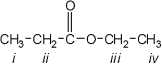
(Multiple Choice)
4.8/5 (84)
(84) Which of the following is true for pair of enantiotopic protons?
1)They will appear at the same chemical shift in an achiral (i.e., nonchiral environment)
2)They will appear at the same chemical shifts in a chiral environment
(Multiple Choice)
4.7/5 (78)
(78) 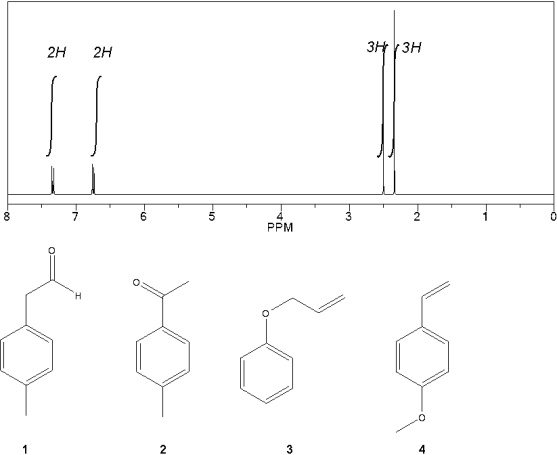
Which C4H9Br compound gives a triplet at approximately 3.5 ppm in the 1H NMR spectrum? 
(Multiple Choice)
4.9/5 (77)
(77) Consider the compound shown below. 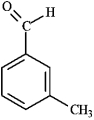 The above compound would produce a signal further downfield in a 13C NMR spectrum than

The above compound would produce a signal further downfield in a 13C NMR spectrum than (True/False)
4.8/5 (84)
(84) Which of the following combinations of peaks appears in the 1H NMR spectrum of 1,2-dimethyoxyethane, CH3OCH2CH2OCH3?
(Multiple Choice)
5.0/5 (95)
(95) What is the hydrogen deficiency index for a compound with a molecular formula of C6H11N?
(Multiple Choice)
4.9/5 (65)
(65) For each of the compounds below tell how many signals you would expect the molecule to have in its normal, broadband hydrogen-decoupled 13C NMR spectra. Enter the numerical value in the blank provided to the left of the structure.
-_______ 
(Short Answer)
4.9/5 (66)
(66) Which of the following compounds gives a 1H NMR spectrum consisting of only a singlet, triplet and quintet?
(Multiple Choice)
4.8/5 (69)
(69) Which C6H12O2 compound gives the following 1H NMR spectrum? 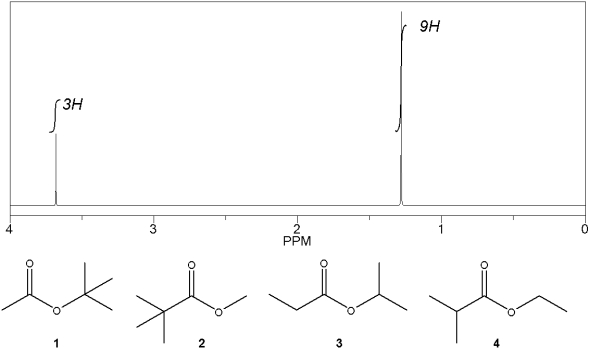
(Multiple Choice)
4.9/5 (73)
(73) How many signals appear in the proton-decoupled 13C NMR spectrum of 1,4-dibromobenzene?
(Multiple Choice)
4.8/5 (82)
(82) What is the hydrogen deficiency index for a compound with a molecular formula of C10H16O2?
(Multiple Choice)
4.9/5 (91)
(91) Which of the protons in the following molecule appear furthest downfield in the 1H NMR spectrum? 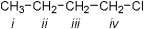
(Multiple Choice)
4.8/5 (94)
(94) Which of the following combinations of peaks appears in the 1H NMR spectrum of 1,4-dimethyoxyethane, CH3OCH2CH2CH2CH2OCH3?
(Multiple Choice)
4.9/5 (85)
(85) Identify the compound (C8H10O2) that gives the following 1H NMR spectrum. 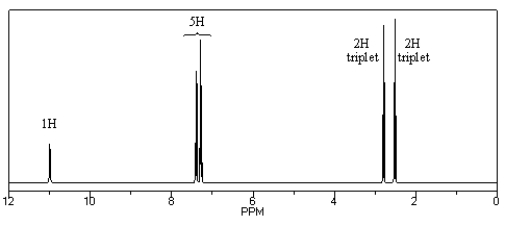
(Essay)
4.9/5 (92)
(92) For each of the compounds below tell how many signals you would expect the molecule to have in its normal, broadband hydrogen-decoupled 13C NMR spectra. Enter the numerical value in the blank provided to the left of the structure.
-_______ 
(Short Answer)
4.9/5 (87)
(87) Which of the following combinations of peaks appears in the 1H NMR spectrum of 2-methylpropane?
(Multiple Choice)
4.9/5 (90)
(90) How many sets of equivalent protons are there in 2-methylhexane?
(Multiple Choice)
4.9/5 (83)
(83) What is the hydrogen deficiency index for a compound with a molecular formula of C6H6Br2?
(Multiple Choice)
4.8/5 (90)
(90) 
Filters
- Essay(0)
- Multiple Choice(0)
- Short Answer(0)
- True False(0)
- Matching(0)