



 Chat with AI
Exam 11: Ethers, Epoxides, and Sulfides

Exam 1: Covalent Bonding and Shapes of Molecules115 Questions
Exam 2: Alkanes and Cycloalkanes95 Questions
Exam 3: Stereoisomerism and Chirality93 Questions
Exam 4: Acids and Bases94 Questions
Exam 5: Alkenes: Bonding, Nomenclature, and Properties86 Questions
Exam 6: Reactions of Alkenes98 Questions
Exam 7: Alkynes100 Questions
Exam 8: Haloalkanes, Halogenation, and Radical Reactions76 Questions
Exam 9: Nucleophilic Substitution and Beta-Elimination111 Questions
Exam 10: Alcohols98 Questions
Exam 11: Ethers, Epoxides, and Sulfides93 Questions
Exam 12: Infrared Spectroscopy67 Questions
Exam 13: Nuclear Magnetic Resonance Spectroscopy102 Questions
Exam 14: Mass Spectrometry65 Questions
Exam 15: An Introduction to Organometallic Compounds66 Questions
Exam 16: Aldehydes and Ketones119 Questions
Exam 17: Carboxylic Acids71 Questions
Exam 18: Functional Derivatives of Carboxylic Acids112 Questions
Exam 19: Enolate Anions and Enamines93 Questions
Exam 20: Dienes, Conjugated Systems, and Pericyclic Reactions69 Questions
Exam 21: Benzene and the Concept of Aromaticity85 Questions
Exam 22: Reactions of Benzene and Its Derivatives107 Questions
Exam 23: Amines88 Questions
Exam 24: Catalytic Carbon-Carbon Bond Formation77 Questions
Exam 25: Carbohydrates60 Questions
Exam 26: Lipids54 Questions
Exam 27: Amino Acids and Proteins70 Questions
Exam 28: Nucleic Acids52 Questions
Exam 29: Organic Polymer Chemistry60 Questions
Select questions type


What is the IUPAC name of the following compound? 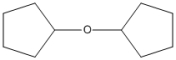

Free
(Short Answer)
4.9/5  (78)
(78) Correct Answer: Verified
dicyclopentyl ether (oxadicyclopentane)
Which of the following statements are true?
1)ethanol is more soluble in water than dimethyl ether
2)ethanol has a higher boiling point than dimethyl ether
3)ethanol has the same molecular weight as dimethyl ether
Free
(Multiple Choice)
4.9/5 (69)
(69) Correct Answer:Verified
VerifiedD
What is the major organic product obtained from the following reaction? 
Free
(Essay)
4.8/5 (87)
(87) Correct Answer:Verified
Verified
The correct name for the following compound is cyclopropyl ethyl thiol. 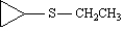
(True/False)
4.9/5 (95)
(95) The first step in the following conversion should be the addition of (CH3)3SiCl, (CH3CH2)3N. 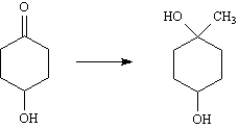
(True/False)
4.9/5 (97)
(97) What is the major organic product obtained from the following reaction? 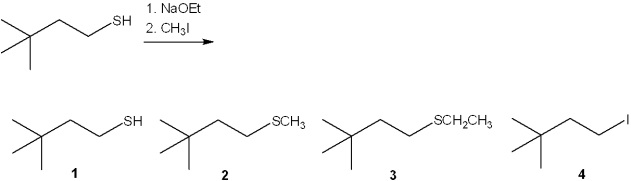
(Multiple Choice)
4.9/5 (78)
(78) Provide the structures of the sodium alkoxide and the alkyl iodide that would be the best starting materials for the preparation of the following compound by a Williamson ether synthesis. 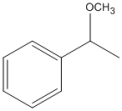
(Essay)
5.0/5 (80)
(80) What is the major organic product obtained from the following reaction? 
(Multiple Choice)
4.9/5 (89)
(89) What is the major organic product obtained from the following reaction? 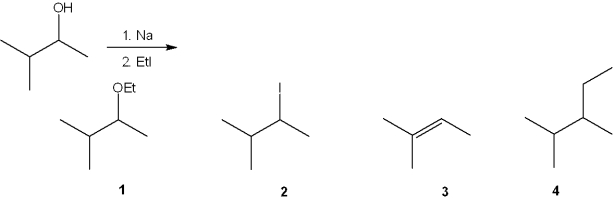
(Multiple Choice)
4.9/5 (95)
(95) 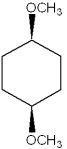
Consider the cleavage of the following ether with H2O and H+.  Cleavage of the following ether will be a slower process.
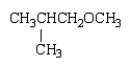
Cleavage of the following ether will be a slower process. (True/False)
4.9/5 (69)
(69) What is the major organic product obtained from the following reaction? 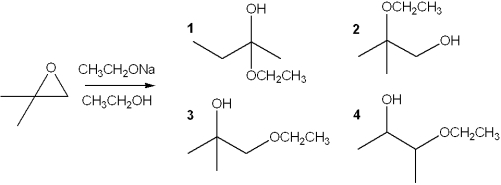
(Multiple Choice)
4.9/5 (85)
(85) The following reaction would be best accomplished by the addition of _______________. (Assume that CH3CO2H is also produced.) 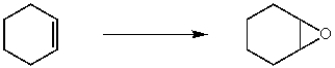
(Essay)
4.8/5 (85)
(85) What would be the best choice of reagent(s) to perform the following transformation? 
(Multiple Choice)
4.9/5 (77)
(77) Which of the following reactions provides anisole (PhOCH3) in a high yield?
(Multiple Choice)
4.8/5 (82)
(82) What is the major organic product obtained from the following sequence of reactions? 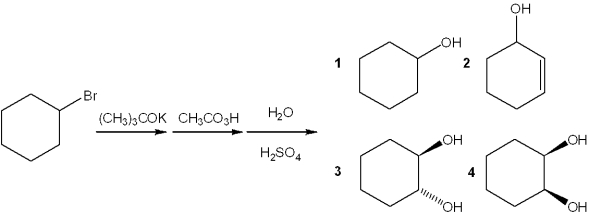
(Multiple Choice)
4.8/5 (92)
(92) What is the major organic product obtained from the following reaction? 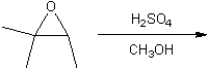
(Essay)
4.7/5 (76)
(76) 
What is the major organic product obtained from the following sequence of reactions? 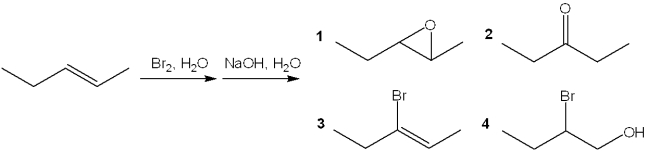
(Multiple Choice)
4.9/5 (76)
(76) What is the best choice of reagent(s) to perform the following transformation? 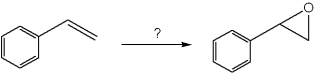
(Multiple Choice)
4.9/5 (95)
(95) 
Filters
- Essay(0)
- Multiple Choice(0)
- Short Answer(0)
- True False(0)
- Matching(0)