Exam 6: Organic Chemistry

arrow
  • Select Tags
search iconSearch Question
flashcardsStudy Flashcards
  • Select Tags

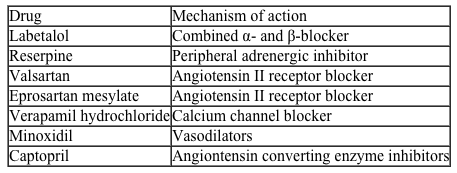
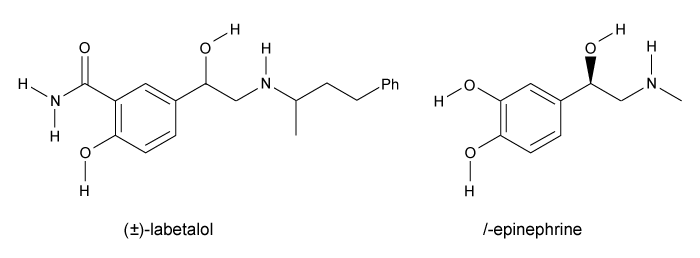
Passage High blood pressure, or hypertension, is a prevalent condition in the United States.  One in three adults has hypertension, and approximately 20% do not know that they have it.  If left untreated, high blood pressure can lead to major health issues, including stroke, heart attack, and kidney disease or failure.  A number of drugs can help control hypertension, including those shown in Table 1.  These drugs can be classified into different groups based on their mechanism of action.Table 1  Drugs Used to Treat High Blood Pressure Passage High blood pressure, or hypertension, is a prevalent condition in the United States.  One in three adults has hypertension, and approximately 20% do not know that they have it.  If left untreated, high blood pressure can lead to major health issues, including stroke, heart attack, and kidney disease or failure.  A number of drugs can help control hypertension, including those shown in Table 1.  These drugs can be classified into different groups based on their mechanism of action.<strong>Table 1</strong>  Drugs Used to Treat High Blood Pressure    Labetalol (Figure 1) exists as four stereoisomers and is administered as a mixture of all four.  This drug can be classified as a pseudohybrid drug because two of the isomers, (R,R) and (S,R), exhibit biological activity; the other two isomers, (S,S) and (R,S), are not active.  The (R,R) isomer acts as a nonselective β-adrenergic receptor blocker, and the (S,R) isomer acts as a selective α-adrenergic receptor blocker.    <strong>Figure 1</strong>  Structure of (±)-labetalol and l-epinephrinel-epinephrine (Figure 1) is the agonist of the α- and β-adrenergic receptors.  The structural motifs that allow l-epinephrine to bind to the adrenergic receptors include an amine separated from an aromatic ring by two carbon units, a hydroxyl group at a chiral center beta to the amine, and two hydroxyl groups on the aromatic ring in the meta and para positions.  With a few structural modifications, the agonist l-epinephrine can be converted into the antagonist labetalol.  Substitution of a hydroxyl on the aromatic ring with an amide group and extension of the methyl group on the amine transforms l-epinephrine into labetalol.  These substitutions keep a majority of the structural motifs necessary for labetalol to mimic l-epinephrine and bind to the adrenergic receptors. -Would (R,R)- and (S,S)-labetalol be expected to rotate plane-polarized light in the same direction? Labetalol (Figure 1) exists as four stereoisomers and is administered as a mixture of all four.  This drug can be classified as a pseudohybrid drug because two of the isomers, (R,R) and (S,R), exhibit biological activity; the other two isomers, (S,S) and (R,S), are not active.  The (R,R) isomer acts as a nonselective β-adrenergic receptor blocker, and the (S,R) isomer acts as a selective α-adrenergic receptor blocker. Passage High blood pressure, or hypertension, is a prevalent condition in the United States.  One in three adults has hypertension, and approximately 20% do not know that they have it.  If left untreated, high blood pressure can lead to major health issues, including stroke, heart attack, and kidney disease or failure.  A number of drugs can help control hypertension, including those shown in Table 1.  These drugs can be classified into different groups based on their mechanism of action.<strong>Table 1</strong>  Drugs Used to Treat High Blood Pressure    Labetalol (Figure 1) exists as four stereoisomers and is administered as a mixture of all four.  This drug can be classified as a pseudohybrid drug because two of the isomers, (R,R) and (S,R), exhibit biological activity; the other two isomers, (S,S) and (R,S), are not active.  The (R,R) isomer acts as a nonselective β-adrenergic receptor blocker, and the (S,R) isomer acts as a selective α-adrenergic receptor blocker.    <strong>Figure 1</strong>  Structure of (±)-labetalol and l-epinephrinel-epinephrine (Figure 1) is the agonist of the α- and β-adrenergic receptors.  The structural motifs that allow l-epinephrine to bind to the adrenergic receptors include an amine separated from an aromatic ring by two carbon units, a hydroxyl group at a chiral center beta to the amine, and two hydroxyl groups on the aromatic ring in the meta and para positions.  With a few structural modifications, the agonist l-epinephrine can be converted into the antagonist labetalol.  Substitution of a hydroxyl on the aromatic ring with an amide group and extension of the methyl group on the amine transforms l-epinephrine into labetalol.  These substitutions keep a majority of the structural motifs necessary for labetalol to mimic l-epinephrine and bind to the adrenergic receptors. -Would (R,R)- and (S,S)-labetalol be expected to rotate plane-polarized light in the same direction? Figure 1  Structure of (±)-labetalol and l-epinephrinel-epinephrine (Figure 1) is the agonist of the α- and β-adrenergic receptors.  The structural motifs that allow l-epinephrine to bind to the adrenergic receptors include an amine separated from an aromatic ring by two carbon units, a hydroxyl group at a chiral center beta to the amine, and two hydroxyl groups on the aromatic ring in the meta and para positions.  With a few structural modifications, the agonist l-epinephrine can be converted into the antagonist labetalol.  Substitution of a hydroxyl on the aromatic ring with an amide group and extension of the methyl group on the amine transforms l-epinephrine into labetalol.  These substitutions keep a majority of the structural motifs necessary for labetalol to mimic l-epinephrine and bind to the adrenergic receptors. -Would (R,R)- and (S,S)-labetalol be expected to rotate plane-polarized light in the same direction?
(Multiple Choice)
4.9/5
(88)

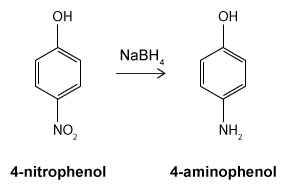
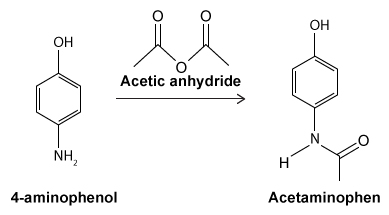
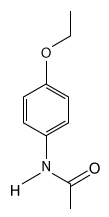
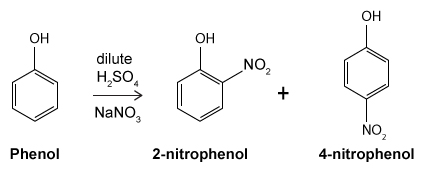
Passage The drug paracetamol, also known as acetaminophen, is used to relieve pain and fever, and is a metabolite of the antipyretic drug phenacetin (Figure 1).  These two drugs have similar medicinal properties, but phenacetin has been shown to be carcinogenic and cause kidney damage.  Acetaminophen is a safer alternative to phenacetin when taken in therapeutic doses. Passage The drug paracetamol, also known as acetaminophen, is used to relieve pain and fever, and is a metabolite of the antipyretic drug phenacetin (Figure 1).  These two drugs have similar medicinal properties, but phenacetin has been shown to be carcinogenic and cause kidney damage.  Acetaminophen is a safer alternative to phenacetin when taken in therapeutic doses.    <strong>Figure 1</strong>  Structure of phenacetinA student synthesizes acetaminophen in a laboratory from phenol according to the reactions shown.  The synthesis begins with the nitration of phenol by sodium nitrate (NaNO<sub>3</sub>) to produce the mixture of the isomers 2-nitrophenol and 4-nitrophenol (Reaction 1).  These isomers can be easily separated by steam distillation to isolate the desired product, 4-nitrophenol.  Reduction of the nitro group with sodium borohydride (NaBH<sub>4</sub>) (Reaction 2) is followed by acetylation of the amine with acetic anhydride (Reaction 3) to afford the final product, acetaminophen.    <strong>Reaction 1</strong>    <strong>Reaction 2</strong>    <strong>Reaction 3</strong> -During distillation, superheating of the reaction mixture should be avoided.  Which of the following would prevent superheating? Figure 1  Structure of phenacetinA student synthesizes acetaminophen in a laboratory from phenol according to the reactions shown.  The synthesis begins with the nitration of phenol by sodium nitrate (NaNO3) to produce the mixture of the isomers 2-nitrophenol and 4-nitrophenol (Reaction 1).  These isomers can be easily separated by steam distillation to isolate the desired product, 4-nitrophenol.  Reduction of the nitro group with sodium borohydride (NaBH4) (Reaction 2) is followed by acetylation of the amine with acetic anhydride (Reaction 3) to afford the final product, acetaminophen. Passage The drug paracetamol, also known as acetaminophen, is used to relieve pain and fever, and is a metabolite of the antipyretic drug phenacetin (Figure 1).  These two drugs have similar medicinal properties, but phenacetin has been shown to be carcinogenic and cause kidney damage.  Acetaminophen is a safer alternative to phenacetin when taken in therapeutic doses.    <strong>Figure 1</strong>  Structure of phenacetinA student synthesizes acetaminophen in a laboratory from phenol according to the reactions shown.  The synthesis begins with the nitration of phenol by sodium nitrate (NaNO<sub>3</sub>) to produce the mixture of the isomers 2-nitrophenol and 4-nitrophenol (Reaction 1).  These isomers can be easily separated by steam distillation to isolate the desired product, 4-nitrophenol.  Reduction of the nitro group with sodium borohydride (NaBH<sub>4</sub>) (Reaction 2) is followed by acetylation of the amine with acetic anhydride (Reaction 3) to afford the final product, acetaminophen.    <strong>Reaction 1</strong>    <strong>Reaction 2</strong>    <strong>Reaction 3</strong> -During distillation, superheating of the reaction mixture should be avoided.  Which of the following would prevent superheating? Reaction 1 Passage The drug paracetamol, also known as acetaminophen, is used to relieve pain and fever, and is a metabolite of the antipyretic drug phenacetin (Figure 1).  These two drugs have similar medicinal properties, but phenacetin has been shown to be carcinogenic and cause kidney damage.  Acetaminophen is a safer alternative to phenacetin when taken in therapeutic doses.    <strong>Figure 1</strong>  Structure of phenacetinA student synthesizes acetaminophen in a laboratory from phenol according to the reactions shown.  The synthesis begins with the nitration of phenol by sodium nitrate (NaNO<sub>3</sub>) to produce the mixture of the isomers 2-nitrophenol and 4-nitrophenol (Reaction 1).  These isomers can be easily separated by steam distillation to isolate the desired product, 4-nitrophenol.  Reduction of the nitro group with sodium borohydride (NaBH<sub>4</sub>) (Reaction 2) is followed by acetylation of the amine with acetic anhydride (Reaction 3) to afford the final product, acetaminophen.    <strong>Reaction 1</strong>    <strong>Reaction 2</strong>    <strong>Reaction 3</strong> -During distillation, superheating of the reaction mixture should be avoided.  Which of the following would prevent superheating? Reaction 2 Passage The drug paracetamol, also known as acetaminophen, is used to relieve pain and fever, and is a metabolite of the antipyretic drug phenacetin (Figure 1).  These two drugs have similar medicinal properties, but phenacetin has been shown to be carcinogenic and cause kidney damage.  Acetaminophen is a safer alternative to phenacetin when taken in therapeutic doses.    <strong>Figure 1</strong>  Structure of phenacetinA student synthesizes acetaminophen in a laboratory from phenol according to the reactions shown.  The synthesis begins with the nitration of phenol by sodium nitrate (NaNO<sub>3</sub>) to produce the mixture of the isomers 2-nitrophenol and 4-nitrophenol (Reaction 1).  These isomers can be easily separated by steam distillation to isolate the desired product, 4-nitrophenol.  Reduction of the nitro group with sodium borohydride (NaBH<sub>4</sub>) (Reaction 2) is followed by acetylation of the amine with acetic anhydride (Reaction 3) to afford the final product, acetaminophen.    <strong>Reaction 1</strong>    <strong>Reaction 2</strong>    <strong>Reaction 3</strong> -During distillation, superheating of the reaction mixture should be avoided.  Which of the following would prevent superheating? Reaction 3 -During distillation, superheating of the reaction mixture should be avoided.  Which of the following would prevent superheating?
(Multiple Choice)
4.9/5
(83)

Passage The drug paracetamol, also known as acetaminophen, is used to relieve pain and fever, and is a metabolite of the antipyretic drug phenacetin (Figure 1).  These two drugs have similar medicinal properties, but phenacetin has been shown to be carcinogenic and cause kidney damage.  Acetaminophen is a safer alternative to phenacetin when taken in therapeutic doses. Passage The drug paracetamol, also known as acetaminophen, is used to relieve pain and fever, and is a metabolite of the antipyretic drug phenacetin (Figure 1).  These two drugs have similar medicinal properties, but phenacetin has been shown to be carcinogenic and cause kidney damage.  Acetaminophen is a safer alternative to phenacetin when taken in therapeutic doses.    <strong>Figure 1</strong>  Structure of phenacetinA student synthesizes acetaminophen in a laboratory from phenol according to the reactions shown.  The synthesis begins with the nitration of phenol by sodium nitrate (NaNO<sub>3</sub>) to produce the mixture of the isomers 2-nitrophenol and 4-nitrophenol (Reaction 1).  These isomers can be easily separated by steam distillation to isolate the desired product, 4-nitrophenol.  Reduction of the nitro group with sodium borohydride (NaBH<sub>4</sub>) (Reaction 2) is followed by acetylation of the amine with acetic anhydride (Reaction 3) to afford the final product, acetaminophen.    <strong>Reaction 1</strong>    <strong>Reaction 2</strong>    <strong>Reaction 3</strong> -Which technique could monitor the formation of 4-aminophenol by excitation of electrons with high-energy photons? Figure 1  Structure of phenacetinA student synthesizes acetaminophen in a laboratory from phenol according to the reactions shown.  The synthesis begins with the nitration of phenol by sodium nitrate (NaNO3) to produce the mixture of the isomers 2-nitrophenol and 4-nitrophenol (Reaction 1).  These isomers can be easily separated by steam distillation to isolate the desired product, 4-nitrophenol.  Reduction of the nitro group with sodium borohydride (NaBH4) (Reaction 2) is followed by acetylation of the amine with acetic anhydride (Reaction 3) to afford the final product, acetaminophen. Passage The drug paracetamol, also known as acetaminophen, is used to relieve pain and fever, and is a metabolite of the antipyretic drug phenacetin (Figure 1).  These two drugs have similar medicinal properties, but phenacetin has been shown to be carcinogenic and cause kidney damage.  Acetaminophen is a safer alternative to phenacetin when taken in therapeutic doses.    <strong>Figure 1</strong>  Structure of phenacetinA student synthesizes acetaminophen in a laboratory from phenol according to the reactions shown.  The synthesis begins with the nitration of phenol by sodium nitrate (NaNO<sub>3</sub>) to produce the mixture of the isomers 2-nitrophenol and 4-nitrophenol (Reaction 1).  These isomers can be easily separated by steam distillation to isolate the desired product, 4-nitrophenol.  Reduction of the nitro group with sodium borohydride (NaBH<sub>4</sub>) (Reaction 2) is followed by acetylation of the amine with acetic anhydride (Reaction 3) to afford the final product, acetaminophen.    <strong>Reaction 1</strong>    <strong>Reaction 2</strong>    <strong>Reaction 3</strong> -Which technique could monitor the formation of 4-aminophenol by excitation of electrons with high-energy photons? Reaction 1 Passage The drug paracetamol, also known as acetaminophen, is used to relieve pain and fever, and is a metabolite of the antipyretic drug phenacetin (Figure 1).  These two drugs have similar medicinal properties, but phenacetin has been shown to be carcinogenic and cause kidney damage.  Acetaminophen is a safer alternative to phenacetin when taken in therapeutic doses.    <strong>Figure 1</strong>  Structure of phenacetinA student synthesizes acetaminophen in a laboratory from phenol according to the reactions shown.  The synthesis begins with the nitration of phenol by sodium nitrate (NaNO<sub>3</sub>) to produce the mixture of the isomers 2-nitrophenol and 4-nitrophenol (Reaction 1).  These isomers can be easily separated by steam distillation to isolate the desired product, 4-nitrophenol.  Reduction of the nitro group with sodium borohydride (NaBH<sub>4</sub>) (Reaction 2) is followed by acetylation of the amine with acetic anhydride (Reaction 3) to afford the final product, acetaminophen.    <strong>Reaction 1</strong>    <strong>Reaction 2</strong>    <strong>Reaction 3</strong> -Which technique could monitor the formation of 4-aminophenol by excitation of electrons with high-energy photons? Reaction 2 Passage The drug paracetamol, also known as acetaminophen, is used to relieve pain and fever, and is a metabolite of the antipyretic drug phenacetin (Figure 1).  These two drugs have similar medicinal properties, but phenacetin has been shown to be carcinogenic and cause kidney damage.  Acetaminophen is a safer alternative to phenacetin when taken in therapeutic doses.    <strong>Figure 1</strong>  Structure of phenacetinA student synthesizes acetaminophen in a laboratory from phenol according to the reactions shown.  The synthesis begins with the nitration of phenol by sodium nitrate (NaNO<sub>3</sub>) to produce the mixture of the isomers 2-nitrophenol and 4-nitrophenol (Reaction 1).  These isomers can be easily separated by steam distillation to isolate the desired product, 4-nitrophenol.  Reduction of the nitro group with sodium borohydride (NaBH<sub>4</sub>) (Reaction 2) is followed by acetylation of the amine with acetic anhydride (Reaction 3) to afford the final product, acetaminophen.    <strong>Reaction 1</strong>    <strong>Reaction 2</strong>    <strong>Reaction 3</strong> -Which technique could monitor the formation of 4-aminophenol by excitation of electrons with high-energy photons? Reaction 3 -Which technique could monitor the formation of 4-aminophenol by excitation of electrons with high-energy photons?

(Multiple Choice)
5.0/5
(69)

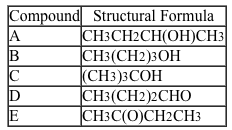
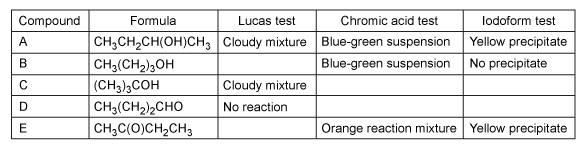
Passage Students used three classification tests to study the reactivity of alcohol, aldehyde, and ketone functional groups in organic compounds.  The organic compounds provided to the students are given in Table 1.Table 1  Organic Compounds Tested Passage Students used three classification tests to study the reactivity of alcohol, aldehyde, and ketone functional groups in organic compounds.  The organic compounds provided to the students are given in Table 1.<strong>Table 1</strong>  Organic Compounds Tested    First, the students performed the Lucas test by mixing a few drops of each compound with 2 mL of the Lucas reagent (ZnCl<sub>2</sub> and HCl).  This reagent is used to test for secondary and tertiary alcohols.  A positive test result is indicated by a cloudy reaction mixture upon addition of the Lucas reagent due to the formation of an insoluble compound by an S<sub>N</sub>1 reaction with a secondary or tertiary alcohol (Reaction 1).    <strong>Reaction 1</strong>Next, a test for alcohols and aldehydes was performed by the addition of a drop of chromic acid reagent (CrO<sub>3</sub> dissolved in aqueous H<sub>2</sub>SO<sub>4</sub>) into samples of the organic compounds.  The disappearance of the orange color from chromic acid and formation of a blue-green suspension is indicative of a positive result for this test.  Compound A was found to be an example of a positive result, as shown in Reaction 2.    <strong>Reaction 2</strong>Finally, samples of the compounds were also dissolved in water, followed by the addition of NaOH and iodine.  This test is known as the iodoform test, which is used to identify methyl ketones and secondary alcohols.  A positive result is indicated by the formation of iodoform (CHI<sub>3</sub>), a yellow precipitate (Reaction 3).    3</strong><strong>Table 2</strong>  Selected Observations from the Classification Tests    -If the chromic acid reagent is added to Compound C, no reaction occurs because: First, the students performed the Lucas test by mixing a few drops of each compound with 2 mL of the Lucas reagent (ZnCl2 and HCl).  This reagent is used to test for secondary and tertiary alcohols.  A positive test result is indicated by a cloudy reaction mixture upon addition of the Lucas reagent due to the formation of an insoluble compound by an SN1 reaction with a secondary or tertiary alcohol (Reaction 1). Passage Students used three classification tests to study the reactivity of alcohol, aldehyde, and ketone functional groups in organic compounds.  The organic compounds provided to the students are given in Table 1.<strong>Table 1</strong>  Organic Compounds Tested    First, the students performed the Lucas test by mixing a few drops of each compound with 2 mL of the Lucas reagent (ZnCl<sub>2</sub> and HCl).  This reagent is used to test for secondary and tertiary alcohols.  A positive test result is indicated by a cloudy reaction mixture upon addition of the Lucas reagent due to the formation of an insoluble compound by an S<sub>N</sub>1 reaction with a secondary or tertiary alcohol (Reaction 1).    <strong>Reaction 1</strong>Next, a test for alcohols and aldehydes was performed by the addition of a drop of chromic acid reagent (CrO<sub>3</sub> dissolved in aqueous H<sub>2</sub>SO<sub>4</sub>) into samples of the organic compounds.  The disappearance of the orange color from chromic acid and formation of a blue-green suspension is indicative of a positive result for this test.  Compound A was found to be an example of a positive result, as shown in Reaction 2.    <strong>Reaction 2</strong>Finally, samples of the compounds were also dissolved in water, followed by the addition of NaOH and iodine.  This test is known as the iodoform test, which is used to identify methyl ketones and secondary alcohols.  A positive result is indicated by the formation of iodoform (CHI<sub>3</sub>), a yellow precipitate (Reaction 3).    3</strong><strong>Table 2</strong>  Selected Observations from the Classification Tests    -If the chromic acid reagent is added to Compound C, no reaction occurs because: Reaction 1Next, a test for alcohols and aldehydes was performed by the addition of a drop of chromic acid reagent (CrO3 dissolved in aqueous H2SO4) into samples of the organic compounds.  The disappearance of the orange color from chromic acid and formation of a blue-green suspension is indicative of a positive result for this test.  Compound A was found to be an example of a positive result, as shown in Reaction 2. Passage Students used three classification tests to study the reactivity of alcohol, aldehyde, and ketone functional groups in organic compounds.  The organic compounds provided to the students are given in Table 1.<strong>Table 1</strong>  Organic Compounds Tested    First, the students performed the Lucas test by mixing a few drops of each compound with 2 mL of the Lucas reagent (ZnCl<sub>2</sub> and HCl).  This reagent is used to test for secondary and tertiary alcohols.  A positive test result is indicated by a cloudy reaction mixture upon addition of the Lucas reagent due to the formation of an insoluble compound by an S<sub>N</sub>1 reaction with a secondary or tertiary alcohol (Reaction 1).    <strong>Reaction 1</strong>Next, a test for alcohols and aldehydes was performed by the addition of a drop of chromic acid reagent (CrO<sub>3</sub> dissolved in aqueous H<sub>2</sub>SO<sub>4</sub>) into samples of the organic compounds.  The disappearance of the orange color from chromic acid and formation of a blue-green suspension is indicative of a positive result for this test.  Compound A was found to be an example of a positive result, as shown in Reaction 2.    <strong>Reaction 2</strong>Finally, samples of the compounds were also dissolved in water, followed by the addition of NaOH and iodine.  This test is known as the iodoform test, which is used to identify methyl ketones and secondary alcohols.  A positive result is indicated by the formation of iodoform (CHI<sub>3</sub>), a yellow precipitate (Reaction 3).    3</strong><strong>Table 2</strong>  Selected Observations from the Classification Tests    -If the chromic acid reagent is added to Compound C, no reaction occurs because: Reaction 2Finally, samples of the compounds were also dissolved in water, followed by the addition of NaOH and iodine.  This test is known as the iodoform test, which is used to identify methyl ketones and secondary alcohols.  A positive result is indicated by the formation of iodoform (CHI3), a yellow precipitate (Reaction 3). Passage Students used three classification tests to study the reactivity of alcohol, aldehyde, and ketone functional groups in organic compounds.  The organic compounds provided to the students are given in Table 1.<strong>Table 1</strong>  Organic Compounds Tested    First, the students performed the Lucas test by mixing a few drops of each compound with 2 mL of the Lucas reagent (ZnCl<sub>2</sub> and HCl).  This reagent is used to test for secondary and tertiary alcohols.  A positive test result is indicated by a cloudy reaction mixture upon addition of the Lucas reagent due to the formation of an insoluble compound by an S<sub>N</sub>1 reaction with a secondary or tertiary alcohol (Reaction 1).    <strong>Reaction 1</strong>Next, a test for alcohols and aldehydes was performed by the addition of a drop of chromic acid reagent (CrO<sub>3</sub> dissolved in aqueous H<sub>2</sub>SO<sub>4</sub>) into samples of the organic compounds.  The disappearance of the orange color from chromic acid and formation of a blue-green suspension is indicative of a positive result for this test.  Compound A was found to be an example of a positive result, as shown in Reaction 2.    <strong>Reaction 2</strong>Finally, samples of the compounds were also dissolved in water, followed by the addition of NaOH and iodine.  This test is known as the iodoform test, which is used to identify methyl ketones and secondary alcohols.  A positive result is indicated by the formation of iodoform (CHI<sub>3</sub>), a yellow precipitate (Reaction 3).    3</strong><strong>Table 2</strong>  Selected Observations from the Classification Tests    -If the chromic acid reagent is added to Compound C, no reaction occurs because: 3Table 2  Selected Observations from the Classification Tests Passage Students used three classification tests to study the reactivity of alcohol, aldehyde, and ketone functional groups in organic compounds.  The organic compounds provided to the students are given in Table 1.<strong>Table 1</strong>  Organic Compounds Tested    First, the students performed the Lucas test by mixing a few drops of each compound with 2 mL of the Lucas reagent (ZnCl<sub>2</sub> and HCl).  This reagent is used to test for secondary and tertiary alcohols.  A positive test result is indicated by a cloudy reaction mixture upon addition of the Lucas reagent due to the formation of an insoluble compound by an S<sub>N</sub>1 reaction with a secondary or tertiary alcohol (Reaction 1).    <strong>Reaction 1</strong>Next, a test for alcohols and aldehydes was performed by the addition of a drop of chromic acid reagent (CrO<sub>3</sub> dissolved in aqueous H<sub>2</sub>SO<sub>4</sub>) into samples of the organic compounds.  The disappearance of the orange color from chromic acid and formation of a blue-green suspension is indicative of a positive result for this test.  Compound A was found to be an example of a positive result, as shown in Reaction 2.    <strong>Reaction 2</strong>Finally, samples of the compounds were also dissolved in water, followed by the addition of NaOH and iodine.  This test is known as the iodoform test, which is used to identify methyl ketones and secondary alcohols.  A positive result is indicated by the formation of iodoform (CHI<sub>3</sub>), a yellow precipitate (Reaction 3).    3</strong><strong>Table 2</strong>  Selected Observations from the Classification Tests    -If the chromic acid reagent is added to Compound C, no reaction occurs because: -If the chromic acid reagent is added to Compound C, no reaction occurs because:



(Multiple Choice)
4.9/5
(80)

Which of the following compounds is most likely to be formed from an elimination reaction that produces a Z alkene?

(Multiple Choice)
5.0/5
(97)

If the compound shown below is the product of a Fischer esterification, which of the following compounds is the starting reagent with oxygen-18 isotopic substitution for this reaction? If the compound shown below is the product of a Fischer esterification, which of the following compounds is the starting reagent with oxygen-18 isotopic substitution for this reaction?
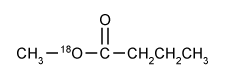
(Multiple Choice)
4.8/5
(99)

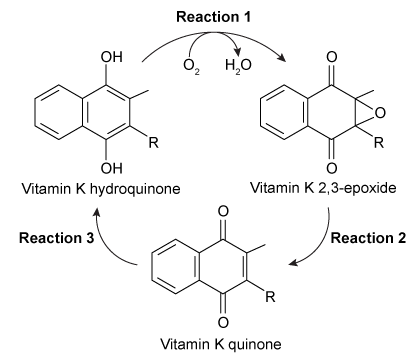
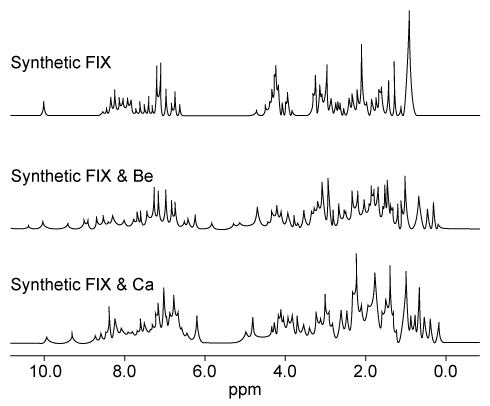
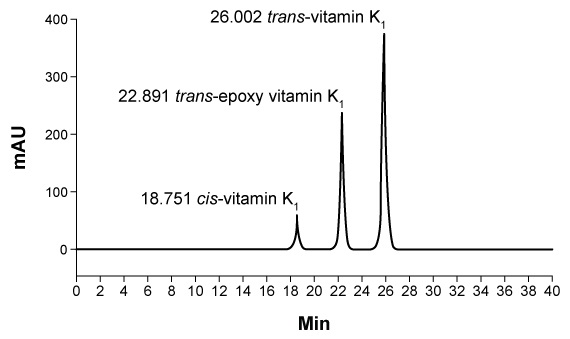
Passage Hemophilia B is a blood clotting disorder caused by a factor IX (FIX) deficiency.  FIX is a 57-kDa, vitamin K-dependent protease that activates factor X, leading to the conversion of prothrombin to thrombin for propagation of the clotting cascade.  Activated FIX has two major domains:  a γ-carboxyglutamic acid domain and a serine protease domain.  The γ-carboxyglutamic acid domain participates in the oxidation of vitamin K using metallic cofactors, as shown in Figure 1. Passage Hemophilia B is a blood clotting disorder caused by a factor IX (FIX) deficiency.  FIX is a 57-kDa, vitamin K-dependent protease that activates factor X, leading to the conversion of prothrombin to thrombin for propagation of the clotting cascade.  Activated FIX has two major domains:  a γ-carboxyglutamic acid domain and a serine protease domain.  The γ-carboxyglutamic acid domain participates in the oxidation of vitamin K using metallic cofactors, as shown in Figure 1.    <strong>Figure 1</strong>  Oxidation of vitamin KTo further analyze the γ-carboxyglutamic acid-rich domain of FIX, an analogous synthetic peptide composed of matching residues 1 through 49 on FIX was evaluated by proton nuclear magnetic resonance (NMR) spectroscopy.  Analysis of the proton chemical shift before the addition of metal ions suggested that the synthetic peptide contained normal structural elements.  Large chemical shifts were observed after the addition of calcium and beryllium, as shown in Figure 2.    <strong>Figure 2</strong>  Results of NMR spectroscopy (tetramethylsilane [TMS] peak has been removed)The synthetic analog was then placed in solution with vitamin K hydroquinone and cofactors required for vitamin K oxidation.  The oxidation products of vitamin K in Reactions 1 and 2 were collected and evaluated under high-performance liquid chromatography (HPLC) using hexane as the mobile phase.  Analysis demonstrated cis and trans isomers of vitamin K<sub>1</sub> and a trans-epoxy vitamin K<sub>1</sub>, as shown in Figure 3.    <strong>Figure 3</strong>  Results of HPLC separation Adapted from Freedman SJ, Furie BC, Furie B, Baleja JD. Structure of the metal-free gamma-carboxyglutamic acid-rich membrane binding region of factor IX by two-dimensional NMR spectroscopy. J Biol Chem. 1995. -In the oxidation of vitamin K hydroquinone to vitamin K 2,3-epoxide, at least one carbonyl group is formed.  Compared to the original carbon-oxygen bond, the newly formed bond is characterized by: Figure 1  Oxidation of vitamin KTo further analyze the γ-carboxyglutamic acid-rich domain of FIX, an analogous synthetic peptide composed of matching residues 1 through 49 on FIX was evaluated by proton nuclear magnetic resonance (NMR) spectroscopy.  Analysis of the proton chemical shift before the addition of metal ions suggested that the synthetic peptide contained normal structural elements.  Large chemical shifts were observed after the addition of calcium and beryllium, as shown in Figure 2. Passage Hemophilia B is a blood clotting disorder caused by a factor IX (FIX) deficiency.  FIX is a 57-kDa, vitamin K-dependent protease that activates factor X, leading to the conversion of prothrombin to thrombin for propagation of the clotting cascade.  Activated FIX has two major domains:  a γ-carboxyglutamic acid domain and a serine protease domain.  The γ-carboxyglutamic acid domain participates in the oxidation of vitamin K using metallic cofactors, as shown in Figure 1.    <strong>Figure 1</strong>  Oxidation of vitamin KTo further analyze the γ-carboxyglutamic acid-rich domain of FIX, an analogous synthetic peptide composed of matching residues 1 through 49 on FIX was evaluated by proton nuclear magnetic resonance (NMR) spectroscopy.  Analysis of the proton chemical shift before the addition of metal ions suggested that the synthetic peptide contained normal structural elements.  Large chemical shifts were observed after the addition of calcium and beryllium, as shown in Figure 2.    <strong>Figure 2</strong>  Results of NMR spectroscopy (tetramethylsilane [TMS] peak has been removed)The synthetic analog was then placed in solution with vitamin K hydroquinone and cofactors required for vitamin K oxidation.  The oxidation products of vitamin K in Reactions 1 and 2 were collected and evaluated under high-performance liquid chromatography (HPLC) using hexane as the mobile phase.  Analysis demonstrated cis and trans isomers of vitamin K<sub>1</sub> and a trans-epoxy vitamin K<sub>1</sub>, as shown in Figure 3.    <strong>Figure 3</strong>  Results of HPLC separation Adapted from Freedman SJ, Furie BC, Furie B, Baleja JD. Structure of the metal-free gamma-carboxyglutamic acid-rich membrane binding region of factor IX by two-dimensional NMR spectroscopy. J Biol Chem. 1995. -In the oxidation of vitamin K hydroquinone to vitamin K 2,3-epoxide, at least one carbonyl group is formed.  Compared to the original carbon-oxygen bond, the newly formed bond is characterized by: Figure 2  Results of NMR spectroscopy (tetramethylsilane [TMS] peak has been removed)The synthetic analog was then placed in solution with vitamin K hydroquinone and cofactors required for vitamin K oxidation.  The oxidation products of vitamin K in Reactions 1 and 2 were collected and evaluated under high-performance liquid chromatography (HPLC) using hexane as the mobile phase.  Analysis demonstrated cis and trans isomers of vitamin K1 and a trans-epoxy vitamin K1, as shown in Figure 3. Passage Hemophilia B is a blood clotting disorder caused by a factor IX (FIX) deficiency.  FIX is a 57-kDa, vitamin K-dependent protease that activates factor X, leading to the conversion of prothrombin to thrombin for propagation of the clotting cascade.  Activated FIX has two major domains:  a γ-carboxyglutamic acid domain and a serine protease domain.  The γ-carboxyglutamic acid domain participates in the oxidation of vitamin K using metallic cofactors, as shown in Figure 1.    <strong>Figure 1</strong>  Oxidation of vitamin KTo further analyze the γ-carboxyglutamic acid-rich domain of FIX, an analogous synthetic peptide composed of matching residues 1 through 49 on FIX was evaluated by proton nuclear magnetic resonance (NMR) spectroscopy.  Analysis of the proton chemical shift before the addition of metal ions suggested that the synthetic peptide contained normal structural elements.  Large chemical shifts were observed after the addition of calcium and beryllium, as shown in Figure 2.    <strong>Figure 2</strong>  Results of NMR spectroscopy (tetramethylsilane [TMS] peak has been removed)The synthetic analog was then placed in solution with vitamin K hydroquinone and cofactors required for vitamin K oxidation.  The oxidation products of vitamin K in Reactions 1 and 2 were collected and evaluated under high-performance liquid chromatography (HPLC) using hexane as the mobile phase.  Analysis demonstrated cis and trans isomers of vitamin K<sub>1</sub> and a trans-epoxy vitamin K<sub>1</sub>, as shown in Figure 3.    <strong>Figure 3</strong>  Results of HPLC separation Adapted from Freedman SJ, Furie BC, Furie B, Baleja JD. Structure of the metal-free gamma-carboxyglutamic acid-rich membrane binding region of factor IX by two-dimensional NMR spectroscopy. J Biol Chem. 1995. -In the oxidation of vitamin K hydroquinone to vitamin K 2,3-epoxide, at least one carbonyl group is formed.  Compared to the original carbon-oxygen bond, the newly formed bond is characterized by: Figure 3  Results of HPLC separation Adapted from Freedman SJ, Furie BC, Furie B, Baleja JD. Structure of the metal-free gamma-carboxyglutamic acid-rich membrane binding region of factor IX by two-dimensional NMR spectroscopy. J Biol Chem. 1995. -In the oxidation of vitamin K hydroquinone to vitamin K 2,3-epoxide, at least one carbonyl group is formed.  Compared to the original carbon-oxygen bond, the newly formed bond is characterized by:
(Multiple Choice)
5.0/5
(75)

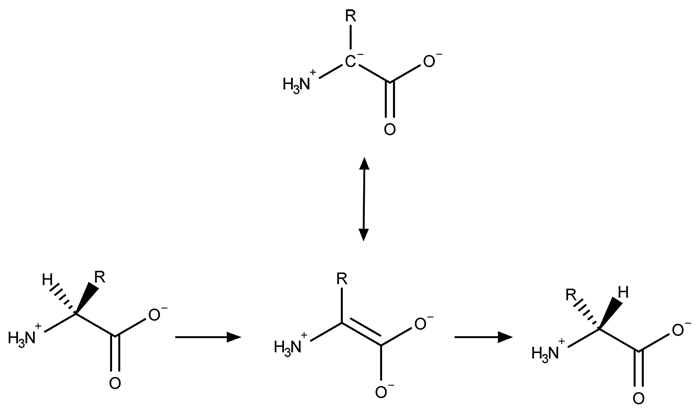
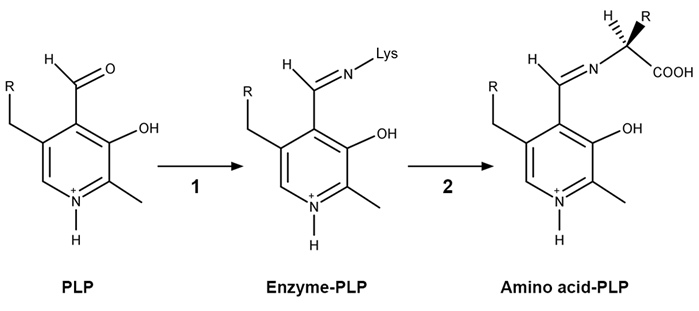
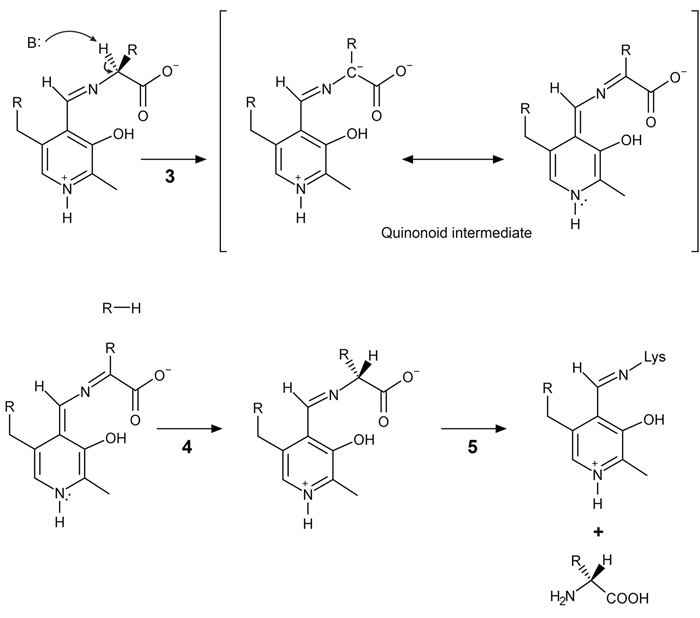
Passage A limited number of cellular functions exist for D-amino acids, such as the structural role of D-alanine and D-glutamate in bacterial cell walls.  Because genetically encoded amino acids are synthesized in the L form, production of D-amino acids depends on enzymes called racemases.  With the exception of cysteine, conversion of an L-amino acid to a D-amino acid corresponds to the conversion of an S stereoisomer to an R stereoisomer.  The mechanism of conversion requires the formation of a high-energy carbanion intermediate.  Although pyridoxal phosphate (PLP)-dependent amino acid racemases such as glutamate racemase use PLP as a coenzyme to stabilize this intermediate, the reaction catalyzed by PLP-independent racemases such as alanine racemase proceeds through the enolate intermediate shown in Figure 1. Passage A limited number of cellular functions exist for D-amino acids, such as the structural role of D-alanine and D-glutamate in bacterial cell walls.  Because genetically encoded amino acids are synthesized in the L form, production of D-amino acids depends on enzymes called racemases.  With the exception of cysteine, conversion of an L-amino acid to a D-amino acid corresponds to the conversion of an S stereoisomer to an R stereoisomer.  The mechanism of conversion requires the formation of a high-energy carbanion intermediate.  Although pyridoxal phosphate (PLP)-dependent amino acid racemases such as glutamate racemase use PLP as a coenzyme to stabilize this intermediate, the reaction catalyzed by PLP-independent racemases such as alanine racemase proceeds through the enolate intermediate shown in Figure 1.    <strong>Figure 1</strong>  PLP-independent amino acid racemase reactionThe first step in most PLP-dependent reactions is the condensation of an aldehyde group on the coenzyme PLP.  This forms a Schiff base linking PLP to a lysine side chain on the enzyme's active site.  The lysine is then substituted with the amino acid to be converted from L to D configuration (Figure 2).    <strong>Figure 2</strong>  Formation of an amino acid-PLP adductThe next step in PLP-dependent reactions is the removal of the amino acid's α-hydrogen by a base in the enzyme's active site.  A quinonoid intermediate and two additional intermediates are formed, as shown in Figure 3.  The final step includes the rebonding of PLP to the enzyme's active site and the release of the D-amino acid.    <strong>Figure 3</strong>  Intermediates of a PLP-dependent amino acid racemase-catalyzed reactionOther PLP-dependent enzymes participate in the decarboxylation of amino acids via a similar mechanism.  Such enzymes break the bond between the carboxylate carbon and α-carbon in an amino acid by forming a quinonoid intermediate, which helps stabilize the carbanion intermediate of the reaction. Adapted from Cava F, Lam H, De pedro MA, Waldor MK. Emerging knowledge of regulatory roles of D-amino acids in bacteria. Cell Mol Life Sci. 2011. -During PLP-dependent reactions, reprotonation of the planar molecule results from the addition of a hydrogen atom: Figure 1  PLP-independent amino acid racemase reactionThe first step in most PLP-dependent reactions is the condensation of an aldehyde group on the coenzyme PLP.  This forms a Schiff base linking PLP to a lysine side chain on the enzyme's active site.  The lysine is then substituted with the amino acid to be converted from L to D configuration (Figure 2). Passage A limited number of cellular functions exist for D-amino acids, such as the structural role of D-alanine and D-glutamate in bacterial cell walls.  Because genetically encoded amino acids are synthesized in the L form, production of D-amino acids depends on enzymes called racemases.  With the exception of cysteine, conversion of an L-amino acid to a D-amino acid corresponds to the conversion of an S stereoisomer to an R stereoisomer.  The mechanism of conversion requires the formation of a high-energy carbanion intermediate.  Although pyridoxal phosphate (PLP)-dependent amino acid racemases such as glutamate racemase use PLP as a coenzyme to stabilize this intermediate, the reaction catalyzed by PLP-independent racemases such as alanine racemase proceeds through the enolate intermediate shown in Figure 1.    <strong>Figure 1</strong>  PLP-independent amino acid racemase reactionThe first step in most PLP-dependent reactions is the condensation of an aldehyde group on the coenzyme PLP.  This forms a Schiff base linking PLP to a lysine side chain on the enzyme's active site.  The lysine is then substituted with the amino acid to be converted from L to D configuration (Figure 2).    <strong>Figure 2</strong>  Formation of an amino acid-PLP adductThe next step in PLP-dependent reactions is the removal of the amino acid's α-hydrogen by a base in the enzyme's active site.  A quinonoid intermediate and two additional intermediates are formed, as shown in Figure 3.  The final step includes the rebonding of PLP to the enzyme's active site and the release of the D-amino acid.    <strong>Figure 3</strong>  Intermediates of a PLP-dependent amino acid racemase-catalyzed reactionOther PLP-dependent enzymes participate in the decarboxylation of amino acids via a similar mechanism.  Such enzymes break the bond between the carboxylate carbon and α-carbon in an amino acid by forming a quinonoid intermediate, which helps stabilize the carbanion intermediate of the reaction. Adapted from Cava F, Lam H, De pedro MA, Waldor MK. Emerging knowledge of regulatory roles of D-amino acids in bacteria. Cell Mol Life Sci. 2011. -During PLP-dependent reactions, reprotonation of the planar molecule results from the addition of a hydrogen atom: Figure 2  Formation of an amino acid-PLP adductThe next step in PLP-dependent reactions is the removal of the amino acid's α-hydrogen by a base in the enzyme's active site.  A quinonoid intermediate and two additional intermediates are formed, as shown in Figure 3.  The final step includes the rebonding of PLP to the enzyme's active site and the release of the D-amino acid. Passage A limited number of cellular functions exist for D-amino acids, such as the structural role of D-alanine and D-glutamate in bacterial cell walls.  Because genetically encoded amino acids are synthesized in the L form, production of D-amino acids depends on enzymes called racemases.  With the exception of cysteine, conversion of an L-amino acid to a D-amino acid corresponds to the conversion of an S stereoisomer to an R stereoisomer.  The mechanism of conversion requires the formation of a high-energy carbanion intermediate.  Although pyridoxal phosphate (PLP)-dependent amino acid racemases such as glutamate racemase use PLP as a coenzyme to stabilize this intermediate, the reaction catalyzed by PLP-independent racemases such as alanine racemase proceeds through the enolate intermediate shown in Figure 1.    <strong>Figure 1</strong>  PLP-independent amino acid racemase reactionThe first step in most PLP-dependent reactions is the condensation of an aldehyde group on the coenzyme PLP.  This forms a Schiff base linking PLP to a lysine side chain on the enzyme's active site.  The lysine is then substituted with the amino acid to be converted from L to D configuration (Figure 2).    <strong>Figure 2</strong>  Formation of an amino acid-PLP adductThe next step in PLP-dependent reactions is the removal of the amino acid's α-hydrogen by a base in the enzyme's active site.  A quinonoid intermediate and two additional intermediates are formed, as shown in Figure 3.  The final step includes the rebonding of PLP to the enzyme's active site and the release of the D-amino acid.    <strong>Figure 3</strong>  Intermediates of a PLP-dependent amino acid racemase-catalyzed reactionOther PLP-dependent enzymes participate in the decarboxylation of amino acids via a similar mechanism.  Such enzymes break the bond between the carboxylate carbon and α-carbon in an amino acid by forming a quinonoid intermediate, which helps stabilize the carbanion intermediate of the reaction. Adapted from Cava F, Lam H, De pedro MA, Waldor MK. Emerging knowledge of regulatory roles of D-amino acids in bacteria. Cell Mol Life Sci. 2011. -During PLP-dependent reactions, reprotonation of the planar molecule results from the addition of a hydrogen atom: Figure 3  Intermediates of a PLP-dependent amino acid racemase-catalyzed reactionOther PLP-dependent enzymes participate in the decarboxylation of amino acids via a similar mechanism.  Such enzymes break the bond between the carboxylate carbon and α-carbon in an amino acid by forming a quinonoid intermediate, which helps stabilize the carbanion intermediate of the reaction. Adapted from Cava F, Lam H, De pedro MA, Waldor MK. Emerging knowledge of regulatory roles of D-amino acids in bacteria. Cell Mol Life Sci. 2011. -During PLP-dependent reactions, reprotonation of the planar molecule results from the addition of a hydrogen atom:
(Multiple Choice)
4.8/5
(81)

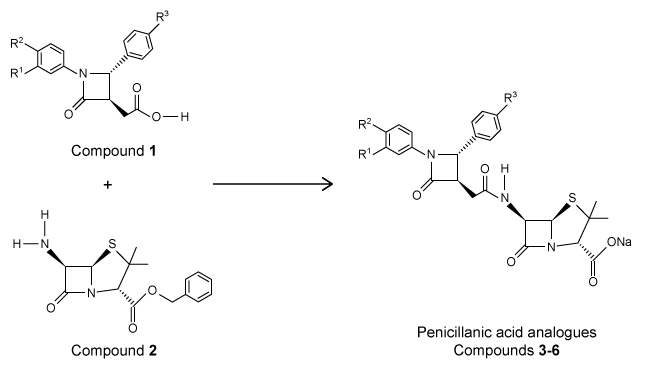
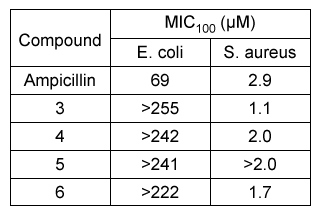
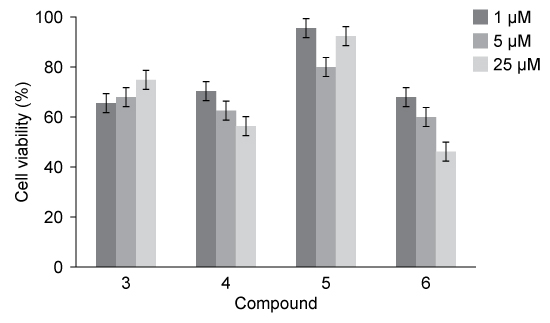
Passage The β-lactam scaffold is an important feature in a class of broad-spectrum antibiotics that includes the penicillins, cephalosporins, and monobactams.  These antibiotics are used to treat a variety of diseases caused by bacteria.  The penicillins work by inhibiting a step in the synthesis of peptidoglycan.  However, the development of antibiotic resistance in the form of enzymes such as β-lactamase is an ongoing problem.An aromatic ring linked to the β-lactam ring has been reported to participate in hydrophobic interactions with β-lactamase active sites, and an aromatic ring bonded to the nitrogen of the β-lactam has shown to be beneficial to biological activity.  With this in mind, researchers synthesized a group of penicillanic acid analogues with substituted aromatic rings bonded to the β-lactam ring in an effort to overcome the challenge of antibiotic resistance.  The substituents on the aromatic rings were varied, including -OCH3 and -NO2, to make several analogues.  A key step in the synthesis of these analogues was the coupling of Compounds 1 and 2 to form a compound with two β-lactam rings (Reaction 1). Passage The β-lactam scaffold is an important feature in a class of broad-spectrum antibiotics that includes the penicillins, cephalosporins, and monobactams.  These antibiotics are used to treat a variety of diseases caused by bacteria.  The penicillins work by inhibiting a step in the synthesis of peptidoglycan.  However, the development of antibiotic resistance in the form of enzymes such as β-lactamase is an ongoing problem.An aromatic ring linked to the β-lactam ring has been reported to participate in hydrophobic interactions with β-lactamase active sites, and an aromatic ring bonded to the nitrogen of the β-lactam has shown to be beneficial to biological activity.  With this in mind, researchers synthesized a group of penicillanic acid analogues with substituted aromatic rings bonded to the β-lactam ring in an effort to overcome the challenge of antibiotic resistance.  The substituents on the aromatic rings were varied, including -OCH<sub>3</sub> and -NO<sub>2</sub>, to make several analogues.  A key step in the synthesis of these analogues was the coupling of Compounds <strong>1</strong> and <strong>2</strong> to form a compound with two β-lactam rings (Reaction 1).    <strong>Reaction 1</strong>The researchers studied the analogues' structure-activity relationship and antimicrobial activity against the gram-negative bacteria Escherichia coli and the gram-positive bacteria Staphylococcus aureus.  Ampicillin, a penicillin derivative used to treat illnesses brought about by gram-positive and gram-negative bacteria, was used as a control.  The minimal inhibitory concentrations are shown in Table 1.<strong>Table 1</strong>  Minimal Inhibitory Concentration (MIC)    The penicillanic acid analogues were tested for their effect on mammalian cell viability because toxicity to cells is also an important factor to consider for potential drug candidates.  The general acceptable level of cell viability for a drug candidate is 70%.  These results are shown in Figure 1.    <strong>Figure 1</strong>  Cell viability assay results Adapted from De rosa M, Vigliotta G, Palma G, Saturnino C, Soriente A. Novel Penicillin-Type Analogues Bearing a Variable Substituted 2-Azetidinone Ring at Position 6: Synthesis and Biological Evaluation. Molecules. 2015. -Which of the following properties of β-lactams like those described in the passage best explains their reactivity? Reaction 1The researchers studied the analogues' structure-activity relationship and antimicrobial activity against the gram-negative bacteria Escherichia coli and the gram-positive bacteria Staphylococcus aureus.  Ampicillin, a penicillin derivative used to treat illnesses brought about by gram-positive and gram-negative bacteria, was used as a control.  The minimal inhibitory concentrations are shown in Table 1.Table 1  Minimal Inhibitory Concentration (MIC) Passage The β-lactam scaffold is an important feature in a class of broad-spectrum antibiotics that includes the penicillins, cephalosporins, and monobactams.  These antibiotics are used to treat a variety of diseases caused by bacteria.  The penicillins work by inhibiting a step in the synthesis of peptidoglycan.  However, the development of antibiotic resistance in the form of enzymes such as β-lactamase is an ongoing problem.An aromatic ring linked to the β-lactam ring has been reported to participate in hydrophobic interactions with β-lactamase active sites, and an aromatic ring bonded to the nitrogen of the β-lactam has shown to be beneficial to biological activity.  With this in mind, researchers synthesized a group of penicillanic acid analogues with substituted aromatic rings bonded to the β-lactam ring in an effort to overcome the challenge of antibiotic resistance.  The substituents on the aromatic rings were varied, including -OCH<sub>3</sub> and -NO<sub>2</sub>, to make several analogues.  A key step in the synthesis of these analogues was the coupling of Compounds <strong>1</strong> and <strong>2</strong> to form a compound with two β-lactam rings (Reaction 1).    <strong>Reaction 1</strong>The researchers studied the analogues' structure-activity relationship and antimicrobial activity against the gram-negative bacteria Escherichia coli and the gram-positive bacteria Staphylococcus aureus.  Ampicillin, a penicillin derivative used to treat illnesses brought about by gram-positive and gram-negative bacteria, was used as a control.  The minimal inhibitory concentrations are shown in Table 1.<strong>Table 1</strong>  Minimal Inhibitory Concentration (MIC)    The penicillanic acid analogues were tested for their effect on mammalian cell viability because toxicity to cells is also an important factor to consider for potential drug candidates.  The general acceptable level of cell viability for a drug candidate is 70%.  These results are shown in Figure 1.    <strong>Figure 1</strong>  Cell viability assay results Adapted from De rosa M, Vigliotta G, Palma G, Saturnino C, Soriente A. Novel Penicillin-Type Analogues Bearing a Variable Substituted 2-Azetidinone Ring at Position 6: Synthesis and Biological Evaluation. Molecules. 2015. -Which of the following properties of β-lactams like those described in the passage best explains their reactivity? The penicillanic acid analogues were tested for their effect on mammalian cell viability because toxicity to cells is also an important factor to consider for potential drug candidates.  The general acceptable level of cell viability for a drug candidate is 70%.  These results are shown in Figure 1. Passage The β-lactam scaffold is an important feature in a class of broad-spectrum antibiotics that includes the penicillins, cephalosporins, and monobactams.  These antibiotics are used to treat a variety of diseases caused by bacteria.  The penicillins work by inhibiting a step in the synthesis of peptidoglycan.  However, the development of antibiotic resistance in the form of enzymes such as β-lactamase is an ongoing problem.An aromatic ring linked to the β-lactam ring has been reported to participate in hydrophobic interactions with β-lactamase active sites, and an aromatic ring bonded to the nitrogen of the β-lactam has shown to be beneficial to biological activity.  With this in mind, researchers synthesized a group of penicillanic acid analogues with substituted aromatic rings bonded to the β-lactam ring in an effort to overcome the challenge of antibiotic resistance.  The substituents on the aromatic rings were varied, including -OCH<sub>3</sub> and -NO<sub>2</sub>, to make several analogues.  A key step in the synthesis of these analogues was the coupling of Compounds <strong>1</strong> and <strong>2</strong> to form a compound with two β-lactam rings (Reaction 1).    <strong>Reaction 1</strong>The researchers studied the analogues' structure-activity relationship and antimicrobial activity against the gram-negative bacteria Escherichia coli and the gram-positive bacteria Staphylococcus aureus.  Ampicillin, a penicillin derivative used to treat illnesses brought about by gram-positive and gram-negative bacteria, was used as a control.  The minimal inhibitory concentrations are shown in Table 1.<strong>Table 1</strong>  Minimal Inhibitory Concentration (MIC)    The penicillanic acid analogues were tested for their effect on mammalian cell viability because toxicity to cells is also an important factor to consider for potential drug candidates.  The general acceptable level of cell viability for a drug candidate is 70%.  These results are shown in Figure 1.    <strong>Figure 1</strong>  Cell viability assay results Adapted from De rosa M, Vigliotta G, Palma G, Saturnino C, Soriente A. Novel Penicillin-Type Analogues Bearing a Variable Substituted 2-Azetidinone Ring at Position 6: Synthesis and Biological Evaluation. Molecules. 2015. -Which of the following properties of β-lactams like those described in the passage best explains their reactivity? Figure 1  Cell viability assay results Adapted from De rosa M, Vigliotta G, Palma G, Saturnino C, Soriente A. Novel Penicillin-Type Analogues Bearing a Variable Substituted 2-Azetidinone Ring at Position 6: Synthesis and Biological Evaluation. Molecules. 2015. -Which of the following properties of β-lactams like those described in the passage best explains their reactivity?
(Multiple Choice)
4.8/5
(81)

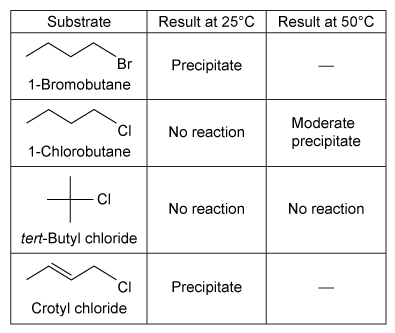
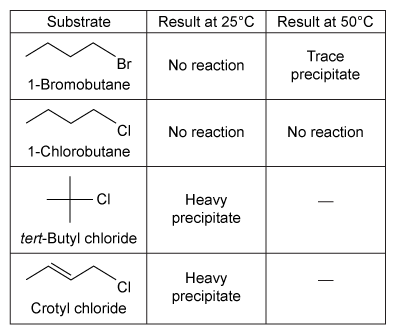
Passage A group of students studied the reactivity of four alkyl halides (R−X) in two nucleophilic substitution reactions.  Nucleophilic substitution reactions can go through one of two mechanisms.  The SN2 reaction requires substitution of a leaving group with a nucleophile in a single step (Reaction 1), and the SN1 reaction requires elimination of the leaving group and formation of an intermediate before nucleophilic substitution can occur, resulting in a two-step process (Reaction 2).R−X + NaI → R−I + NaX↓Reaction 1R−X + AgNO3 → R+ + AgX↓ + HOCH2CH3 → R−OCH2CH3 + HNO3Reaction 2Experiment 1The students performed the SN2 reaction (Reaction 1) by the addition of a few drops of each alkyl halide into a separate test tube containing 1 mL of 15% solution of NaI in acetone at 25°C.  After mixing, they monitored the reaction for the formation of a precipitate (sodium halide salt).  If no precipitate formed after 5 minutes, they raised the temperature of the reaction to 50°C and again checked for the formation of a precipitate.  Formation of a precipitate indicated the substrate underwent nucleophilic substitution.  The results observed for the Finkelstein reaction are shown in Table 1.Table 1  Results of the SN2 Reaction Passage A group of students studied the reactivity of four alkyl halides (R−X) in two nucleophilic substitution reactions.  Nucleophilic substitution reactions can go through one of two mechanisms.  The S<sub>N</sub>2 reaction requires substitution of a leaving group with a nucleophile in a single step (Reaction 1), and the S<sub>N</sub>1 reaction requires elimination of the leaving group and formation of an intermediate before nucleophilic substitution can occur, resulting in a two-step process (Reaction 2).R−X + NaI → R−I + NaX↓<strong>Reaction 1</strong>R−X + AgNO<sub>3</sub> → R<sup>+</sup> + AgX↓ + HOCH<sub>2</sub>CH<sub>3</sub> → R−OCH<sub>2</sub>CH<sub>3</sub> + HNO<sub>3</sub><strong>Reaction 2</strong>Experiment 1The students performed the S<sub>N</sub>2 reaction (Reaction 1) by the addition of a few drops of each alkyl halide into a separate test tube containing 1 mL of 15% solution of NaI in acetone at 25°C.  After mixing, they monitored the reaction for the formation of a precipitate (sodium halide salt).  If no precipitate formed after 5 minutes, they raised the temperature of the reaction to 50°C and again checked for the formation of a precipitate.  Formation of a precipitate indicated the substrate underwent nucleophilic substitution.  The results observed for the Finkelstein reaction are shown in Table 1.<strong>Table 1</strong>  Results of the S<sub>N</sub>2 Reaction    Experiment 2The students repeated the procedure followed in Experiment 1 except they added a few drops of each alkyl halide into a separate test tube containing 1 mL of 1% solution of AgNO<sub>3</sub> in ethanol at 25°C.  The results observed for this reaction are shown in Table 2.<strong>Table 2</strong>  Results of the S<sub>N</sub>1 Reaction    -The substrate tert-butylchloride reacts in Experiment 2 but not in Experiment 1 because:the leaving group is bonded to a primary carbon.a stable carbocation forms in Experiment 2.the leaving group is bonded to a tertiary carbon.an unstable carbocation forms in Experiment 2. Experiment 2The students repeated the procedure followed in Experiment 1 except they added a few drops of each alkyl halide into a separate test tube containing 1 mL of 1% solution of AgNO3 in ethanol at 25°C.  The results observed for this reaction are shown in Table 2.Table 2  Results of the SN1 Reaction Passage A group of students studied the reactivity of four alkyl halides (R−X) in two nucleophilic substitution reactions.  Nucleophilic substitution reactions can go through one of two mechanisms.  The S<sub>N</sub>2 reaction requires substitution of a leaving group with a nucleophile in a single step (Reaction 1), and the S<sub>N</sub>1 reaction requires elimination of the leaving group and formation of an intermediate before nucleophilic substitution can occur, resulting in a two-step process (Reaction 2).R−X + NaI → R−I + NaX↓<strong>Reaction 1</strong>R−X + AgNO<sub>3</sub> → R<sup>+</sup> + AgX↓ + HOCH<sub>2</sub>CH<sub>3</sub> → R−OCH<sub>2</sub>CH<sub>3</sub> + HNO<sub>3</sub><strong>Reaction 2</strong>Experiment 1The students performed the S<sub>N</sub>2 reaction (Reaction 1) by the addition of a few drops of each alkyl halide into a separate test tube containing 1 mL of 15% solution of NaI in acetone at 25°C.  After mixing, they monitored the reaction for the formation of a precipitate (sodium halide salt).  If no precipitate formed after 5 minutes, they raised the temperature of the reaction to 50°C and again checked for the formation of a precipitate.  Formation of a precipitate indicated the substrate underwent nucleophilic substitution.  The results observed for the Finkelstein reaction are shown in Table 1.<strong>Table 1</strong>  Results of the S<sub>N</sub>2 Reaction    Experiment 2The students repeated the procedure followed in Experiment 1 except they added a few drops of each alkyl halide into a separate test tube containing 1 mL of 1% solution of AgNO<sub>3</sub> in ethanol at 25°C.  The results observed for this reaction are shown in Table 2.<strong>Table 2</strong>  Results of the S<sub>N</sub>1 Reaction    -The substrate tert-butylchloride reacts in Experiment 2 but not in Experiment 1 because:the leaving group is bonded to a primary carbon.a stable carbocation forms in Experiment 2.the leaving group is bonded to a tertiary carbon.an unstable carbocation forms in Experiment 2. -The substrate tert-butylchloride reacts in Experiment 2 but not in Experiment 1 because:the leaving group is bonded to a primary carbon.a stable carbocation forms in Experiment 2.the leaving group is bonded to a tertiary carbon.an unstable carbocation forms in Experiment 2.
(Multiple Choice)
4.9/5
(78)

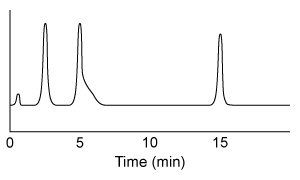
Passage Ethanol is an important source of energy that is frequently used as a supplement to gasoline.  It can be obtained from renewable resources such as the cellulose found in plant matter.  When subjected to a process called gasification, the plant mass is converted to a mixture called syngas, composed predominantly of carbon monoxide and molecular hydrogen.  Syngas can be passed over a rhodium catalyst to generate ethanol and other products.  After using this method, a group of researchers analyzed the resulting products by gas chromatography using helium as a carrier gas.  The results are shown in Figure 1. Passage Ethanol is an important source of energy that is frequently used as a supplement to gasoline.  It can be obtained from renewable resources such as the cellulose found in plant matter.  When subjected to a process called gasification, the plant mass is converted to a mixture called syngas, composed predominantly of carbon monoxide and molecular hydrogen.  Syngas can be passed over a rhodium catalyst to generate ethanol and other products.  After using this method, a group of researchers analyzed the resulting products by gas chromatography using helium as a carrier gas.  The results are shown in Figure 1.    <strong>Figure 1</strong>  Gas chromatograph of syngas catalysis productsMass spectrometry revealed that the process yielded similar amounts of ethanol, acetic acid, and acetaldehyde, with trace amounts of ethane.  In addition, the ethanol peak was found to be contaminated with ethyl acetate.  Another group of researchers in the same laboratory had recently produced Compound 1 as a by-product in a separate reaction.  They combined Compound 1 with purified ethyl acetate to form megestrol acetate, a drug used in the treatment of certain cancers.  This reaction also produced ethanol, as shown in Scheme 1.    <strong>Scheme 1</strong> Adapted from Lopez L, Velasco J, Montes V, Marinas A, Cabrera S, Boutonnet M, Järås S. Catalysts  2015. -The conversion of megestrol to megestrol acetate shown in Scheme 1 represents which kind of reaction? Figure 1  Gas chromatograph of syngas catalysis productsMass spectrometry revealed that the process yielded similar amounts of ethanol, acetic acid, and acetaldehyde, with trace amounts of ethane.  In addition, the ethanol peak was found to be contaminated with ethyl acetate.  Another group of researchers in the same laboratory had recently produced Compound 1 as a by-product in a separate reaction.  They combined Compound 1 with purified ethyl acetate to form megestrol acetate, a drug used in the treatment of certain cancers.  This reaction also produced ethanol, as shown in Scheme 1. Passage Ethanol is an important source of energy that is frequently used as a supplement to gasoline.  It can be obtained from renewable resources such as the cellulose found in plant matter.  When subjected to a process called gasification, the plant mass is converted to a mixture called syngas, composed predominantly of carbon monoxide and molecular hydrogen.  Syngas can be passed over a rhodium catalyst to generate ethanol and other products.  After using this method, a group of researchers analyzed the resulting products by gas chromatography using helium as a carrier gas.  The results are shown in Figure 1.    <strong>Figure 1</strong>  Gas chromatograph of syngas catalysis productsMass spectrometry revealed that the process yielded similar amounts of ethanol, acetic acid, and acetaldehyde, with trace amounts of ethane.  In addition, the ethanol peak was found to be contaminated with ethyl acetate.  Another group of researchers in the same laboratory had recently produced Compound 1 as a by-product in a separate reaction.  They combined Compound 1 with purified ethyl acetate to form megestrol acetate, a drug used in the treatment of certain cancers.  This reaction also produced ethanol, as shown in Scheme 1.    <strong>Scheme 1</strong> Adapted from Lopez L, Velasco J, Montes V, Marinas A, Cabrera S, Boutonnet M, Järås S. Catalysts  2015. -The conversion of megestrol to megestrol acetate shown in Scheme 1 represents which kind of reaction? Scheme 1 Adapted from Lopez L, Velasco J, Montes V, Marinas A, Cabrera S, Boutonnet M, Järås S. Catalysts  2015. -The conversion of megestrol to megestrol acetate shown in Scheme 1 represents which kind of reaction?

(Multiple Choice)
4.8/5
(91)

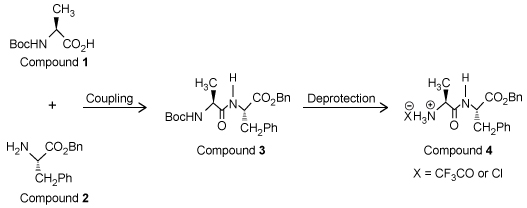
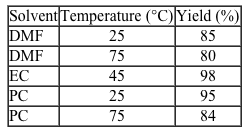
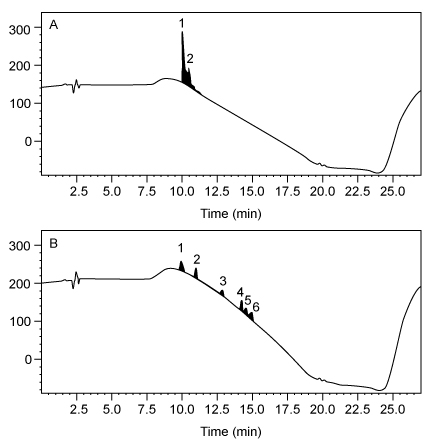
Passage Solid-phase peptide synthesis is normally carried out on a resin bathed multiple times in dimethylformamide (DMF)-a toxic, polar, aprotic solvent-which poses an environmental problem because a large amount of toxic solvent waste is created.  Cyclic carbonates such as propylene carbonate (PC) and ethylene carbonate (EC) are nontoxic, polar, aprotic solvents that could be used as an alternative to DMF.Compounds 1 and 2 are modified L-amino acids.  They were coupled to form Compound 3, a dipeptide, which was then deprotected to yield Compound 4 (Figure 1). Passage Solid-phase peptide synthesis is normally carried out on a resin bathed multiple times in dimethylformamide (DMF)-a toxic, polar, aprotic solvent-which poses an environmental problem because a large amount of toxic solvent waste is created.  Cyclic carbonates such as propylene carbonate (PC) and ethylene carbonate (EC) are nontoxic, polar, aprotic solvents that could be used as an alternative to DMF.Compounds <strong>1</strong> and <strong>2</strong> are modified L-amino acids.  They were coupled to form Compound <strong>3</strong>, a dipeptide, which was then deprotected to yield Compound <strong>4</strong> (Figure 1).    <strong>Figure 1</strong>  Synthesis of Compound <strong>4</strong>To determine the effect that solvent type and temperature have on the synthesis of this peptide, the nontoxic solvents PC and EC as well as the toxic solvent DMF were each used in separate syntheses of Compound <strong>4</strong> at different temperatures.  The reaction solvent was also used to rinse the resin.  Table 1 shows the results of these syntheses.<strong>Table 1</strong>  Results from the Synthesis of Compound <strong>4</strong>    The successful synthesis of Compound <strong>4</strong> using nontoxic solvents encouraged researchers to pursue the synthesis of a larger, biologically active peptide.  Bradykinin, a vasodilator containing nine amino acids (Arg-Pro-Pro-Gly-Phe-Ser-Pro-Phe-Arg), was synthesized using the same solid-state peptide synthesis protocol used to synthesize Compound <strong>4</strong>.  Separate syntheses were done using either DMF or PC, and the purity of bradykinin from each synthesis was analyzed by high-performance liquid chromatography (HPLC) (Figure 2).In each chromatogram, peak 1 has the same retention time as commercially obtained bradykinin, and the other peaks correspond to impurities.  In chromatogram A, the impurity has a similar retention time to the product peak whereas the impurity peaks in chromatogram B have distinct retention times compared to the product peak.    <strong>Figure 2</strong>  HPLC of synthetic bradykinin: (A) synthesis in DMF; (B) synthesis in PC Adapted from S. B. Lawrenson et al., The greening of peptide synthesis.  Green Chem. ©2017 The Royal Society of Chemistry. -How many hydrophilic amino acid residues are present in bradykinin? Figure 1  Synthesis of Compound 4To determine the effect that solvent type and temperature have on the synthesis of this peptide, the nontoxic solvents PC and EC as well as the toxic solvent DMF were each used in separate syntheses of Compound 4 at different temperatures.  The reaction solvent was also used to rinse the resin.  Table 1 shows the results of these syntheses.Table 1  Results from the Synthesis of Compound 4 Passage Solid-phase peptide synthesis is normally carried out on a resin bathed multiple times in dimethylformamide (DMF)-a toxic, polar, aprotic solvent-which poses an environmental problem because a large amount of toxic solvent waste is created.  Cyclic carbonates such as propylene carbonate (PC) and ethylene carbonate (EC) are nontoxic, polar, aprotic solvents that could be used as an alternative to DMF.Compounds <strong>1</strong> and <strong>2</strong> are modified L-amino acids.  They were coupled to form Compound <strong>3</strong>, a dipeptide, which was then deprotected to yield Compound <strong>4</strong> (Figure 1).    <strong>Figure 1</strong>  Synthesis of Compound <strong>4</strong>To determine the effect that solvent type and temperature have on the synthesis of this peptide, the nontoxic solvents PC and EC as well as the toxic solvent DMF were each used in separate syntheses of Compound <strong>4</strong> at different temperatures.  The reaction solvent was also used to rinse the resin.  Table 1 shows the results of these syntheses.<strong>Table 1</strong>  Results from the Synthesis of Compound <strong>4</strong>    The successful synthesis of Compound <strong>4</strong> using nontoxic solvents encouraged researchers to pursue the synthesis of a larger, biologically active peptide.  Bradykinin, a vasodilator containing nine amino acids (Arg-Pro-Pro-Gly-Phe-Ser-Pro-Phe-Arg), was synthesized using the same solid-state peptide synthesis protocol used to synthesize Compound <strong>4</strong>.  Separate syntheses were done using either DMF or PC, and the purity of bradykinin from each synthesis was analyzed by high-performance liquid chromatography (HPLC) (Figure 2).In each chromatogram, peak 1 has the same retention time as commercially obtained bradykinin, and the other peaks correspond to impurities.  In chromatogram A, the impurity has a similar retention time to the product peak whereas the impurity peaks in chromatogram B have distinct retention times compared to the product peak.    <strong>Figure 2</strong>  HPLC of synthetic bradykinin: (A) synthesis in DMF; (B) synthesis in PC Adapted from S. B. Lawrenson et al., The greening of peptide synthesis.  Green Chem. ©2017 The Royal Society of Chemistry. -How many hydrophilic amino acid residues are present in bradykinin? The successful synthesis of Compound 4 using nontoxic solvents encouraged researchers to pursue the synthesis of a larger, biologically active peptide.  Bradykinin, a vasodilator containing nine amino acids (Arg-Pro-Pro-Gly-Phe-Ser-Pro-Phe-Arg), was synthesized using the same solid-state peptide synthesis protocol used to synthesize Compound 4.  Separate syntheses were done using either DMF or PC, and the purity of bradykinin from each synthesis was analyzed by high-performance liquid chromatography (HPLC) (Figure 2).In each chromatogram, peak 1 has the same retention time as commercially obtained bradykinin, and the other peaks correspond to impurities.  In chromatogram A, the impurity has a similar retention time to the product peak whereas the impurity peaks in chromatogram B have distinct retention times compared to the product peak. Passage Solid-phase peptide synthesis is normally carried out on a resin bathed multiple times in dimethylformamide (DMF)-a toxic, polar, aprotic solvent-which poses an environmental problem because a large amount of toxic solvent waste is created.  Cyclic carbonates such as propylene carbonate (PC) and ethylene carbonate (EC) are nontoxic, polar, aprotic solvents that could be used as an alternative to DMF.Compounds <strong>1</strong> and <strong>2</strong> are modified L-amino acids.  They were coupled to form Compound <strong>3</strong>, a dipeptide, which was then deprotected to yield Compound <strong>4</strong> (Figure 1).    <strong>Figure 1</strong>  Synthesis of Compound <strong>4</strong>To determine the effect that solvent type and temperature have on the synthesis of this peptide, the nontoxic solvents PC and EC as well as the toxic solvent DMF were each used in separate syntheses of Compound <strong>4</strong> at different temperatures.  The reaction solvent was also used to rinse the resin.  Table 1 shows the results of these syntheses.<strong>Table 1</strong>  Results from the Synthesis of Compound <strong>4</strong>    The successful synthesis of Compound <strong>4</strong> using nontoxic solvents encouraged researchers to pursue the synthesis of a larger, biologically active peptide.  Bradykinin, a vasodilator containing nine amino acids (Arg-Pro-Pro-Gly-Phe-Ser-Pro-Phe-Arg), was synthesized using the same solid-state peptide synthesis protocol used to synthesize Compound <strong>4</strong>.  Separate syntheses were done using either DMF or PC, and the purity of bradykinin from each synthesis was analyzed by high-performance liquid chromatography (HPLC) (Figure 2).In each chromatogram, peak 1 has the same retention time as commercially obtained bradykinin, and the other peaks correspond to impurities.  In chromatogram A, the impurity has a similar retention time to the product peak whereas the impurity peaks in chromatogram B have distinct retention times compared to the product peak.    <strong>Figure 2</strong>  HPLC of synthetic bradykinin: (A) synthesis in DMF; (B) synthesis in PC Adapted from S. B. Lawrenson et al., The greening of peptide synthesis.  Green Chem. ©2017 The Royal Society of Chemistry. -How many hydrophilic amino acid residues are present in bradykinin? Figure 2  HPLC of synthetic bradykinin: (A) synthesis in DMF; (B) synthesis in PC Adapted from S. B. Lawrenson et al., "The greening of peptide synthesis."  Green Chem. ©2017 The Royal Society of Chemistry. -How many hydrophilic amino acid residues are present in bradykinin?
(Multiple Choice)
5.0/5
(73)

Passage Ethanol is an important source of energy that is frequently used as a supplement to gasoline.  It can be obtained from renewable resources such as the cellulose found in plant matter.  When subjected to a process called gasification, the plant mass is converted to a mixture called syngas, composed predominantly of carbon monoxide and molecular hydrogen.  Syngas can be passed over a rhodium catalyst to generate ethanol and other products.  After using this method, a group of researchers analyzed the resulting products by gas chromatography using helium as a carrier gas.  The results are shown in Figure 1. Passage Ethanol is an important source of energy that is frequently used as a supplement to gasoline.  It can be obtained from renewable resources such as the cellulose found in plant matter.  When subjected to a process called gasification, the plant mass is converted to a mixture called syngas, composed predominantly of carbon monoxide and molecular hydrogen.  Syngas can be passed over a rhodium catalyst to generate ethanol and other products.  After using this method, a group of researchers analyzed the resulting products by gas chromatography using helium as a carrier gas.  The results are shown in Figure 1.    <strong>Figure 1</strong>  Gas chromatograph of syngas catalysis productsMass spectrometry revealed that the process yielded similar amounts of ethanol, acetic acid, and acetaldehyde, with trace amounts of ethane.  In addition, the ethanol peak was found to be contaminated with ethyl acetate.  Another group of researchers in the same laboratory had recently produced Compound 1 as a by-product in a separate reaction.  They combined Compound 1 with purified ethyl acetate to form megestrol acetate, a drug used in the treatment of certain cancers.  This reaction also produced ethanol, as shown in Scheme 1.    <strong>Scheme 1</strong> Adapted from Lopez L, Velasco J, Montes V, Marinas A, Cabrera S, Boutonnet M, Järås S. Catalysts  2015. -Acetic acid most likely eluted from the gas chromatograph at what time point? Figure 1  Gas chromatograph of syngas catalysis productsMass spectrometry revealed that the process yielded similar amounts of ethanol, acetic acid, and acetaldehyde, with trace amounts of ethane.  In addition, the ethanol peak was found to be contaminated with ethyl acetate.  Another group of researchers in the same laboratory had recently produced Compound 1 as a by-product in a separate reaction.  They combined Compound 1 with purified ethyl acetate to form megestrol acetate, a drug used in the treatment of certain cancers.  This reaction also produced ethanol, as shown in Scheme 1. Passage Ethanol is an important source of energy that is frequently used as a supplement to gasoline.  It can be obtained from renewable resources such as the cellulose found in plant matter.  When subjected to a process called gasification, the plant mass is converted to a mixture called syngas, composed predominantly of carbon monoxide and molecular hydrogen.  Syngas can be passed over a rhodium catalyst to generate ethanol and other products.  After using this method, a group of researchers analyzed the resulting products by gas chromatography using helium as a carrier gas.  The results are shown in Figure 1.    <strong>Figure 1</strong>  Gas chromatograph of syngas catalysis productsMass spectrometry revealed that the process yielded similar amounts of ethanol, acetic acid, and acetaldehyde, with trace amounts of ethane.  In addition, the ethanol peak was found to be contaminated with ethyl acetate.  Another group of researchers in the same laboratory had recently produced Compound 1 as a by-product in a separate reaction.  They combined Compound 1 with purified ethyl acetate to form megestrol acetate, a drug used in the treatment of certain cancers.  This reaction also produced ethanol, as shown in Scheme 1.    <strong>Scheme 1</strong> Adapted from Lopez L, Velasco J, Montes V, Marinas A, Cabrera S, Boutonnet M, Järås S. Catalysts  2015. -Acetic acid most likely eluted from the gas chromatograph at what time point? Scheme 1 Adapted from Lopez L, Velasco J, Montes V, Marinas A, Cabrera S, Boutonnet M, Järås S. Catalysts  2015. -Acetic acid most likely eluted from the gas chromatograph at what time point?

(Multiple Choice)
4.8/5
(82)

The amino acid serine is shown below. The amino acid serine is shown below.   Which of the following structures of serine has an L configuration? Which of the following structures of serine has an L configuration?
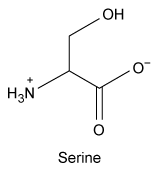
(Multiple Choice)
4.9/5
(76)

Passage Two key ingredients found in many soaps are PEG 150 distearate and ethylhexyl glycerin.  Both can be synthesized from glyceryl tristearate (Figure 1). Passage Two key ingredients found in many soaps are PEG 150 distearate and ethylhexyl glycerin.  Both can be synthesized from glyceryl tristearate (Figure 1).    <strong>Figure 1</strong>  Formation of PEG 150 distearate and ethylhexyl glycerin from glyceryl tristearateThe first step in this process requires the saponification of glyceryl tristearate.  The resulting stearate molecules can then react with PEG 150 in an acid-catalyzed Fischer esterification to form PEG 150 distearate.  The glycerol produced during saponification is used as a nucleophile to form ethylhexyl glycerin through a base-catalyzed S<sub>N</sub>2 reaction with an ethylhexyl halide.Studies have shown that hand washing with soap can substantially reduce the number of germs present on hands and that washing hands before preparing food is particularly effective in reducing illness.  Researchers examined the effect of washing for 20 seconds with different amounts of soap containing PEG 150 distearate and ethylhexyl glycerin and found an inverse correlation between the volume of soap used and the amount of bacteria recovered from the hands.  The data are shown in Figure 2.    <strong>Figure 2</strong>  Bacteria recovered from hands after washing with varying amounts of soapThe researchers then investigated the effect of hand washing with different kinds of soap on the transfer of bacteria from hands to objects.  Volunteers washed with a fixed volume of soap for 30 seconds, then handled sterilized plastic spheres for 30 seconds.  Bacteria were then recovered from the spheres.  The results are shown in Table 1.<strong>Table 1</strong> Bacteria Recovered from Objects    Adapted from  Fuls JL, Rodgers ND, Fischler GE, et al. Alternative hand contamination technique to compare the activities of antimicrobial and nonantimicrobial soaps under different test conditions. Appl Environ Microbiol. 2008. -By approximately what factor were the bacteria recovered from hands reduced when hands were washed with 3 mL of soap versus no soap? Figure 1  Formation of PEG 150 distearate and ethylhexyl glycerin from glyceryl tristearateThe first step in this process requires the saponification of glyceryl tristearate.  The resulting stearate molecules can then react with PEG 150 in an acid-catalyzed Fischer esterification to form PEG 150 distearate.  The glycerol produced during saponification is used as a nucleophile to form ethylhexyl glycerin through a base-catalyzed SN2 reaction with an ethylhexyl halide.Studies have shown that hand washing with soap can substantially reduce the number of germs present on hands and that washing hands before preparing food is particularly effective in reducing illness.  Researchers examined the effect of washing for 20 seconds with different amounts of soap containing PEG 150 distearate and ethylhexyl glycerin and found an inverse correlation between the volume of soap used and the amount of bacteria recovered from the hands.  The data are shown in Figure 2. Passage Two key ingredients found in many soaps are PEG 150 distearate and ethylhexyl glycerin.  Both can be synthesized from glyceryl tristearate (Figure 1).    <strong>Figure 1</strong>  Formation of PEG 150 distearate and ethylhexyl glycerin from glyceryl tristearateThe first step in this process requires the saponification of glyceryl tristearate.  The resulting stearate molecules can then react with PEG 150 in an acid-catalyzed Fischer esterification to form PEG 150 distearate.  The glycerol produced during saponification is used as a nucleophile to form ethylhexyl glycerin through a base-catalyzed S<sub>N</sub>2 reaction with an ethylhexyl halide.Studies have shown that hand washing with soap can substantially reduce the number of germs present on hands and that washing hands before preparing food is particularly effective in reducing illness.  Researchers examined the effect of washing for 20 seconds with different amounts of soap containing PEG 150 distearate and ethylhexyl glycerin and found an inverse correlation between the volume of soap used and the amount of bacteria recovered from the hands.  The data are shown in Figure 2.    <strong>Figure 2</strong>  Bacteria recovered from hands after washing with varying amounts of soapThe researchers then investigated the effect of hand washing with different kinds of soap on the transfer of bacteria from hands to objects.  Volunteers washed with a fixed volume of soap for 30 seconds, then handled sterilized plastic spheres for 30 seconds.  Bacteria were then recovered from the spheres.  The results are shown in Table 1.<strong>Table 1</strong> Bacteria Recovered from Objects    Adapted from  Fuls JL, Rodgers ND, Fischler GE, et al. Alternative hand contamination technique to compare the activities of antimicrobial and nonantimicrobial soaps under different test conditions. Appl Environ Microbiol. 2008. -By approximately what factor were the bacteria recovered from hands reduced when hands were washed with 3 mL of soap versus no soap? Figure 2  Bacteria recovered from hands after washing with varying amounts of soapThe researchers then investigated the effect of hand washing with different kinds of soap on the transfer of bacteria from hands to objects.  Volunteers washed with a fixed volume of soap for 30 seconds, then handled sterilized plastic spheres for 30 seconds.  Bacteria were then recovered from the spheres.  The results are shown in Table 1.Table 1 Bacteria Recovered from Objects Passage Two key ingredients found in many soaps are PEG 150 distearate and ethylhexyl glycerin.  Both can be synthesized from glyceryl tristearate (Figure 1).    <strong>Figure 1</strong>  Formation of PEG 150 distearate and ethylhexyl glycerin from glyceryl tristearateThe first step in this process requires the saponification of glyceryl tristearate.  The resulting stearate molecules can then react with PEG 150 in an acid-catalyzed Fischer esterification to form PEG 150 distearate.  The glycerol produced during saponification is used as a nucleophile to form ethylhexyl glycerin through a base-catalyzed S<sub>N</sub>2 reaction with an ethylhexyl halide.Studies have shown that hand washing with soap can substantially reduce the number of germs present on hands and that washing hands before preparing food is particularly effective in reducing illness.  Researchers examined the effect of washing for 20 seconds with different amounts of soap containing PEG 150 distearate and ethylhexyl glycerin and found an inverse correlation between the volume of soap used and the amount of bacteria recovered from the hands.  The data are shown in Figure 2.    <strong>Figure 2</strong>  Bacteria recovered from hands after washing with varying amounts of soapThe researchers then investigated the effect of hand washing with different kinds of soap on the transfer of bacteria from hands to objects.  Volunteers washed with a fixed volume of soap for 30 seconds, then handled sterilized plastic spheres for 30 seconds.  Bacteria were then recovered from the spheres.  The results are shown in Table 1.<strong>Table 1</strong> Bacteria Recovered from Objects    Adapted from  Fuls JL, Rodgers ND, Fischler GE, et al. Alternative hand contamination technique to compare the activities of antimicrobial and nonantimicrobial soaps under different test conditions. Appl Environ Microbiol. 2008. -By approximately what factor were the bacteria recovered from hands reduced when hands were washed with 3 mL of soap versus no soap? Adapted from  Fuls JL, Rodgers ND, Fischler GE, et al. Alternative hand contamination technique to compare the activities of antimicrobial and nonantimicrobial soaps under different test conditions. Appl Environ Microbiol. 2008. -By approximately what factor were the bacteria recovered from hands reduced when hands were washed with 3 mL of soap versus no soap?
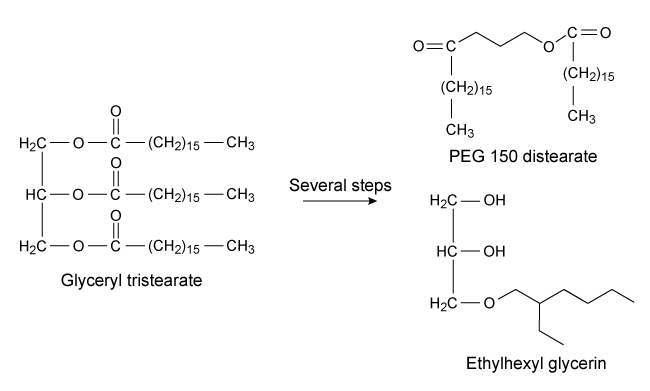
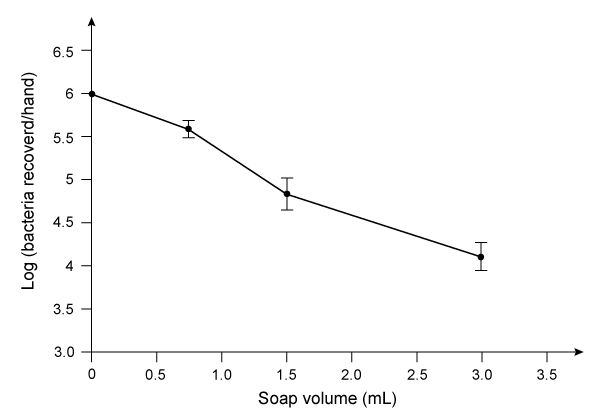

(Multiple Choice)
4.7/5
(72)

Passage Two key ingredients found in many soaps are PEG 150 distearate and ethylhexyl glycerin.  Both can be synthesized from glyceryl tristearate (Figure 1). Passage Two key ingredients found in many soaps are PEG 150 distearate and ethylhexyl glycerin.  Both can be synthesized from glyceryl tristearate (Figure 1).    <strong>Figure 1</strong>  Formation of PEG 150 distearate and ethylhexyl glycerin from glyceryl tristearateThe first step in this process requires the saponification of glyceryl tristearate.  The resulting stearate molecules can then react with PEG 150 in an acid-catalyzed Fischer esterification to form PEG 150 distearate.  The glycerol produced during saponification is used as a nucleophile to form ethylhexyl glycerin through a base-catalyzed S<sub>N</sub>2 reaction with an ethylhexyl halide.Studies have shown that hand washing with soap can substantially reduce the number of germs present on hands and that washing hands before preparing food is particularly effective in reducing illness.  Researchers examined the effect of washing for 20 seconds with different amounts of soap containing PEG 150 distearate and ethylhexyl glycerin and found an inverse correlation between the volume of soap used and the amount of bacteria recovered from the hands.  The data are shown in Figure 2.    <strong>Figure 2</strong>  Bacteria recovered from hands after washing with varying amounts of soapThe researchers then investigated the effect of hand washing with different kinds of soap on the transfer of bacteria from hands to objects.  Volunteers washed with a fixed volume of soap for 30 seconds, then handled sterilized plastic spheres for 30 seconds.  Bacteria were then recovered from the spheres.  The results are shown in Table 1.<strong>Table 1</strong> Bacteria Recovered from Objects    Adapted from  Fuls JL, Rodgers ND, Fischler GE, et al. Alternative hand contamination technique to compare the activities of antimicrobial and nonantimicrobial soaps under different test conditions. Appl Environ Microbiol. 2008. -Acid helps catalyze the Fischer esterification reaction by doing all of the following EXCEPT: Figure 1  Formation of PEG 150 distearate and ethylhexyl glycerin from glyceryl tristearateThe first step in this process requires the saponification of glyceryl tristearate.  The resulting stearate molecules can then react with PEG 150 in an acid-catalyzed Fischer esterification to form PEG 150 distearate.  The glycerol produced during saponification is used as a nucleophile to form ethylhexyl glycerin through a base-catalyzed SN2 reaction with an ethylhexyl halide.Studies have shown that hand washing with soap can substantially reduce the number of germs present on hands and that washing hands before preparing food is particularly effective in reducing illness.  Researchers examined the effect of washing for 20 seconds with different amounts of soap containing PEG 150 distearate and ethylhexyl glycerin and found an inverse correlation between the volume of soap used and the amount of bacteria recovered from the hands.  The data are shown in Figure 2. Passage Two key ingredients found in many soaps are PEG 150 distearate and ethylhexyl glycerin.  Both can be synthesized from glyceryl tristearate (Figure 1).    <strong>Figure 1</strong>  Formation of PEG 150 distearate and ethylhexyl glycerin from glyceryl tristearateThe first step in this process requires the saponification of glyceryl tristearate.  The resulting stearate molecules can then react with PEG 150 in an acid-catalyzed Fischer esterification to form PEG 150 distearate.  The glycerol produced during saponification is used as a nucleophile to form ethylhexyl glycerin through a base-catalyzed S<sub>N</sub>2 reaction with an ethylhexyl halide.Studies have shown that hand washing with soap can substantially reduce the number of germs present on hands and that washing hands before preparing food is particularly effective in reducing illness.  Researchers examined the effect of washing for 20 seconds with different amounts of soap containing PEG 150 distearate and ethylhexyl glycerin and found an inverse correlation between the volume of soap used and the amount of bacteria recovered from the hands.  The data are shown in Figure 2.    <strong>Figure 2</strong>  Bacteria recovered from hands after washing with varying amounts of soapThe researchers then investigated the effect of hand washing with different kinds of soap on the transfer of bacteria from hands to objects.  Volunteers washed with a fixed volume of soap for 30 seconds, then handled sterilized plastic spheres for 30 seconds.  Bacteria were then recovered from the spheres.  The results are shown in Table 1.<strong>Table 1</strong> Bacteria Recovered from Objects    Adapted from  Fuls JL, Rodgers ND, Fischler GE, et al. Alternative hand contamination technique to compare the activities of antimicrobial and nonantimicrobial soaps under different test conditions. Appl Environ Microbiol. 2008. -Acid helps catalyze the Fischer esterification reaction by doing all of the following EXCEPT: Figure 2  Bacteria recovered from hands after washing with varying amounts of soapThe researchers then investigated the effect of hand washing with different kinds of soap on the transfer of bacteria from hands to objects.  Volunteers washed with a fixed volume of soap for 30 seconds, then handled sterilized plastic spheres for 30 seconds.  Bacteria were then recovered from the spheres.  The results are shown in Table 1.Table 1 Bacteria Recovered from Objects Passage Two key ingredients found in many soaps are PEG 150 distearate and ethylhexyl glycerin.  Both can be synthesized from glyceryl tristearate (Figure 1).    <strong>Figure 1</strong>  Formation of PEG 150 distearate and ethylhexyl glycerin from glyceryl tristearateThe first step in this process requires the saponification of glyceryl tristearate.  The resulting stearate molecules can then react with PEG 150 in an acid-catalyzed Fischer esterification to form PEG 150 distearate.  The glycerol produced during saponification is used as a nucleophile to form ethylhexyl glycerin through a base-catalyzed S<sub>N</sub>2 reaction with an ethylhexyl halide.Studies have shown that hand washing with soap can substantially reduce the number of germs present on hands and that washing hands before preparing food is particularly effective in reducing illness.  Researchers examined the effect of washing for 20 seconds with different amounts of soap containing PEG 150 distearate and ethylhexyl glycerin and found an inverse correlation between the volume of soap used and the amount of bacteria recovered from the hands.  The data are shown in Figure 2.    <strong>Figure 2</strong>  Bacteria recovered from hands after washing with varying amounts of soapThe researchers then investigated the effect of hand washing with different kinds of soap on the transfer of bacteria from hands to objects.  Volunteers washed with a fixed volume of soap for 30 seconds, then handled sterilized plastic spheres for 30 seconds.  Bacteria were then recovered from the spheres.  The results are shown in Table 1.<strong>Table 1</strong> Bacteria Recovered from Objects    Adapted from  Fuls JL, Rodgers ND, Fischler GE, et al. Alternative hand contamination technique to compare the activities of antimicrobial and nonantimicrobial soaps under different test conditions. Appl Environ Microbiol. 2008. -Acid helps catalyze the Fischer esterification reaction by doing all of the following EXCEPT: Adapted from  Fuls JL, Rodgers ND, Fischler GE, et al. Alternative hand contamination technique to compare the activities of antimicrobial and nonantimicrobial soaps under different test conditions. Appl Environ Microbiol. 2008. -Acid helps catalyze the Fischer esterification reaction by doing all of the following EXCEPT:

(Multiple Choice)
4.8/5
(79)

Passage Students used three classification tests to study the reactivity of alcohol, aldehyde, and ketone functional groups in organic compounds.  The organic compounds provided to the students are given in Table 1.Table 1  Organic Compounds Tested Passage Students used three classification tests to study the reactivity of alcohol, aldehyde, and ketone functional groups in organic compounds.  The organic compounds provided to the students are given in Table 1.<strong>Table 1</strong>  Organic Compounds Tested    First, the students performed the Lucas test by mixing a few drops of each compound with 2 mL of the Lucas reagent (ZnCl<sub>2</sub> and HCl).  This reagent is used to test for secondary and tertiary alcohols.  A positive test result is indicated by a cloudy reaction mixture upon addition of the Lucas reagent due to the formation of an insoluble compound by an S<sub>N</sub>1 reaction with a secondary or tertiary alcohol (Reaction 1).    <strong>Reaction 1</strong>Next, a test for alcohols and aldehydes was performed by the addition of a drop of chromic acid reagent (CrO<sub>3</sub> dissolved in aqueous H<sub>2</sub>SO<sub>4</sub>) into samples of the organic compounds.  The disappearance of the orange color from chromic acid and formation of a blue-green suspension is indicative of a positive result for this test.  Compound A was found to be an example of a positive result, as shown in Reaction 2.    <strong>Reaction 2</strong>Finally, samples of the compounds were also dissolved in water, followed by the addition of NaOH and iodine.  This test is known as the iodoform test, which is used to identify methyl ketones and secondary alcohols.  A positive result is indicated by the formation of iodoform (CHI<sub>3</sub>), a yellow precipitate (Reaction 3).    3</strong><strong>Table 2</strong>  Selected Observations from the Classification Tests    -An unknown compound containing both a secondary alcohol and an aldehyde in its structure was given to a student.  Suppose the Lucas test confirmed there was an alcohol present.  If a protecting group were added to the alcohol, would a positive result from the chromic acid test be indicative of only the presence of the aldehyde? First, the students performed the Lucas test by mixing a few drops of each compound with 2 mL of the Lucas reagent (ZnCl2 and HCl).  This reagent is used to test for secondary and tertiary alcohols.  A positive test result is indicated by a cloudy reaction mixture upon addition of the Lucas reagent due to the formation of an insoluble compound by an SN1 reaction with a secondary or tertiary alcohol (Reaction 1). Passage Students used three classification tests to study the reactivity of alcohol, aldehyde, and ketone functional groups in organic compounds.  The organic compounds provided to the students are given in Table 1.<strong>Table 1</strong>  Organic Compounds Tested    First, the students performed the Lucas test by mixing a few drops of each compound with 2 mL of the Lucas reagent (ZnCl<sub>2</sub> and HCl).  This reagent is used to test for secondary and tertiary alcohols.  A positive test result is indicated by a cloudy reaction mixture upon addition of the Lucas reagent due to the formation of an insoluble compound by an S<sub>N</sub>1 reaction with a secondary or tertiary alcohol (Reaction 1).    <strong>Reaction 1</strong>Next, a test for alcohols and aldehydes was performed by the addition of a drop of chromic acid reagent (CrO<sub>3</sub> dissolved in aqueous H<sub>2</sub>SO<sub>4</sub>) into samples of the organic compounds.  The disappearance of the orange color from chromic acid and formation of a blue-green suspension is indicative of a positive result for this test.  Compound A was found to be an example of a positive result, as shown in Reaction 2.    <strong>Reaction 2</strong>Finally, samples of the compounds were also dissolved in water, followed by the addition of NaOH and iodine.  This test is known as the iodoform test, which is used to identify methyl ketones and secondary alcohols.  A positive result is indicated by the formation of iodoform (CHI<sub>3</sub>), a yellow precipitate (Reaction 3).    3</strong><strong>Table 2</strong>  Selected Observations from the Classification Tests    -An unknown compound containing both a secondary alcohol and an aldehyde in its structure was given to a student.  Suppose the Lucas test confirmed there was an alcohol present.  If a protecting group were added to the alcohol, would a positive result from the chromic acid test be indicative of only the presence of the aldehyde? Reaction 1Next, a test for alcohols and aldehydes was performed by the addition of a drop of chromic acid reagent (CrO3 dissolved in aqueous H2SO4) into samples of the organic compounds.  The disappearance of the orange color from chromic acid and formation of a blue-green suspension is indicative of a positive result for this test.  Compound A was found to be an example of a positive result, as shown in Reaction 2. Passage Students used three classification tests to study the reactivity of alcohol, aldehyde, and ketone functional groups in organic compounds.  The organic compounds provided to the students are given in Table 1.<strong>Table 1</strong>  Organic Compounds Tested    First, the students performed the Lucas test by mixing a few drops of each compound with 2 mL of the Lucas reagent (ZnCl<sub>2</sub> and HCl).  This reagent is used to test for secondary and tertiary alcohols.  A positive test result is indicated by a cloudy reaction mixture upon addition of the Lucas reagent due to the formation of an insoluble compound by an S<sub>N</sub>1 reaction with a secondary or tertiary alcohol (Reaction 1).    <strong>Reaction 1</strong>Next, a test for alcohols and aldehydes was performed by the addition of a drop of chromic acid reagent (CrO<sub>3</sub> dissolved in aqueous H<sub>2</sub>SO<sub>4</sub>) into samples of the organic compounds.  The disappearance of the orange color from chromic acid and formation of a blue-green suspension is indicative of a positive result for this test.  Compound A was found to be an example of a positive result, as shown in Reaction 2.    <strong>Reaction 2</strong>Finally, samples of the compounds were also dissolved in water, followed by the addition of NaOH and iodine.  This test is known as the iodoform test, which is used to identify methyl ketones and secondary alcohols.  A positive result is indicated by the formation of iodoform (CHI<sub>3</sub>), a yellow precipitate (Reaction 3).    3</strong><strong>Table 2</strong>  Selected Observations from the Classification Tests    -An unknown compound containing both a secondary alcohol and an aldehyde in its structure was given to a student.  Suppose the Lucas test confirmed there was an alcohol present.  If a protecting group were added to the alcohol, would a positive result from the chromic acid test be indicative of only the presence of the aldehyde? Reaction 2Finally, samples of the compounds were also dissolved in water, followed by the addition of NaOH and iodine.  This test is known as the iodoform test, which is used to identify methyl ketones and secondary alcohols.  A positive result is indicated by the formation of iodoform (CHI3), a yellow precipitate (Reaction 3). Passage Students used three classification tests to study the reactivity of alcohol, aldehyde, and ketone functional groups in organic compounds.  The organic compounds provided to the students are given in Table 1.<strong>Table 1</strong>  Organic Compounds Tested    First, the students performed the Lucas test by mixing a few drops of each compound with 2 mL of the Lucas reagent (ZnCl<sub>2</sub> and HCl).  This reagent is used to test for secondary and tertiary alcohols.  A positive test result is indicated by a cloudy reaction mixture upon addition of the Lucas reagent due to the formation of an insoluble compound by an S<sub>N</sub>1 reaction with a secondary or tertiary alcohol (Reaction 1).    <strong>Reaction 1</strong>Next, a test for alcohols and aldehydes was performed by the addition of a drop of chromic acid reagent (CrO<sub>3</sub> dissolved in aqueous H<sub>2</sub>SO<sub>4</sub>) into samples of the organic compounds.  The disappearance of the orange color from chromic acid and formation of a blue-green suspension is indicative of a positive result for this test.  Compound A was found to be an example of a positive result, as shown in Reaction 2.    <strong>Reaction 2</strong>Finally, samples of the compounds were also dissolved in water, followed by the addition of NaOH and iodine.  This test is known as the iodoform test, which is used to identify methyl ketones and secondary alcohols.  A positive result is indicated by the formation of iodoform (CHI<sub>3</sub>), a yellow precipitate (Reaction 3).    3</strong><strong>Table 2</strong>  Selected Observations from the Classification Tests    -An unknown compound containing both a secondary alcohol and an aldehyde in its structure was given to a student.  Suppose the Lucas test confirmed there was an alcohol present.  If a protecting group were added to the alcohol, would a positive result from the chromic acid test be indicative of only the presence of the aldehyde? 3Table 2  Selected Observations from the Classification Tests Passage Students used three classification tests to study the reactivity of alcohol, aldehyde, and ketone functional groups in organic compounds.  The organic compounds provided to the students are given in Table 1.<strong>Table 1</strong>  Organic Compounds Tested    First, the students performed the Lucas test by mixing a few drops of each compound with 2 mL of the Lucas reagent (ZnCl<sub>2</sub> and HCl).  This reagent is used to test for secondary and tertiary alcohols.  A positive test result is indicated by a cloudy reaction mixture upon addition of the Lucas reagent due to the formation of an insoluble compound by an S<sub>N</sub>1 reaction with a secondary or tertiary alcohol (Reaction 1).    <strong>Reaction 1</strong>Next, a test for alcohols and aldehydes was performed by the addition of a drop of chromic acid reagent (CrO<sub>3</sub> dissolved in aqueous H<sub>2</sub>SO<sub>4</sub>) into samples of the organic compounds.  The disappearance of the orange color from chromic acid and formation of a blue-green suspension is indicative of a positive result for this test.  Compound A was found to be an example of a positive result, as shown in Reaction 2.    <strong>Reaction 2</strong>Finally, samples of the compounds were also dissolved in water, followed by the addition of NaOH and iodine.  This test is known as the iodoform test, which is used to identify methyl ketones and secondary alcohols.  A positive result is indicated by the formation of iodoform (CHI<sub>3</sub>), a yellow precipitate (Reaction 3).    3</strong><strong>Table 2</strong>  Selected Observations from the Classification Tests    -An unknown compound containing both a secondary alcohol and an aldehyde in its structure was given to a student.  Suppose the Lucas test confirmed there was an alcohol present.  If a protecting group were added to the alcohol, would a positive result from the chromic acid test be indicative of only the presence of the aldehyde? -An unknown compound containing both a secondary alcohol and an aldehyde in its structure was given to a student.  Suppose the Lucas test confirmed there was an alcohol present.  If a protecting group were added to the alcohol, would a positive result from the chromic acid test be indicative of only the presence of the aldehyde?

(Multiple Choice)
4.9/5
(84)

Passage Electrospray ionization mass spectrometry (ESI-MS) employs a soft ionization technique that, unlike traditional ionization via electron bombardment, results in little to no fragmentation of target molecules.  During electron bombardment, electrons collide with the analyte and cause the molecule to lose an electron whereas during ESI-MS, ions are produced by passing the analyte solution through an electrospray needle that has a potential difference applied with respect to a counterelectrode.  This leads to the formation of charged droplets, which are repelled from the needle toward the counterelectrode and mass spectrometer, as shown in Figure 1. Passage Electrospray ionization mass spectrometry (ESI-MS) employs a soft ionization technique that, unlike traditional ionization via electron bombardment, results in little to no fragmentation of target molecules.  During electron bombardment, electrons collide with the analyte and cause the molecule to lose an electron whereas during ESI-MS, ions are produced by passing the analyte solution through an electrospray needle that has a potential difference applied with respect to a counterelectrode.  This leads to the formation of charged droplets, which are repelled from the needle toward the counterelectrode and mass spectrometer, as shown in Figure 1.    <strong>Figure 1</strong>  ESI-MS ionization mechanismDuring the droplet's flight, the solvent is evaporated off analyte molecules.  Ionization occurs through the protonation of basic sites on target molecules.  Reaction 1 shows the number of protons n added to molecule M.M → (M + nH)<sup>n</sup><sup>+</sup><strong>Reaction 1</strong>Researchers used ESI-MS to quantify the formation of four pyridyloxobutyl-DNA (POB-DNA) adducts, shown in Figure 2.  POB-DNA adduct formation involves highly mutagenic pyridyloxobutylating agents, which are formed from cytochrome P450-mediated hydroxylation of 4-(methylnitrosamino)-1-(3-pyridyl)-1-butanone (NNK), an abundant N-nitrosamine carcinogen found in cigarette smoke.  Adducts were produced in vitro by treating samples of calf thymus DNA with NNK.  The DNA adducts were then separated by reversed-phase high-performance liquid chromatography (RP-HPLC) and analyzed via ESI-MS.    <strong>Figure 2</strong>  Molecular structure of POB-DNA adducts Adapted from Lao Y, Villalta PW, Sturla SJ, Wang M, Hecht SS. Quantitation of pyridyloxobutyl DNA adducts of tobacco-specific nitrosamines in rat tissue DNA by high-performance liquid chromatography-electrospray ionization-tandem mass spectrometry. Chem Res Toxicol. 2006. -In a second experiment, the following DNA adducts are analyzed after separation by normal-phase HPLC.  Which of the following is true regarding the separation of these adducts?  Figure 1  ESI-MS ionization mechanismDuring the droplet's flight, the solvent is evaporated off analyte molecules.  Ionization occurs through the protonation of basic sites on target molecules.  Reaction 1 shows the number of protons n added to molecule M.M → (M + nH)n+Reaction 1Researchers used ESI-MS to quantify the formation of four pyridyloxobutyl-DNA (POB-DNA) adducts, shown in Figure 2.  POB-DNA adduct formation involves highly mutagenic pyridyloxobutylating agents, which are formed from cytochrome P450-mediated hydroxylation of 4-(methylnitrosamino)-1-(3-pyridyl)-1-butanone (NNK), an abundant N-nitrosamine carcinogen found in cigarette smoke.  Adducts were produced in vitro by treating samples of calf thymus DNA with NNK.  The DNA adducts were then separated by reversed-phase high-performance liquid chromatography (RP-HPLC) and analyzed via ESI-MS. Passage Electrospray ionization mass spectrometry (ESI-MS) employs a soft ionization technique that, unlike traditional ionization via electron bombardment, results in little to no fragmentation of target molecules.  During electron bombardment, electrons collide with the analyte and cause the molecule to lose an electron whereas during ESI-MS, ions are produced by passing the analyte solution through an electrospray needle that has a potential difference applied with respect to a counterelectrode.  This leads to the formation of charged droplets, which are repelled from the needle toward the counterelectrode and mass spectrometer, as shown in Figure 1.    <strong>Figure 1</strong>  ESI-MS ionization mechanismDuring the droplet's flight, the solvent is evaporated off analyte molecules.  Ionization occurs through the protonation of basic sites on target molecules.  Reaction 1 shows the number of protons n added to molecule M.M → (M + nH)<sup>n</sup><sup>+</sup><strong>Reaction 1</strong>Researchers used ESI-MS to quantify the formation of four pyridyloxobutyl-DNA (POB-DNA) adducts, shown in Figure 2.  POB-DNA adduct formation involves highly mutagenic pyridyloxobutylating agents, which are formed from cytochrome P450-mediated hydroxylation of 4-(methylnitrosamino)-1-(3-pyridyl)-1-butanone (NNK), an abundant N-nitrosamine carcinogen found in cigarette smoke.  Adducts were produced in vitro by treating samples of calf thymus DNA with NNK.  The DNA adducts were then separated by reversed-phase high-performance liquid chromatography (RP-HPLC) and analyzed via ESI-MS.    <strong>Figure 2</strong>  Molecular structure of POB-DNA adducts Adapted from Lao Y, Villalta PW, Sturla SJ, Wang M, Hecht SS. Quantitation of pyridyloxobutyl DNA adducts of tobacco-specific nitrosamines in rat tissue DNA by high-performance liquid chromatography-electrospray ionization-tandem mass spectrometry. Chem Res Toxicol. 2006. -In a second experiment, the following DNA adducts are analyzed after separation by normal-phase HPLC.  Which of the following is true regarding the separation of these adducts?  Figure 2  Molecular structure of POB-DNA adducts Adapted from Lao Y, Villalta PW, Sturla SJ, Wang M, Hecht SS. Quantitation of pyridyloxobutyl DNA adducts of tobacco-specific nitrosamines in rat tissue DNA by high-performance liquid chromatography-electrospray ionization-tandem mass spectrometry. Chem Res Toxicol. 2006. -In a second experiment, the following DNA adducts are analyzed after separation by normal-phase HPLC.  Which of the following is true regarding the separation of these adducts? Passage Electrospray ionization mass spectrometry (ESI-MS) employs a soft ionization technique that, unlike traditional ionization via electron bombardment, results in little to no fragmentation of target molecules.  During electron bombardment, electrons collide with the analyte and cause the molecule to lose an electron whereas during ESI-MS, ions are produced by passing the analyte solution through an electrospray needle that has a potential difference applied with respect to a counterelectrode.  This leads to the formation of charged droplets, which are repelled from the needle toward the counterelectrode and mass spectrometer, as shown in Figure 1.    <strong>Figure 1</strong>  ESI-MS ionization mechanismDuring the droplet's flight, the solvent is evaporated off analyte molecules.  Ionization occurs through the protonation of basic sites on target molecules.  Reaction 1 shows the number of protons n added to molecule M.M → (M + nH)<sup>n</sup><sup>+</sup><strong>Reaction 1</strong>Researchers used ESI-MS to quantify the formation of four pyridyloxobutyl-DNA (POB-DNA) adducts, shown in Figure 2.  POB-DNA adduct formation involves highly mutagenic pyridyloxobutylating agents, which are formed from cytochrome P450-mediated hydroxylation of 4-(methylnitrosamino)-1-(3-pyridyl)-1-butanone (NNK), an abundant N-nitrosamine carcinogen found in cigarette smoke.  Adducts were produced in vitro by treating samples of calf thymus DNA with NNK.  The DNA adducts were then separated by reversed-phase high-performance liquid chromatography (RP-HPLC) and analyzed via ESI-MS.    <strong>Figure 2</strong>  Molecular structure of POB-DNA adducts Adapted from Lao Y, Villalta PW, Sturla SJ, Wang M, Hecht SS. Quantitation of pyridyloxobutyl DNA adducts of tobacco-specific nitrosamines in rat tissue DNA by high-performance liquid chromatography-electrospray ionization-tandem mass spectrometry. Chem Res Toxicol. 2006. -In a second experiment, the following DNA adducts are analyzed after separation by normal-phase HPLC.  Which of the following is true regarding the separation of these adducts?
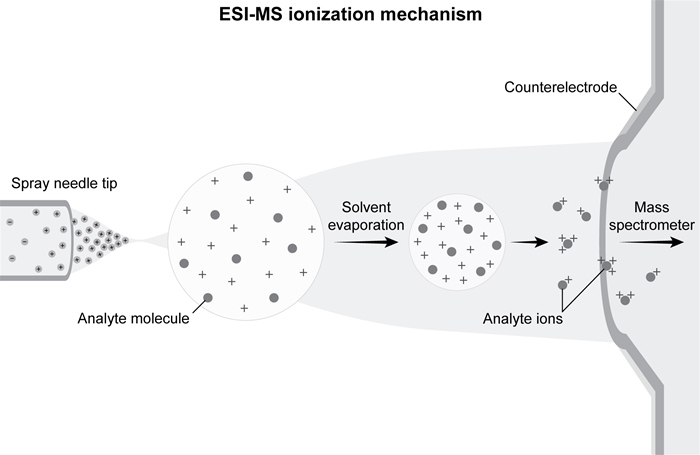

(Multiple Choice)
4.9/5
(82)

If a primary alkyl halide and a chiral tertiary halide both undergo substitution reactions, the reaction with the tertiary halide will have more products because:

(Multiple Choice)
4.8/5
(61)

Passage A group of students studied the reactivity of four alkyl halides (R−X) in two nucleophilic substitution reactions.  Nucleophilic substitution reactions can go through one of two mechanisms.  The SN2 reaction requires substitution of a leaving group with a nucleophile in a single step (Reaction 1), and the SN1 reaction requires elimination of the leaving group and formation of an intermediate before nucleophilic substitution can occur, resulting in a two-step process (Reaction 2).R−X + NaI → R−I + NaX↓Reaction 1R−X + AgNO3 → R+ + AgX↓ + HOCH2CH3 → R−OCH2CH3 + HNO3Reaction 2Experiment 1The students performed the SN2 reaction (Reaction 1) by the addition of a few drops of each alkyl halide into a separate test tube containing 1 mL of 15% solution of NaI in acetone at 25°C.  After mixing, they monitored the reaction for the formation of a precipitate (sodium halide salt).  If no precipitate formed after 5 minutes, they raised the temperature of the reaction to 50°C and again checked for the formation of a precipitate.  Formation of a precipitate indicated the substrate underwent nucleophilic substitution.  The results observed for the Finkelstein reaction are shown in Table 1.Table 1  Results of the SN2 Reaction Passage A group of students studied the reactivity of four alkyl halides (R−X) in two nucleophilic substitution reactions.  Nucleophilic substitution reactions can go through one of two mechanisms.  The S<sub>N</sub>2 reaction requires substitution of a leaving group with a nucleophile in a single step (Reaction 1), and the S<sub>N</sub>1 reaction requires elimination of the leaving group and formation of an intermediate before nucleophilic substitution can occur, resulting in a two-step process (Reaction 2).R−X + NaI → R−I + NaX↓<strong>Reaction 1</strong>R−X + AgNO<sub>3</sub> → R<sup>+</sup> + AgX↓ + HOCH<sub>2</sub>CH<sub>3</sub> → R−OCH<sub>2</sub>CH<sub>3</sub> + HNO<sub>3</sub><strong>Reaction 2</strong>Experiment 1The students performed the S<sub>N</sub>2 reaction (Reaction 1) by the addition of a few drops of each alkyl halide into a separate test tube containing 1 mL of 15% solution of NaI in acetone at 25°C.  After mixing, they monitored the reaction for the formation of a precipitate (sodium halide salt).  If no precipitate formed after 5 minutes, they raised the temperature of the reaction to 50°C and again checked for the formation of a precipitate.  Formation of a precipitate indicated the substrate underwent nucleophilic substitution.  The results observed for the Finkelstein reaction are shown in Table 1.<strong>Table 1</strong>  Results of the S<sub>N</sub>2 Reaction    Experiment 2The students repeated the procedure followed in Experiment 1 except they added a few drops of each alkyl halide into a separate test tube containing 1 mL of 1% solution of AgNO<sub>3</sub> in ethanol at 25°C.  The results observed for this reaction are shown in Table 2.<strong>Table 2</strong>  Results of the S<sub>N</sub>1 Reaction    -An alkoxide nucleophile is used instead of iodide in Experiment 1.  Which of the alkoxides is the LEAST sterically hindered? Experiment 2The students repeated the procedure followed in Experiment 1 except they added a few drops of each alkyl halide into a separate test tube containing 1 mL of 1% solution of AgNO3 in ethanol at 25°C.  The results observed for this reaction are shown in Table 2.Table 2  Results of the SN1 Reaction Passage A group of students studied the reactivity of four alkyl halides (R−X) in two nucleophilic substitution reactions.  Nucleophilic substitution reactions can go through one of two mechanisms.  The S<sub>N</sub>2 reaction requires substitution of a leaving group with a nucleophile in a single step (Reaction 1), and the S<sub>N</sub>1 reaction requires elimination of the leaving group and formation of an intermediate before nucleophilic substitution can occur, resulting in a two-step process (Reaction 2).R−X + NaI → R−I + NaX↓<strong>Reaction 1</strong>R−X + AgNO<sub>3</sub> → R<sup>+</sup> + AgX↓ + HOCH<sub>2</sub>CH<sub>3</sub> → R−OCH<sub>2</sub>CH<sub>3</sub> + HNO<sub>3</sub><strong>Reaction 2</strong>Experiment 1The students performed the S<sub>N</sub>2 reaction (Reaction 1) by the addition of a few drops of each alkyl halide into a separate test tube containing 1 mL of 15% solution of NaI in acetone at 25°C.  After mixing, they monitored the reaction for the formation of a precipitate (sodium halide salt).  If no precipitate formed after 5 minutes, they raised the temperature of the reaction to 50°C and again checked for the formation of a precipitate.  Formation of a precipitate indicated the substrate underwent nucleophilic substitution.  The results observed for the Finkelstein reaction are shown in Table 1.<strong>Table 1</strong>  Results of the S<sub>N</sub>2 Reaction    Experiment 2The students repeated the procedure followed in Experiment 1 except they added a few drops of each alkyl halide into a separate test tube containing 1 mL of 1% solution of AgNO<sub>3</sub> in ethanol at 25°C.  The results observed for this reaction are shown in Table 2.<strong>Table 2</strong>  Results of the S<sub>N</sub>1 Reaction    -An alkoxide nucleophile is used instead of iodide in Experiment 1.  Which of the alkoxides is the LEAST sterically hindered? -An alkoxide nucleophile is used instead of iodide in Experiment 1.  Which of the alkoxides is the LEAST sterically hindered?

(Multiple Choice)
4.9/5
(83)
Showing 101 - 120 of 191
close modal

Filters

  • Essay(0)
  • Multiple Choice(0)
  • Short Answer(0)
  • True False(0)
  • Matching(0)