Multiple Choice
Passage
The drug paracetamol, also known as acetaminophen, is used to relieve pain and fever, and is a metabolite of the antipyretic drug phenacetin (Figure 1) . These two drugs have similar medicinal properties, but phenacetin has been shown to be carcinogenic and cause kidney damage. Acetaminophen is a safer alternative to phenacetin when taken in therapeutic doses.
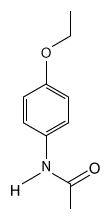 Figure 1 Structure of phenacetinA student synthesizes acetaminophen in a laboratory from phenol according to the reactions shown. The synthesis begins with the nitration of phenol by sodium nitrate (NaNO3) to produce the mixture of the isomers 2-nitrophenol and 4-nitrophenol (Reaction 1) . These isomers can be easily separated by steam distillation to isolate the desired product, 4-nitrophenol. Reduction of the nitro group with sodium borohydride (NaBH4) (Reaction 2) is followed by acetylation of the amine with acetic anhydride (Reaction 3) to afford the final product, acetaminophen.
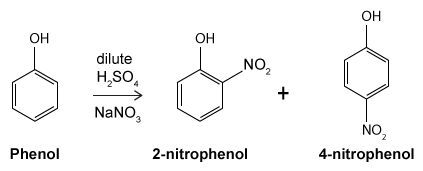 Reaction 1
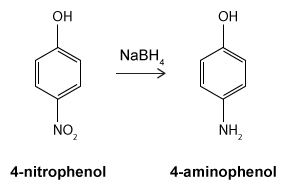 Reaction 2
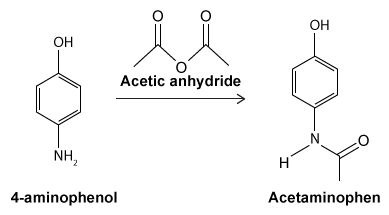 Reaction 3
-Which technique could monitor the formation of 4-aminophenol by excitation of electrons with high-energy photons?
A) Mass spectrometry
B) 1H NMR spectroscopy
C) TLC with ultraviolet (UV) light
D) Gas chromatography
Correct Answer:

Verified
Correct Answer:
Verified
Q98: Passage<br>Fatty acids (FAs) are lipids that play
Q99: Passage<br>Electrospray ionization mass spectrometry (ESI-MS) employs a
Q100: Passage<br>The N-terminus of an amino acid must
Q101: Passage<br>High blood pressure, or hypertension, is a
Q102: Passage<br>The drug paracetamol, also known as acetaminophen,
Q104: Passage<br>Students used three classification tests to study
Q105: Which of the following compounds is most
Q106: If the compound shown below is the
Q107: Passage<br>Hemophilia B is a blood clotting disorder
Q108: Passage<br>A limited number of cellular functions exist