



 Chat with AI
Exam 6: Organic Chemistry

Exam 1: Behavioral Sciences343 Questions
Exam 2: Biochemistry307 Questions
Exam 3: Biology319 Questions
Exam 4: Critical Analysis & Reasoning Skills358 Questions
Exam 5: General Chemistry317 Questions
Exam 6: Organic Chemistry191 Questions
Exam 7: Physics200 Questions
Select questions type


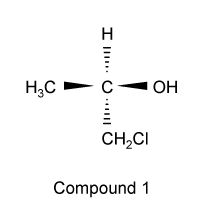

The solutes in an aqueous reaction mixture are separated by extraction. The function of the nonpolar organic solvent is to:
(Multiple Choice)
4.7/5  (73)
(73) Passage
The protozoan Euglena gracilis expresses glycosyltransferases (enzymes that add carbohydrates to molecules) and glycosidases (enzymes that remove carbohydrates) within its membrane. These enzymes were previously studied using radiolabeled sugars. To avoid the use of radioactive materials, fluorescence-based assays were investigated. Derivatives of the fluorescent molecule coumarin were attached to carbohydrates (Figure 1) for detection in fluorescence assays.Compound 1, a carbohydrate derivative with hydroxyl groups protected by benzoate (Bz), reacted with Compound 2 to form Compound 3. 13C NMR confirmed the formation of Compound 3 by observing a distinct C-H coupling at the anomeric carbon. Hydroxyl deprotection and addition of Compound 4 (a coumarin analogue) gave Compound 5, a fluorescent coumarin derivative. Compound 6, another coumarin derivative, was made following a similar sequence except an additional sugar was attached before the addition of the coumarin group.
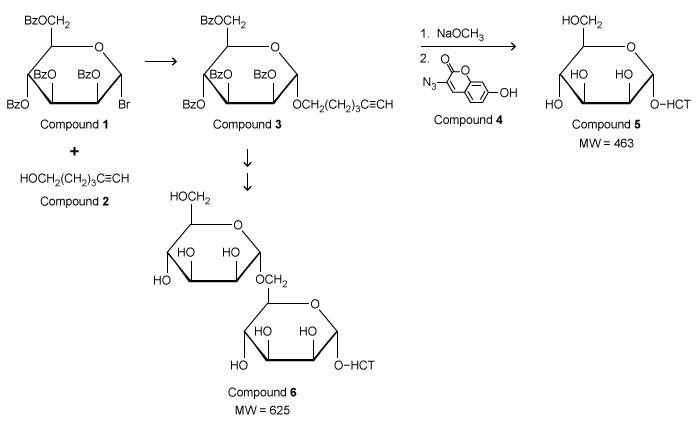 Figure 1 Synthesis of fluorescent coumarin derivatives (Note: HCT denotes the fluorescent butyl hydroxycoumarin triazole group.)Small vesicles called microsomes were isolated from Euglena gracilis membranes, and microsomal glycosyltransferase activities were investigated using a hexose donor substrate and either Compound 5 (Figure 2) or Compound 6 (Figure 3) as the acceptor substrate. Thin-layer chromatography (TLC) analysis indicated the formation of a new product in each assay. These products were purified and characterized by liquid chromatography-mass spectrometry (LC-MS). The molecular ion for each product was subjected to another round of MS, in which individual hexose units (MW) = 162) were cleaved from the coumarin derivatives that were formed during the assay. The MW of hydroxycoumarin triazole (HCT) is 301.
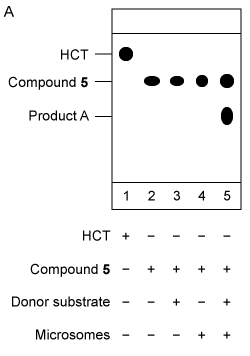
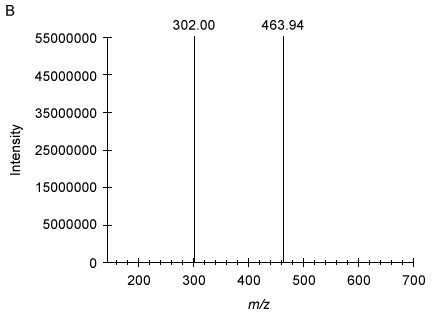 Figure 2 Analysis of Compound 5 as the acceptor substrate: (A) TLC analysis of fluorescent products; (B) Mass spectrum of product A fragmented molecular ion peak
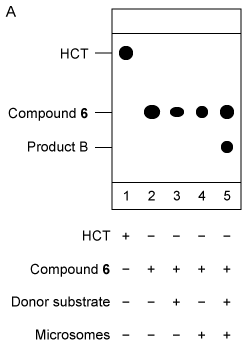
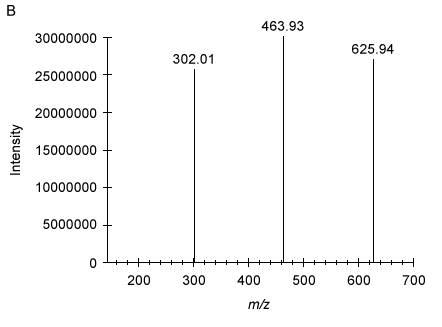 Figure 3 Analysis of Compound 6 as the acceptor substrate: (A) TLC analysis of fluorescent products; (B) Mass spectrum of product B fragmented molecular ion peak
Adapted from: I. M. Ivanova et al., "Fluorescent mannosides serve as acceptor substrates for glycosyltransferase and sugar-1-phosphate transferase activities in Euglena gracilis membranes." Carbohydrate Research. © 2017 Elsevier.
-Based on the mass spectrometry data given in the passage, how many hexose units were cleaved from molecular ions of products A and B, respectively?
Figure 1 Synthesis of fluorescent coumarin derivatives (Note: HCT denotes the fluorescent butyl hydroxycoumarin triazole group.)Small vesicles called microsomes were isolated from Euglena gracilis membranes, and microsomal glycosyltransferase activities were investigated using a hexose donor substrate and either Compound 5 (Figure 2) or Compound 6 (Figure 3) as the acceptor substrate. Thin-layer chromatography (TLC) analysis indicated the formation of a new product in each assay. These products were purified and characterized by liquid chromatography-mass spectrometry (LC-MS). The molecular ion for each product was subjected to another round of MS, in which individual hexose units (MW) = 162) were cleaved from the coumarin derivatives that were formed during the assay. The MW of hydroxycoumarin triazole (HCT) is 301.
Figure 2 Analysis of Compound 5 as the acceptor substrate: (A) TLC analysis of fluorescent products; (B) Mass spectrum of product A fragmented molecular ion peak
Figure 3 Analysis of Compound 6 as the acceptor substrate: (A) TLC analysis of fluorescent products; (B) Mass spectrum of product B fragmented molecular ion peak
Adapted from: I. M. Ivanova et al., "Fluorescent mannosides serve as acceptor substrates for glycosyltransferase and sugar-1-phosphate transferase activities in Euglena gracilis membranes." Carbohydrate Research. © 2017 Elsevier.
-Based on the mass spectrometry data given in the passage, how many hexose units were cleaved from molecular ions of products A and B, respectively? (Multiple Choice)
4.8/5 (63)
(63) Passage
Fatty acids (FAs) are lipids that play important roles in cellular function, including energy storage and membrane structure. Most polyunsaturated fatty acids (PUFAs) are made in the body; however, omega-3 alpha-linolenic acid and omega-6 linoleic acid must be obtained from the diet. These two PUFAs are precursors to other omega-3 and omega-6 long-chain FAs that are necessary for physiological processes such as neurological development, normal growth, and immune response. Insufficient omega-3 and omega-6 long-chain FAs can lead to an increase in omega-9 fatty acids such as mead acid, and to essential fatty acid deficiency (EFAD), which can cause infertility, decreased growth, and increased susceptibility to infection.Total FA levels in plasma and serum can be used to diagnose EFAD. Plasma and serum samples from several individuals were hydrolyzed to release FAs from triacylglycerols and phospholipids. Once isolated, the free FAs were converted to pentafluorobenzyl (PFB) derivatives and separated by gas chromatography (GC). Total levels of each type of fatty acid were quantified by negative chemical ionization-mass spectrometry (NCI-MS) immediately after GC. NCI is an ionization technique that creates negatively charged ions with little to no fragmentation. The NCI-MS revealed that two of the peaks from GC had the same m/z ratio (Figure 1). They were both confirmed to be forms of an unsaturated, unbranched 22-carbon FA called omega-9 docosenoic acid.
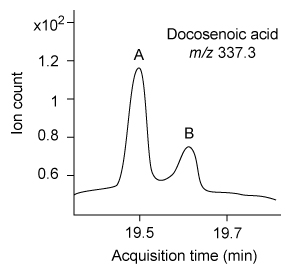 Figure 1 Selected ion chromatogram of docosenoic acidResearchers have proposed that an elevated ratio of the triene omega-9 mead acid to the tetraene omega-6 arachidonic acid, known as the triene/tetraene (TT) ratio, can signify EFAD. Using GC and NCI-MS, they measured the TT ratio, concentration of mead acid, and individual concentrations of omega-3 and omega-6 FAs in plasma and serum samples from three patients and compared their results to normal ranges. An increased TT ratio and mead acid concentration and decreased omega-3 and omega-6 FA concentrations were observed in the patient samples compared to normal ranges.
Adapted from E. Kish-Trier et al., "Quantitation of total fatty acids in plasma and serum by GC-NCI-MS." Clinical Mass Spectrometry. ©2016 Elsevier.
-A triacylglyceride isolated from a plasma sample is shown below.
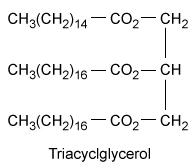 When the triacylglyceride is hydrolyzed, how many unique products are obtained other than glycerol?
Figure 1 Selected ion chromatogram of docosenoic acidResearchers have proposed that an elevated ratio of the triene omega-9 mead acid to the tetraene omega-6 arachidonic acid, known as the triene/tetraene (TT) ratio, can signify EFAD. Using GC and NCI-MS, they measured the TT ratio, concentration of mead acid, and individual concentrations of omega-3 and omega-6 FAs in plasma and serum samples from three patients and compared their results to normal ranges. An increased TT ratio and mead acid concentration and decreased omega-3 and omega-6 FA concentrations were observed in the patient samples compared to normal ranges.
Adapted from E. Kish-Trier et al., "Quantitation of total fatty acids in plasma and serum by GC-NCI-MS." Clinical Mass Spectrometry. ©2016 Elsevier.
-A triacylglyceride isolated from a plasma sample is shown below. When the triacylglyceride is hydrolyzed, how many unique products are obtained other than glycerol? (Multiple Choice)
5.0/5 (65)
(65) What is the product when (2R,3R)-2-bromo-3-methylpentane is reacted with NaOH?
(Multiple Choice)
4.8/5 (77)
(77) Passage
Hemophilia B is a blood clotting disorder caused by a factor IX (FIX) deficiency. FIX is a 57-kDa, vitamin K-dependent protease that activates factor X, leading to the conversion of prothrombin to thrombin for propagation of the clotting cascade. Activated FIX has two major domains: a γ-carboxyglutamic acid domain and a serine protease domain. The γ-carboxyglutamic acid domain participates in the oxidation of vitamin K using metallic cofactors, as shown in Figure 1.
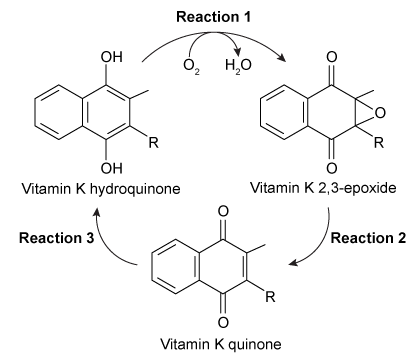 Figure 1 Oxidation of vitamin KTo further analyze the γ-carboxyglutamic acid-rich domain of FIX, an analogous synthetic peptide composed of matching residues 1 through 49 on FIX was evaluated by proton nuclear magnetic resonance (NMR) spectroscopy. Analysis of the proton chemical shift before the addition of metal ions suggested that the synthetic peptide contained normal structural elements. Large chemical shifts were observed after the addition of calcium and beryllium, as shown in Figure 2.
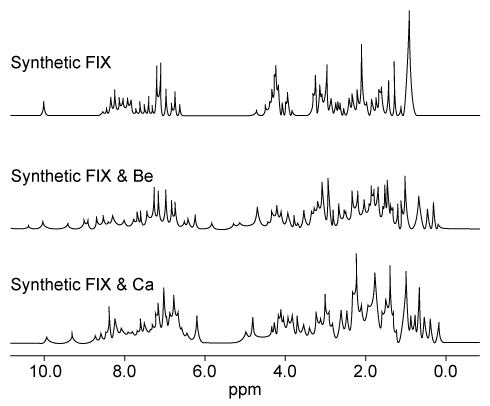 Figure 2 Results of NMR spectroscopy (tetramethylsilane [TMS] peak has been removed)The synthetic analog was then placed in solution with vitamin K hydroquinone and cofactors required for vitamin K oxidation. The oxidation products of vitamin K in Reactions 1 and 2 were collected and evaluated under high-performance liquid chromatography (HPLC) using hexane as the mobile phase. Analysis demonstrated cis and trans isomers of vitamin K1 and a trans-epoxy vitamin K1, as shown in Figure 3.
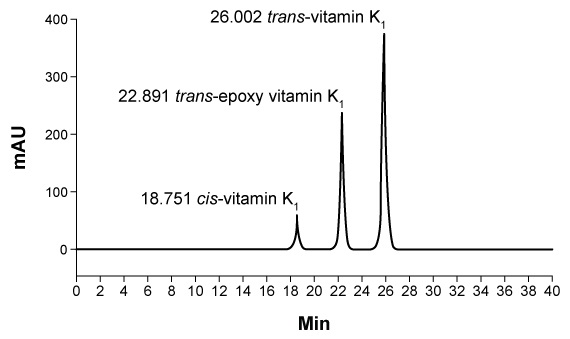 Figure 3 Results of HPLC separation
Adapted from Freedman SJ, Furie BC, Furie B, Baleja JD. Structure of the metal-free gamma-carboxyglutamic acid-rich membrane binding region of factor IX by two-dimensional NMR spectroscopy. J Biol Chem. 1995.
-HPLC is repeated after accidental contamination of the sample containing the cis/trans vitamin K1 isomers and trans-epoxy vitamin K1 in Figure 3. The most recent results demonstrate a new compound with a broad base of 405 mAU and retention time of 23.421 min. This contaminant likely:
Figure 1 Oxidation of vitamin KTo further analyze the γ-carboxyglutamic acid-rich domain of FIX, an analogous synthetic peptide composed of matching residues 1 through 49 on FIX was evaluated by proton nuclear magnetic resonance (NMR) spectroscopy. Analysis of the proton chemical shift before the addition of metal ions suggested that the synthetic peptide contained normal structural elements. Large chemical shifts were observed after the addition of calcium and beryllium, as shown in Figure 2.
Figure 2 Results of NMR spectroscopy (tetramethylsilane [TMS] peak has been removed)The synthetic analog was then placed in solution with vitamin K hydroquinone and cofactors required for vitamin K oxidation. The oxidation products of vitamin K in Reactions 1 and 2 were collected and evaluated under high-performance liquid chromatography (HPLC) using hexane as the mobile phase. Analysis demonstrated cis and trans isomers of vitamin K1 and a trans-epoxy vitamin K1, as shown in Figure 3.
Figure 3 Results of HPLC separation
Adapted from Freedman SJ, Furie BC, Furie B, Baleja JD. Structure of the metal-free gamma-carboxyglutamic acid-rich membrane binding region of factor IX by two-dimensional NMR spectroscopy. J Biol Chem. 1995.
-HPLC is repeated after accidental contamination of the sample containing the cis/trans vitamin K1 isomers and trans-epoxy vitamin K1 in Figure 3. The most recent results demonstrate a new compound with a broad base of 405 mAU and retention time of 23.421 min. This contaminant likely: (Multiple Choice)
4.9/5 (77)
(77) Passage
Solid-phase peptide synthesis is normally carried out on a resin bathed multiple times in dimethylformamide (DMF)-a toxic, polar, aprotic solvent-which poses an environmental problem because a large amount of toxic solvent waste is created. Cyclic carbonates such as propylene carbonate (PC) and ethylene carbonate (EC) are nontoxic, polar, aprotic solvents that could be used as an alternative to DMF.Compounds 1 and 2 are modified L-amino acids. They were coupled to form Compound 3, a dipeptide, which was then deprotected to yield Compound 4 (Figure 1).
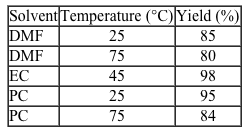
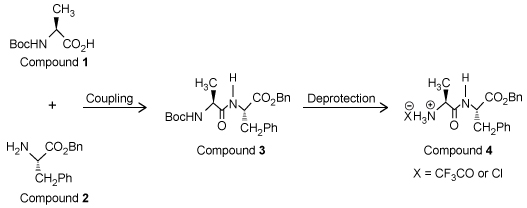 Figure 1 Synthesis of Compound 4To determine the effect that solvent type and temperature have on the synthesis of this peptide, the nontoxic solvents PC and EC as well as the toxic solvent DMF were each used in separate syntheses of Compound 4 at different temperatures. The reaction solvent was also used to rinse the resin. Table 1 shows the results of these syntheses.Table 1 Results from the Synthesis of Compound 4
 The successful synthesis of Compound 4 using nontoxic solvents encouraged researchers to pursue the synthesis of a larger, biologically active peptide. Bradykinin, a vasodilator containing nine amino acids (Arg-Pro-Pro-Gly-Phe-Ser-Pro-Phe-Arg), was synthesized using the same solid-state peptide synthesis protocol used to synthesize Compound 4. Separate syntheses were done using either DMF or PC, and the purity of bradykinin from each synthesis was analyzed by high-performance liquid chromatography (HPLC) (Figure 2).In each chromatogram, peak 1 has the same retention time as commercially obtained bradykinin, and the other peaks correspond to impurities. In chromatogram A, the impurity has a similar retention time to the product peak whereas the impurity peaks in chromatogram B have distinct retention times compared to the product peak.
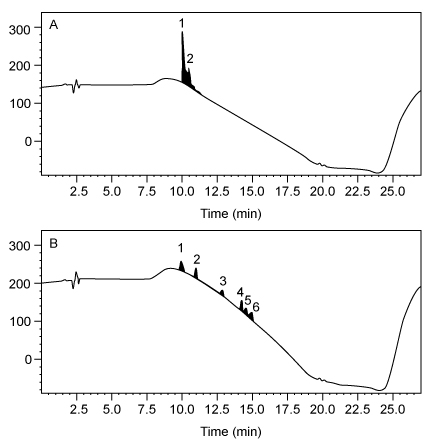 Figure 2 HPLC of synthetic bradykinin: (A) synthesis in DMF; (B) synthesis in PC
Adapted from S. B. Lawrenson et al., "The greening of peptide synthesis." Green Chem. ©2017 The Royal Society of Chemistry.
-A peptide bond is formed in bradykinin synthesis when the amino group of arginine reacts with:
Figure 1 Synthesis of Compound 4To determine the effect that solvent type and temperature have on the synthesis of this peptide, the nontoxic solvents PC and EC as well as the toxic solvent DMF were each used in separate syntheses of Compound 4 at different temperatures. The reaction solvent was also used to rinse the resin. Table 1 shows the results of these syntheses.Table 1 Results from the Synthesis of Compound 4
The successful synthesis of Compound 4 using nontoxic solvents encouraged researchers to pursue the synthesis of a larger, biologically active peptide. Bradykinin, a vasodilator containing nine amino acids (Arg-Pro-Pro-Gly-Phe-Ser-Pro-Phe-Arg), was synthesized using the same solid-state peptide synthesis protocol used to synthesize Compound 4. Separate syntheses were done using either DMF or PC, and the purity of bradykinin from each synthesis was analyzed by high-performance liquid chromatography (HPLC) (Figure 2).In each chromatogram, peak 1 has the same retention time as commercially obtained bradykinin, and the other peaks correspond to impurities. In chromatogram A, the impurity has a similar retention time to the product peak whereas the impurity peaks in chromatogram B have distinct retention times compared to the product peak.
Figure 2 HPLC of synthetic bradykinin: (A) synthesis in DMF; (B) synthesis in PC
Adapted from S. B. Lawrenson et al., "The greening of peptide synthesis." Green Chem. ©2017 The Royal Society of Chemistry.
-A peptide bond is formed in bradykinin synthesis when the amino group of arginine reacts with: (Multiple Choice)
4.7/5 (85)
(85) Passage
Two key ingredients found in many soaps are PEG 150 distearate and ethylhexyl glycerin. Both can be synthesized from glyceryl tristearate (Figure 1).
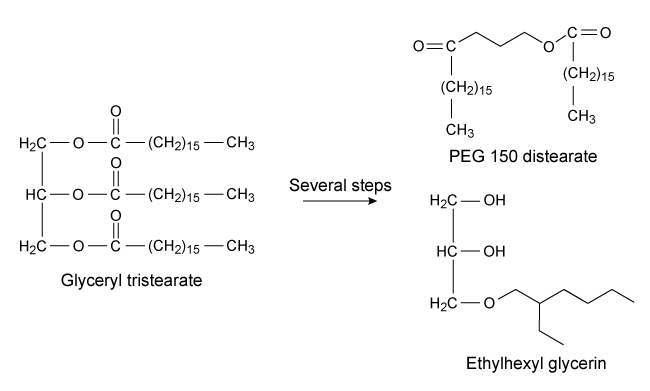 Figure 1 Formation of PEG 150 distearate and ethylhexyl glycerin from glyceryl tristearateThe first step in this process requires the saponification of glyceryl tristearate. The resulting stearate molecules can then react with PEG 150 in an acid-catalyzed Fischer esterification to form PEG 150 distearate. The glycerol produced during saponification is used as a nucleophile to form ethylhexyl glycerin through a base-catalyzed SN2 reaction with an ethylhexyl halide.Studies have shown that hand washing with soap can substantially reduce the number of germs present on hands and that washing hands before preparing food is particularly effective in reducing illness. Researchers examined the effect of washing for 20 seconds with different amounts of soap containing PEG 150 distearate and ethylhexyl glycerin and found an inverse correlation between the volume of soap used and the amount of bacteria recovered from the hands. The data are shown in Figure 2.
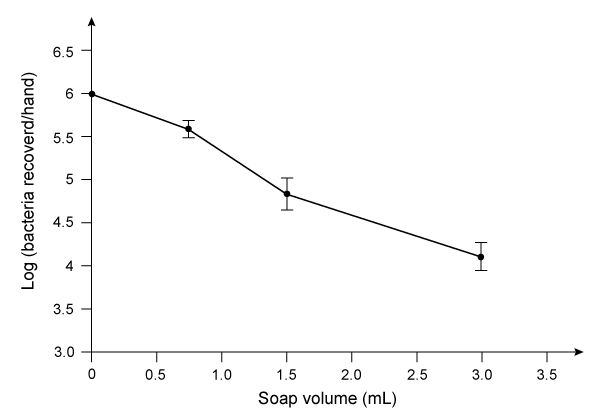 Figure 2 Bacteria recovered from hands after washing with varying amounts of soapThe researchers then investigated the effect of hand washing with different kinds of soap on the transfer of bacteria from hands to objects. Volunteers washed with a fixed volume of soap for 30 seconds, then handled sterilized plastic spheres for 30 seconds. Bacteria were then recovered from the spheres. The results are shown in Table 1.Table 1 Bacteria Recovered from Objects
 Adapted from Fuls JL, Rodgers ND, Fischler GE, et al. Alternative hand contamination technique to compare the activities of antimicrobial and nonantimicrobial soaps under different test conditions. Appl Environ Microbiol. 2008.
-Which additional extraction steps would cause phosphatidylethanolamine and 2,6-dimethoxyphenol to enter the aqueous layer consecutively?
Figure 1 Formation of PEG 150 distearate and ethylhexyl glycerin from glyceryl tristearateThe first step in this process requires the saponification of glyceryl tristearate. The resulting stearate molecules can then react with PEG 150 in an acid-catalyzed Fischer esterification to form PEG 150 distearate. The glycerol produced during saponification is used as a nucleophile to form ethylhexyl glycerin through a base-catalyzed SN2 reaction with an ethylhexyl halide.Studies have shown that hand washing with soap can substantially reduce the number of germs present on hands and that washing hands before preparing food is particularly effective in reducing illness. Researchers examined the effect of washing for 20 seconds with different amounts of soap containing PEG 150 distearate and ethylhexyl glycerin and found an inverse correlation between the volume of soap used and the amount of bacteria recovered from the hands. The data are shown in Figure 2.
Figure 2 Bacteria recovered from hands after washing with varying amounts of soapThe researchers then investigated the effect of hand washing with different kinds of soap on the transfer of bacteria from hands to objects. Volunteers washed with a fixed volume of soap for 30 seconds, then handled sterilized plastic spheres for 30 seconds. Bacteria were then recovered from the spheres. The results are shown in Table 1.Table 1 Bacteria Recovered from Objects
Adapted from Fuls JL, Rodgers ND, Fischler GE, et al. Alternative hand contamination technique to compare the activities of antimicrobial and nonantimicrobial soaps under different test conditions. Appl Environ Microbiol. 2008.
-Which additional extraction steps would cause phosphatidylethanolamine and 2,6-dimethoxyphenol to enter the aqueous layer consecutively? (Multiple Choice)
4.9/5 (82)
(82) Passage
The cryptophycins, isolated from cyanobacteria, are a family of macrocyclic molecules. Researchers have studied the biological activity of these compounds and found that many of them are active against multi-drug-resistant tumor cells.Cryptophycin-52, an analogue of the natural cryptophycins, has been tested in clinical trials for its efficacy against cancer cells, but the studies were suspended due to neurotoxic side effects. Nevertheless, the synthesis of similar analogues continues to be of interest in cancer research. A key step in the synthesis of cryptophycin-52 is the stereospecific formation of an epoxide from an alkene and oxone (Figure 1), which can be facilitated by the Shi catalyst. The Shi catalyst (Figure 2) is derived from the carbohydrate D-fructose and is known among organic chemists for its ability to form epoxides in hydrocarbons in a stereospecific manner.
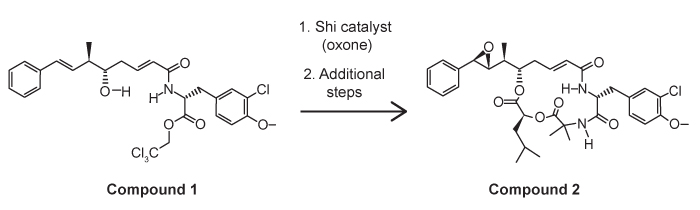 Figure 1 Shi epoxidation of compound 1
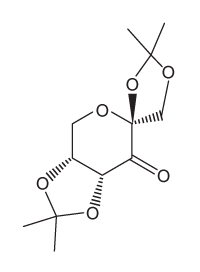 Figure 2 Structure of the Shi catalystThe epoxidation of compound 1 was monitored by thin-layer chromatography (TLC). When the reaction was completed, high-performance liquid chromatography (HPLC) was used to analyze the epoxide product. A chiral column that had an affinity for the desired epoxide was used. A standard of the desired epoxide was obtained to optimize the conditions and determine the retention time of the epoxide. The HPLC chromatogram of the epoxide standard is shown in Figure 3.
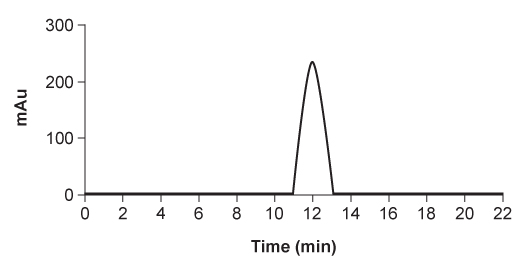 Figure 3 HPLC of epoxide standard
Adapted from Weiß C, Bogner T, Sammet B, Sewald N. Total synthesis and biological evaluation of fluorinated cryptophycins. Beilstein J Org Chem. 2012.
-Ketoses such as fructose are expected to give a positive Tollens test because:
Figure 1 Shi epoxidation of compound 1
Figure 2 Structure of the Shi catalystThe epoxidation of compound 1 was monitored by thin-layer chromatography (TLC). When the reaction was completed, high-performance liquid chromatography (HPLC) was used to analyze the epoxide product. A chiral column that had an affinity for the desired epoxide was used. A standard of the desired epoxide was obtained to optimize the conditions and determine the retention time of the epoxide. The HPLC chromatogram of the epoxide standard is shown in Figure 3.
Figure 3 HPLC of epoxide standard
Adapted from Weiß C, Bogner T, Sammet B, Sewald N. Total synthesis and biological evaluation of fluorinated cryptophycins. Beilstein J Org Chem. 2012.
-Ketoses such as fructose are expected to give a positive Tollens test because: (Multiple Choice)
4.7/5 (89)
(89) The experimental data obtained when a chiral molecule interacts with plane-polarized light is called:
(Multiple Choice)
4.8/5 (68)
(68) Passage
The protozoan Euglena gracilis expresses glycosyltransferases (enzymes that add carbohydrates to molecules) and glycosidases (enzymes that remove carbohydrates) within its membrane. These enzymes were previously studied using radiolabeled sugars. To avoid the use of radioactive materials, fluorescence-based assays were investigated. Derivatives of the fluorescent molecule coumarin were attached to carbohydrates (Figure 1) for detection in fluorescence assays.Compound 1, a carbohydrate derivative with hydroxyl groups protected by benzoate (Bz), reacted with Compound 2 to form Compound 3. 13C NMR confirmed the formation of Compound 3 by observing a distinct C-H coupling at the anomeric carbon. Hydroxyl deprotection and addition of Compound 4 (a coumarin analogue) gave Compound 5, a fluorescent coumarin derivative. Compound 6, another coumarin derivative, was made following a similar sequence except an additional sugar was attached before the addition of the coumarin group.
Figure 1 Synthesis of fluorescent coumarin derivatives (Note: HCT denotes the fluorescent butyl hydroxycoumarin triazole group.)Small vesicles called microsomes were isolated from Euglena gracilis membranes, and microsomal glycosyltransferase activities were investigated using a hexose donor substrate and either Compound 5 (Figure 2) or Compound 6 (Figure 3) as the acceptor substrate. Thin-layer chromatography (TLC) analysis indicated the formation of a new product in each assay. These products were purified and characterized by liquid chromatography-mass spectrometry (LC-MS). The molecular ion for each product was subjected to another round of MS, in which individual hexose units (MW) = 162) were cleaved from the coumarin derivatives that were formed during the assay. The MW of hydroxycoumarin triazole (HCT) is 301.
Figure 2 Analysis of Compound 5 as the acceptor substrate: (A) TLC analysis of fluorescent products; (B) Mass spectrum of product A fragmented molecular ion peak
Figure 3 Analysis of Compound 6 as the acceptor substrate: (A) TLC analysis of fluorescent products; (B) Mass spectrum of product B fragmented molecular ion peak
Adapted from: I. M. Ivanova et al., "Fluorescent mannosides serve as acceptor substrates for glycosyltransferase and sugar-1-phosphate transferase activities in Euglena gracilis membranes." Carbohydrate Research. © 2017 Elsevier.
-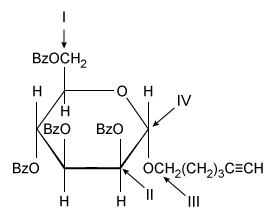 Based on the passage, which carbon gives a distinct C-H coupling in the 13C NMR spectrum that confirms formation of Compound 3?
Figure 1 Synthesis of fluorescent coumarin derivatives (Note: HCT denotes the fluorescent butyl hydroxycoumarin triazole group.)Small vesicles called microsomes were isolated from Euglena gracilis membranes, and microsomal glycosyltransferase activities were investigated using a hexose donor substrate and either Compound 5 (Figure 2) or Compound 6 (Figure 3) as the acceptor substrate. Thin-layer chromatography (TLC) analysis indicated the formation of a new product in each assay. These products were purified and characterized by liquid chromatography-mass spectrometry (LC-MS). The molecular ion for each product was subjected to another round of MS, in which individual hexose units (MW) = 162) were cleaved from the coumarin derivatives that were formed during the assay. The MW of hydroxycoumarin triazole (HCT) is 301.
Figure 2 Analysis of Compound 5 as the acceptor substrate: (A) TLC analysis of fluorescent products; (B) Mass spectrum of product A fragmented molecular ion peak
Figure 3 Analysis of Compound 6 as the acceptor substrate: (A) TLC analysis of fluorescent products; (B) Mass spectrum of product B fragmented molecular ion peak
Adapted from: I. M. Ivanova et al., "Fluorescent mannosides serve as acceptor substrates for glycosyltransferase and sugar-1-phosphate transferase activities in Euglena gracilis membranes." Carbohydrate Research. © 2017 Elsevier.
- Based on the passage, which carbon gives a distinct C-H coupling in the 13C NMR spectrum that confirms formation of Compound 3? (Multiple Choice)
4.8/5 (85)
(85) 
Filters
- Essay(0)
- Multiple Choice(0)
- Short Answer(0)
- True False(0)
- Matching(0)