



 Chat with AI
Exam 6: Organic Chemistry

Exam 1: Behavioral Sciences343 Questions
Exam 2: Biochemistry307 Questions
Exam 3: Biology319 Questions
Exam 4: Critical Analysis & Reasoning Skills358 Questions
Exam 5: General Chemistry317 Questions
Exam 6: Organic Chemistry191 Questions
Exam 7: Physics200 Questions
Select questions type


Passage
The cryptophycins, isolated from cyanobacteria, are a family of macrocyclic molecules. Researchers have studied the biological activity of these compounds and found that many of them are active against multi-drug-resistant tumor cells.Cryptophycin-52, an analogue of the natural cryptophycins, has been tested in clinical trials for its efficacy against cancer cells, but the studies were suspended due to neurotoxic side effects. Nevertheless, the synthesis of similar analogues continues to be of interest in cancer research. A key step in the synthesis of cryptophycin-52 is the stereospecific formation of an epoxide from an alkene and oxone (Figure 1), which can be facilitated by the Shi catalyst. The Shi catalyst (Figure 2) is derived from the carbohydrate D-fructose and is known among organic chemists for its ability to form epoxides in hydrocarbons in a stereospecific manner.
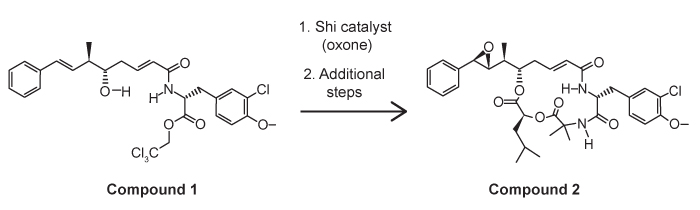 Figure 1 Shi epoxidation of compound 1
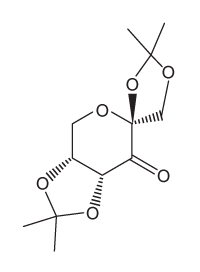 Figure 2 Structure of the Shi catalystThe epoxidation of compound 1 was monitored by thin-layer chromatography (TLC). When the reaction was completed, high-performance liquid chromatography (HPLC) was used to analyze the epoxide product. A chiral column that had an affinity for the desired epoxide was used. A standard of the desired epoxide was obtained to optimize the conditions and determine the retention time of the epoxide. The HPLC chromatogram of the epoxide standard is shown in Figure 3.
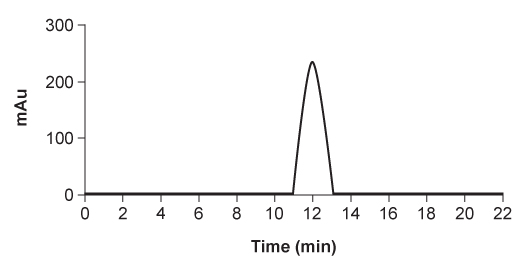 Figure 3 HPLC of epoxide standard
Adapted from Weiß C, Bogner T, Sammet B, Sewald N. Total synthesis and biological evaluation of fluorinated cryptophycins. Beilstein J Org Chem. 2012.
-The HPLC analysis of the Shi epoxide revealed a 10:1 mixture of isomers in favor of the desired isomer. Based on the chromatogram shown in Figure 3, which of the following most likely depicts the chromatogram of the mixture?
Figure 1 Shi epoxidation of compound 1
Figure 2 Structure of the Shi catalystThe epoxidation of compound 1 was monitored by thin-layer chromatography (TLC). When the reaction was completed, high-performance liquid chromatography (HPLC) was used to analyze the epoxide product. A chiral column that had an affinity for the desired epoxide was used. A standard of the desired epoxide was obtained to optimize the conditions and determine the retention time of the epoxide. The HPLC chromatogram of the epoxide standard is shown in Figure 3.
Figure 3 HPLC of epoxide standard
Adapted from Weiß C, Bogner T, Sammet B, Sewald N. Total synthesis and biological evaluation of fluorinated cryptophycins. Beilstein J Org Chem. 2012.
-The HPLC analysis of the Shi epoxide revealed a 10:1 mixture of isomers in favor of the desired isomer. Based on the chromatogram shown in Figure 3, which of the following most likely depicts the chromatogram of the mixture? (Multiple Choice)
4.7/5  (85)
(85) Passage
A group of students studied the reactivity of four alkyl halides (R−X) in two nucleophilic substitution reactions. Nucleophilic substitution reactions can go through one of two mechanisms. The SN2 reaction requires substitution of a leaving group with a nucleophile in a single step (Reaction 1), and the SN1 reaction requires elimination of the leaving group and formation of an intermediate before nucleophilic substitution can occur, resulting in a two-step process (Reaction 2).R−X + NaI → R−I + NaX↓Reaction 1R−X + AgNO3 → R+ + AgX↓ + HOCH2CH3 → R−OCH2CH3 + HNO3Reaction 2Experiment 1The students performed the SN2 reaction (Reaction 1) by the addition of a few drops of each alkyl halide into a separate test tube containing 1 mL of 15% solution of NaI in acetone at 25°C. After mixing, they monitored the reaction for the formation of a precipitate (sodium halide salt). If no precipitate formed after 5 minutes, they raised the temperature of the reaction to 50°C and again checked for the formation of a precipitate. Formation of a precipitate indicated the substrate underwent nucleophilic substitution. The results observed for the Finkelstein reaction are shown in Table 1.Table 1 Results of the SN2 Reaction
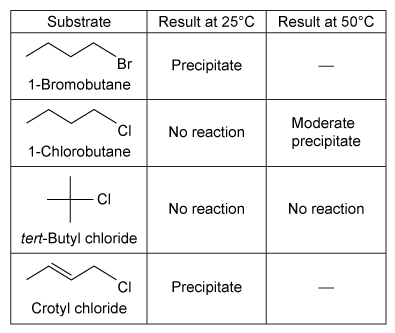 Experiment 2The students repeated the procedure followed in Experiment 1 except they added a few drops of each alkyl halide into a separate test tube containing 1 mL of 1% solution of AgNO3 in ethanol at 25°C. The results observed for this reaction are shown in Table 2.Table 2 Results of the SN1 Reaction
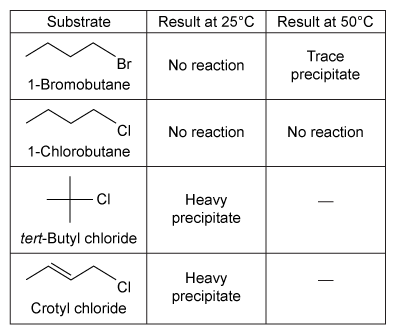 -Which of the following statements is NOT supported by the results in Tables 1 and 2?
Experiment 2The students repeated the procedure followed in Experiment 1 except they added a few drops of each alkyl halide into a separate test tube containing 1 mL of 1% solution of AgNO3 in ethanol at 25°C. The results observed for this reaction are shown in Table 2.Table 2 Results of the SN1 Reaction
-Which of the following statements is NOT supported by the results in Tables 1 and 2? (Multiple Choice)
4.8/5 (80)
(80) Passage
Students perform a synthesis of a carboxylic acid derivative.They mix a 10.00-mL sample of hexanoic acid, 2.33 mL of ethanol, and 0.64 mL of concentrated sulfuric acid in a flask with a water condenser fitted to its neck. The mixture is boiled for one hour and then poured into water when the reaction is complete. The aqueous and organic layers are separated, and the organic layer is washed once with NaHCO3 and twice with water. Solid Na2SO4 is added to the organic layer to remove any water present. The organic layer and Na2SO4 are separated by filtration. The filtrate is purified by fractional distillation to yield the carboxylic acid derivative, a colorless liquid.
-Which carboxylic acid would need to be used to form Compound A (shown below) based on the reaction described in the passage? 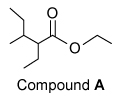
(Multiple Choice)
4.7/5 (78)
(78) Passage
Two key ingredients found in many soaps are PEG 150 distearate and ethylhexyl glycerin. Both can be synthesized from glyceryl tristearate (Figure 1).
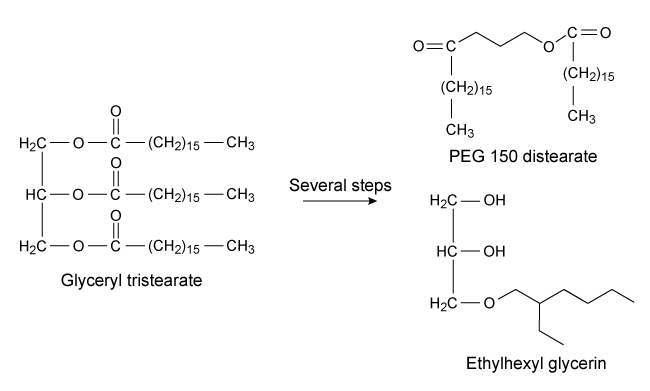 Figure 1 Formation of PEG 150 distearate and ethylhexyl glycerin from glyceryl tristearateThe first step in this process requires the saponification of glyceryl tristearate. The resulting stearate molecules can then react with PEG 150 in an acid-catalyzed Fischer esterification to form PEG 150 distearate. The glycerol produced during saponification is used as a nucleophile to form ethylhexyl glycerin through a base-catalyzed SN2 reaction with an ethylhexyl halide.Studies have shown that hand washing with soap can substantially reduce the number of germs present on hands and that washing hands before preparing food is particularly effective in reducing illness. Researchers examined the effect of washing for 20 seconds with different amounts of soap containing PEG 150 distearate and ethylhexyl glycerin and found an inverse correlation between the volume of soap used and the amount of bacteria recovered from the hands. The data are shown in Figure 2.
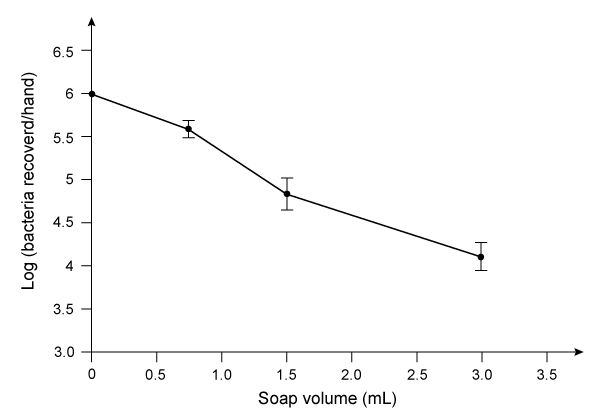 Figure 2 Bacteria recovered from hands after washing with varying amounts of soapThe researchers then investigated the effect of hand washing with different kinds of soap on the transfer of bacteria from hands to objects. Volunteers washed with a fixed volume of soap for 30 seconds, then handled sterilized plastic spheres for 30 seconds. Bacteria were then recovered from the spheres. The results are shown in Table 1.Table 1 Bacteria Recovered from Objects
 Adapted from Fuls JL, Rodgers ND, Fischler GE, et al. Alternative hand contamination technique to compare the activities of antimicrobial and nonantimicrobial soaps under different test conditions. Appl Environ Microbiol. 2008.
-Which of the following peaks in Figure 3 most likely corresponds to ethyl acetate?
Figure 1 Formation of PEG 150 distearate and ethylhexyl glycerin from glyceryl tristearateThe first step in this process requires the saponification of glyceryl tristearate. The resulting stearate molecules can then react with PEG 150 in an acid-catalyzed Fischer esterification to form PEG 150 distearate. The glycerol produced during saponification is used as a nucleophile to form ethylhexyl glycerin through a base-catalyzed SN2 reaction with an ethylhexyl halide.Studies have shown that hand washing with soap can substantially reduce the number of germs present on hands and that washing hands before preparing food is particularly effective in reducing illness. Researchers examined the effect of washing for 20 seconds with different amounts of soap containing PEG 150 distearate and ethylhexyl glycerin and found an inverse correlation between the volume of soap used and the amount of bacteria recovered from the hands. The data are shown in Figure 2.
Figure 2 Bacteria recovered from hands after washing with varying amounts of soapThe researchers then investigated the effect of hand washing with different kinds of soap on the transfer of bacteria from hands to objects. Volunteers washed with a fixed volume of soap for 30 seconds, then handled sterilized plastic spheres for 30 seconds. Bacteria were then recovered from the spheres. The results are shown in Table 1.Table 1 Bacteria Recovered from Objects
Adapted from Fuls JL, Rodgers ND, Fischler GE, et al. Alternative hand contamination technique to compare the activities of antimicrobial and nonantimicrobial soaps under different test conditions. Appl Environ Microbiol. 2008.
-Which of the following peaks in Figure 3 most likely corresponds to ethyl acetate? (Multiple Choice)
5.0/5 (75)
(75) Passage
Hemophilia B is a blood clotting disorder caused by a factor IX (FIX) deficiency. FIX is a 57-kDa, vitamin K-dependent protease that activates factor X, leading to the conversion of prothrombin to thrombin for propagation of the clotting cascade. Activated FIX has two major domains: a γ-carboxyglutamic acid domain and a serine protease domain. The γ-carboxyglutamic acid domain participates in the oxidation of vitamin K using metallic cofactors, as shown in Figure 1.
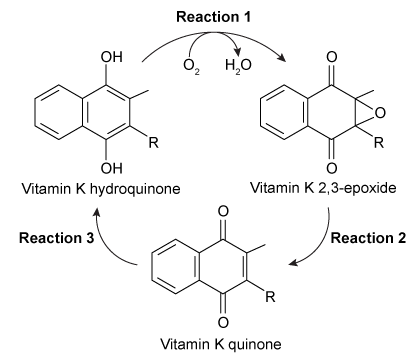 Figure 1 Oxidation of vitamin KTo further analyze the γ-carboxyglutamic acid-rich domain of FIX, an analogous synthetic peptide composed of matching residues 1 through 49 on FIX was evaluated by proton nuclear magnetic resonance (NMR) spectroscopy. Analysis of the proton chemical shift before the addition of metal ions suggested that the synthetic peptide contained normal structural elements. Large chemical shifts were observed after the addition of calcium and beryllium, as shown in Figure 2.
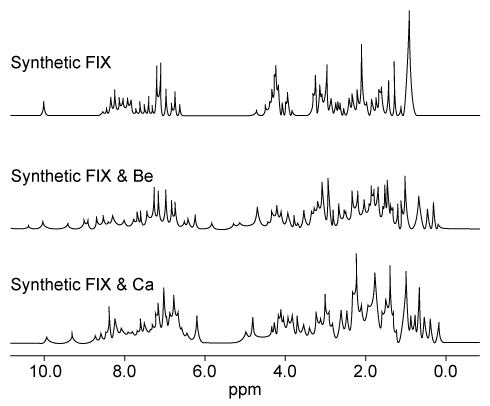 Figure 2 Results of NMR spectroscopy (tetramethylsilane [TMS] peak has been removed)The synthetic analog was then placed in solution with vitamin K hydroquinone and cofactors required for vitamin K oxidation. The oxidation products of vitamin K in Reactions 1 and 2 were collected and evaluated under high-performance liquid chromatography (HPLC) using hexane as the mobile phase. Analysis demonstrated cis and trans isomers of vitamin K1 and a trans-epoxy vitamin K1, as shown in Figure 3.
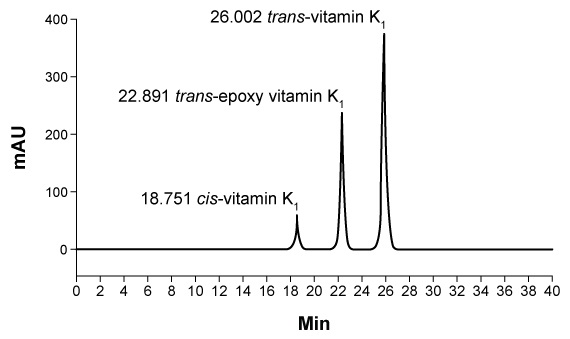 Figure 3 Results of HPLC separation
Adapted from Freedman SJ, Furie BC, Furie B, Baleja JD. Structure of the metal-free gamma-carboxyglutamic acid-rich membrane binding region of factor IX by two-dimensional NMR spectroscopy. J Biol Chem. 1995.
-In Reaction 1, what hybridization state changes do the methylated carbon atom in the ringed structure of vitamin K hydroquinone and the oxygen atom involved in epoxide formation undergo?
Figure 1 Oxidation of vitamin KTo further analyze the γ-carboxyglutamic acid-rich domain of FIX, an analogous synthetic peptide composed of matching residues 1 through 49 on FIX was evaluated by proton nuclear magnetic resonance (NMR) spectroscopy. Analysis of the proton chemical shift before the addition of metal ions suggested that the synthetic peptide contained normal structural elements. Large chemical shifts were observed after the addition of calcium and beryllium, as shown in Figure 2.
Figure 2 Results of NMR spectroscopy (tetramethylsilane [TMS] peak has been removed)The synthetic analog was then placed in solution with vitamin K hydroquinone and cofactors required for vitamin K oxidation. The oxidation products of vitamin K in Reactions 1 and 2 were collected and evaluated under high-performance liquid chromatography (HPLC) using hexane as the mobile phase. Analysis demonstrated cis and trans isomers of vitamin K1 and a trans-epoxy vitamin K1, as shown in Figure 3.
Figure 3 Results of HPLC separation
Adapted from Freedman SJ, Furie BC, Furie B, Baleja JD. Structure of the metal-free gamma-carboxyglutamic acid-rich membrane binding region of factor IX by two-dimensional NMR spectroscopy. J Biol Chem. 1995.
-In Reaction 1, what hybridization state changes do the methylated carbon atom in the ringed structure of vitamin K hydroquinone and the oxygen atom involved in epoxide formation undergo? (Multiple Choice)
4.9/5 (76)
(76) Passage
Students perform a synthesis of a carboxylic acid derivative.They mix a 10.00-mL sample of hexanoic acid, 2.33 mL of ethanol, and 0.64 mL of concentrated sulfuric acid in a flask with a water condenser fitted to its neck. The mixture is boiled for one hour and then poured into water when the reaction is complete. The aqueous and organic layers are separated, and the organic layer is washed once with NaHCO3 and twice with water. Solid Na2SO4 is added to the organic layer to remove any water present. The organic layer and Na2SO4 are separated by filtration. The filtrate is purified by fractional distillation to yield the carboxylic acid derivative, a colorless liquid.
-A majority of excess hexanoic acid is removed from the product in the extraction but a small amount remains, making the product impure. Which statement accurately describes the subsequent distillation of the product?
(Multiple Choice)
4.9/5 (92)
(92) Passage
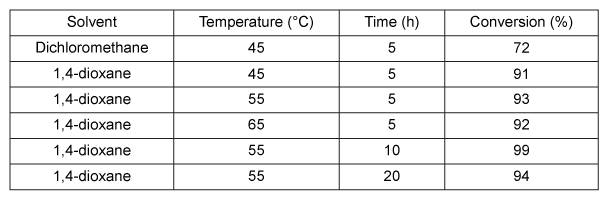
Chloramphenicol (Compound 1) is an antibiotic that acts against gram-positive and gram-negative bacteria by blocking peptidyl transfer, which inhibits protein synthesis by bacterial ribosomes. However, it tastes bitter, so most patients cannot tolerate it. As a result, synthesis of hydroxyl-substituted chloramphenicol analogues has become of interest because ester chloramphenicol analogues taste better than chloramphenicol. Substituents on the primary hydroxyl group of chloramphenicol analogues are typically hydrolyzed quickly in vivo to regenerate Compound 1. Compound 3, a chloramphenicol analogue, was synthesized by the transesterification of Compound 1 and vinyl propionate (Compound 2), catalyzed by the enzyme LipBA lipase (Figure 1).
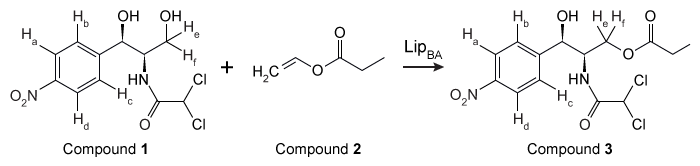 Figure 1 Transesterification of chloramphenicol catalyzed by LipBAAlthough enzyme catalysis allows for efficient regiospecific and stereospecific bond formation, the reaction conditions for the conversion efficiency of Compound 1 to Compound 3, as well as the purity of Compound 3, must also be optimized. The reaction solvent, temperature, and time were studied to find the conditions that gave the highest conversion rate and purity. Each parameter was altered individually while all others were kept constant, and the enzyme concentration was 4.5 g/L in each trial. The results of this study are shown in Table 1. The purity of Compound 3 was found to be over 90% when 1,4-dioxane was used and over 70% when dichloromethane was used.Table 1 Transesterification Conditions Optimization
 The transesterification reaction was monitored by thin-layer chromatography (Figure 2), and the product was confirmed by 1H NMR. The 1H NMR spectra of Compounds 1 and 3 can be distinguished by the shift of He and Hf due to the addition of the electronegative ester functional group.
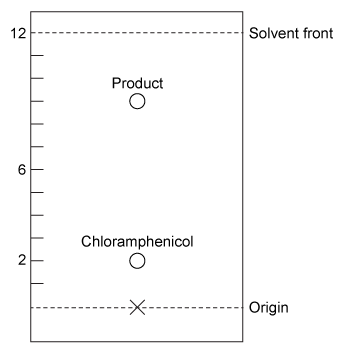 Figure 2 Thin-layer chromatography of reaction mixture
Adapted from F. Dong et al., "Transesterification Synthesis of Chloramphenicol." Molecules. ©2017 MDPI.
-Based on the thin-layer chromatography plate in Figure 2, which of the following expressions gives the Rf value corresponding to the transesterification product?
Figure 1 Transesterification of chloramphenicol catalyzed by LipBAAlthough enzyme catalysis allows for efficient regiospecific and stereospecific bond formation, the reaction conditions for the conversion efficiency of Compound 1 to Compound 3, as well as the purity of Compound 3, must also be optimized. The reaction solvent, temperature, and time were studied to find the conditions that gave the highest conversion rate and purity. Each parameter was altered individually while all others were kept constant, and the enzyme concentration was 4.5 g/L in each trial. The results of this study are shown in Table 1. The purity of Compound 3 was found to be over 90% when 1,4-dioxane was used and over 70% when dichloromethane was used.Table 1 Transesterification Conditions Optimization
The transesterification reaction was monitored by thin-layer chromatography (Figure 2), and the product was confirmed by 1H NMR. The 1H NMR spectra of Compounds 1 and 3 can be distinguished by the shift of He and Hf due to the addition of the electronegative ester functional group.
Figure 2 Thin-layer chromatography of reaction mixture
Adapted from F. Dong et al., "Transesterification Synthesis of Chloramphenicol." Molecules. ©2017 MDPI.
-Based on the thin-layer chromatography plate in Figure 2, which of the following expressions gives the Rf value corresponding to the transesterification product? (Multiple Choice)
5.0/5 (72)
(72) Passage
Fatty acids (FAs) are lipids that play important roles in cellular function, including energy storage and membrane structure. Most polyunsaturated fatty acids (PUFAs) are made in the body; however, omega-3 alpha-linolenic acid and omega-6 linoleic acid must be obtained from the diet. These two PUFAs are precursors to other omega-3 and omega-6 long-chain FAs that are necessary for physiological processes such as neurological development, normal growth, and immune response. Insufficient omega-3 and omega-6 long-chain FAs can lead to an increase in omega-9 fatty acids such as mead acid, and to essential fatty acid deficiency (EFAD), which can cause infertility, decreased growth, and increased susceptibility to infection.Total FA levels in plasma and serum can be used to diagnose EFAD. Plasma and serum samples from several individuals were hydrolyzed to release FAs from triacylglycerols and phospholipids. Once isolated, the free FAs were converted to pentafluorobenzyl (PFB) derivatives and separated by gas chromatography (GC). Total levels of each type of fatty acid were quantified by negative chemical ionization-mass spectrometry (NCI-MS) immediately after GC. NCI is an ionization technique that creates negatively charged ions with little to no fragmentation. The NCI-MS revealed that two of the peaks from GC had the same m/z ratio (Figure 1). They were both confirmed to be forms of an unsaturated, unbranched 22-carbon FA called omega-9 docosenoic acid.
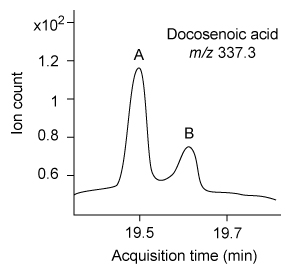 Figure 1 Selected ion chromatogram of docosenoic acidResearchers have proposed that an elevated ratio of the triene omega-9 mead acid to the tetraene omega-6 arachidonic acid, known as the triene/tetraene (TT) ratio, can signify EFAD. Using GC and NCI-MS, they measured the TT ratio, concentration of mead acid, and individual concentrations of omega-3 and omega-6 FAs in plasma and serum samples from three patients and compared their results to normal ranges. An increased TT ratio and mead acid concentration and decreased omega-3 and omega-6 FA concentrations were observed in the patient samples compared to normal ranges.
Adapted from E. Kish-Trier et al., "Quantitation of total fatty acids in plasma and serum by GC-NCI-MS." Clinical Mass Spectrometry. ©2016 Elsevier.
-What can be inferred from Figure 1 about the relationship of Peaks A and B?
Figure 1 Selected ion chromatogram of docosenoic acidResearchers have proposed that an elevated ratio of the triene omega-9 mead acid to the tetraene omega-6 arachidonic acid, known as the triene/tetraene (TT) ratio, can signify EFAD. Using GC and NCI-MS, they measured the TT ratio, concentration of mead acid, and individual concentrations of omega-3 and omega-6 FAs in plasma and serum samples from three patients and compared their results to normal ranges. An increased TT ratio and mead acid concentration and decreased omega-3 and omega-6 FA concentrations were observed in the patient samples compared to normal ranges.
Adapted from E. Kish-Trier et al., "Quantitation of total fatty acids in plasma and serum by GC-NCI-MS." Clinical Mass Spectrometry. ©2016 Elsevier.
-What can be inferred from Figure 1 about the relationship of Peaks A and B? (Multiple Choice)
4.8/5 (84)
(84) A linear five-carbon ketone has a boiling point most similar to:
(Multiple Choice)
4.7/5 (71)
(71) Passage
A limited number of cellular functions exist for D-amino acids, such as the structural role of D-alanine and D-glutamate in bacterial cell walls. Because genetically encoded amino acids are synthesized in the L form, production of D-amino acids depends on enzymes called racemases. With the exception of cysteine, conversion of an L-amino acid to a D-amino acid corresponds to the conversion of an S stereoisomer to an R stereoisomer. The mechanism of conversion requires the formation of a high-energy carbanion intermediate. Although pyridoxal phosphate (PLP)-dependent amino acid racemases such as glutamate racemase use PLP as a coenzyme to stabilize this intermediate, the reaction catalyzed by PLP-independent racemases such as alanine racemase proceeds through the enolate intermediate shown in Figure 1.
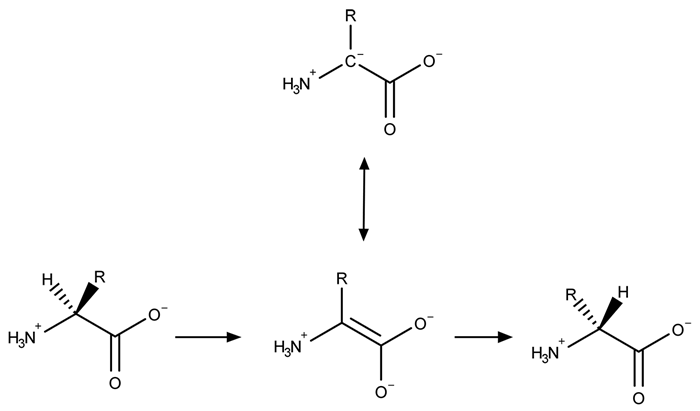 Figure 1 PLP-independent amino acid racemase reactionThe first step in most PLP-dependent reactions is the condensation of an aldehyde group on the coenzyme PLP. This forms a Schiff base linking PLP to a lysine side chain on the enzyme's active site. The lysine is then substituted with the amino acid to be converted from L to D configuration (Figure 2).
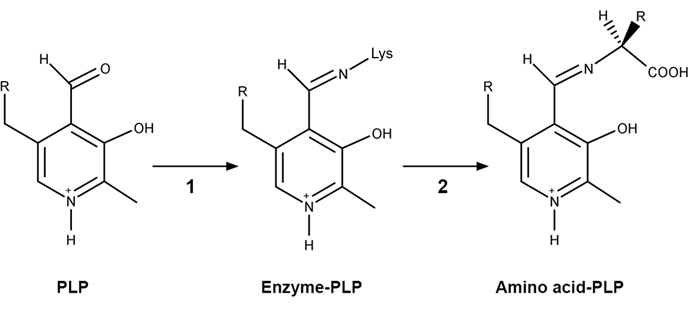 Figure 2 Formation of an amino acid-PLP adductThe next step in PLP-dependent reactions is the removal of the amino acid's α-hydrogen by a base in the enzyme's active site. A quinonoid intermediate and two additional intermediates are formed, as shown in Figure 3. The final step includes the rebonding of PLP to the enzyme's active site and the release of the D-amino acid.
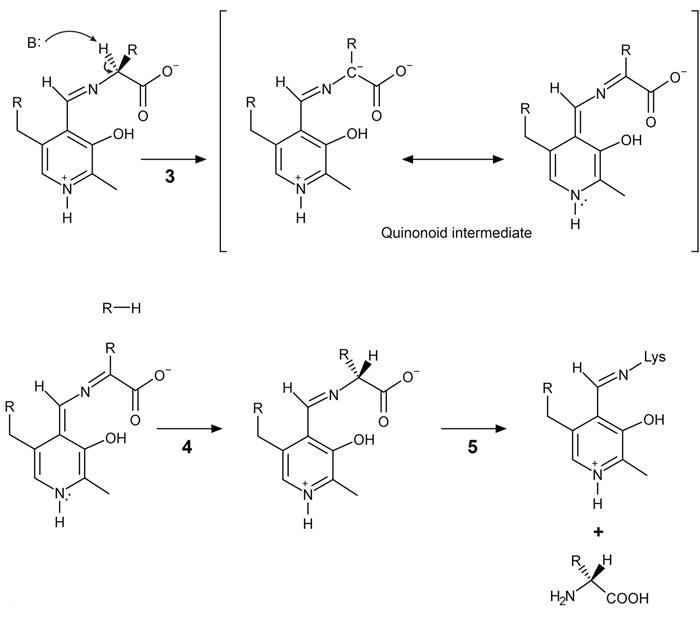 Figure 3 Intermediates of a PLP-dependent amino acid racemase-catalyzed reactionOther PLP-dependent enzymes participate in the decarboxylation of amino acids via a similar mechanism. Such enzymes break the bond between the carboxylate carbon and α-carbon in an amino acid by forming a quinonoid intermediate, which helps stabilize the carbanion intermediate of the reaction.
Adapted from Cava F, Lam H, De pedro MA, Waldor MK. Emerging knowledge of regulatory roles of D-amino acids in bacteria. Cell Mol Life Sci. 2011.
-Which of the following is true regarding the relative reactivity of carbanion and carbocation species?
Figure 1 PLP-independent amino acid racemase reactionThe first step in most PLP-dependent reactions is the condensation of an aldehyde group on the coenzyme PLP. This forms a Schiff base linking PLP to a lysine side chain on the enzyme's active site. The lysine is then substituted with the amino acid to be converted from L to D configuration (Figure 2).
Figure 2 Formation of an amino acid-PLP adductThe next step in PLP-dependent reactions is the removal of the amino acid's α-hydrogen by a base in the enzyme's active site. A quinonoid intermediate and two additional intermediates are formed, as shown in Figure 3. The final step includes the rebonding of PLP to the enzyme's active site and the release of the D-amino acid.
Figure 3 Intermediates of a PLP-dependent amino acid racemase-catalyzed reactionOther PLP-dependent enzymes participate in the decarboxylation of amino acids via a similar mechanism. Such enzymes break the bond between the carboxylate carbon and α-carbon in an amino acid by forming a quinonoid intermediate, which helps stabilize the carbanion intermediate of the reaction.
Adapted from Cava F, Lam H, De pedro MA, Waldor MK. Emerging knowledge of regulatory roles of D-amino acids in bacteria. Cell Mol Life Sci. 2011.
-Which of the following is true regarding the relative reactivity of carbanion and carbocation species? (Multiple Choice)
4.7/5 (63)
(63) Passage
Two key ingredients found in many soaps are PEG 150 distearate and ethylhexyl glycerin. Both can be synthesized from glyceryl tristearate (Figure 1).
Figure 1 Formation of PEG 150 distearate and ethylhexyl glycerin from glyceryl tristearateThe first step in this process requires the saponification of glyceryl tristearate. The resulting stearate molecules can then react with PEG 150 in an acid-catalyzed Fischer esterification to form PEG 150 distearate. The glycerol produced during saponification is used as a nucleophile to form ethylhexyl glycerin through a base-catalyzed SN2 reaction with an ethylhexyl halide.Studies have shown that hand washing with soap can substantially reduce the number of germs present on hands and that washing hands before preparing food is particularly effective in reducing illness. Researchers examined the effect of washing for 20 seconds with different amounts of soap containing PEG 150 distearate and ethylhexyl glycerin and found an inverse correlation between the volume of soap used and the amount of bacteria recovered from the hands. The data are shown in Figure 2.
Figure 2 Bacteria recovered from hands after washing with varying amounts of soapThe researchers then investigated the effect of hand washing with different kinds of soap on the transfer of bacteria from hands to objects. Volunteers washed with a fixed volume of soap for 30 seconds, then handled sterilized plastic spheres for 30 seconds. Bacteria were then recovered from the spheres. The results are shown in Table 1.Table 1 Bacteria Recovered from Objects
Adapted from Fuls JL, Rodgers ND, Fischler GE, et al. Alternative hand contamination technique to compare the activities of antimicrobial and nonantimicrobial soaps under different test conditions. Appl Environ Microbiol. 2008.
-According to Experiment 2, the samples from the lipid extract were diluted by what factor to generate the NMR samples?
Figure 1 Formation of PEG 150 distearate and ethylhexyl glycerin from glyceryl tristearateThe first step in this process requires the saponification of glyceryl tristearate. The resulting stearate molecules can then react with PEG 150 in an acid-catalyzed Fischer esterification to form PEG 150 distearate. The glycerol produced during saponification is used as a nucleophile to form ethylhexyl glycerin through a base-catalyzed SN2 reaction with an ethylhexyl halide.Studies have shown that hand washing with soap can substantially reduce the number of germs present on hands and that washing hands before preparing food is particularly effective in reducing illness. Researchers examined the effect of washing for 20 seconds with different amounts of soap containing PEG 150 distearate and ethylhexyl glycerin and found an inverse correlation between the volume of soap used and the amount of bacteria recovered from the hands. The data are shown in Figure 2.
Figure 2 Bacteria recovered from hands after washing with varying amounts of soapThe researchers then investigated the effect of hand washing with different kinds of soap on the transfer of bacteria from hands to objects. Volunteers washed with a fixed volume of soap for 30 seconds, then handled sterilized plastic spheres for 30 seconds. Bacteria were then recovered from the spheres. The results are shown in Table 1.Table 1 Bacteria Recovered from Objects
Adapted from Fuls JL, Rodgers ND, Fischler GE, et al. Alternative hand contamination technique to compare the activities of antimicrobial and nonantimicrobial soaps under different test conditions. Appl Environ Microbiol. 2008.
-According to Experiment 2, the samples from the lipid extract were diluted by what factor to generate the NMR samples? (Multiple Choice)
4.8/5 (78)
(78) What is the correct systematic name for the compound shown below? 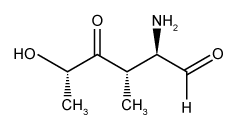
(Multiple Choice)
4.9/5 (75)
(75) Passage
Solid-phase peptide synthesis is normally carried out on a resin bathed multiple times in dimethylformamide (DMF)-a toxic, polar, aprotic solvent-which poses an environmental problem because a large amount of toxic solvent waste is created. Cyclic carbonates such as propylene carbonate (PC) and ethylene carbonate (EC) are nontoxic, polar, aprotic solvents that could be used as an alternative to DMF.Compounds 1 and 2 are modified L-amino acids. They were coupled to form Compound 3, a dipeptide, which was then deprotected to yield Compound 4 (Figure 1).
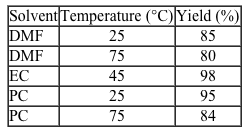
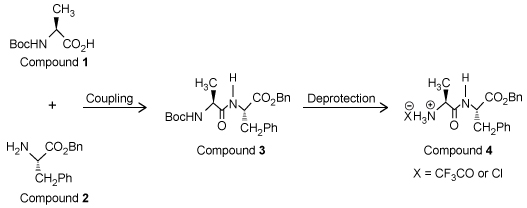 Figure 1 Synthesis of Compound 4To determine the effect that solvent type and temperature have on the synthesis of this peptide, the nontoxic solvents PC and EC as well as the toxic solvent DMF were each used in separate syntheses of Compound 4 at different temperatures. The reaction solvent was also used to rinse the resin. Table 1 shows the results of these syntheses.Table 1 Results from the Synthesis of Compound 4
 The successful synthesis of Compound 4 using nontoxic solvents encouraged researchers to pursue the synthesis of a larger, biologically active peptide. Bradykinin, a vasodilator containing nine amino acids (Arg-Pro-Pro-Gly-Phe-Ser-Pro-Phe-Arg), was synthesized using the same solid-state peptide synthesis protocol used to synthesize Compound 4. Separate syntheses were done using either DMF or PC, and the purity of bradykinin from each synthesis was analyzed by high-performance liquid chromatography (HPLC) (Figure 2).In each chromatogram, peak 1 has the same retention time as commercially obtained bradykinin, and the other peaks correspond to impurities. In chromatogram A, the impurity has a similar retention time to the product peak whereas the impurity peaks in chromatogram B have distinct retention times compared to the product peak.
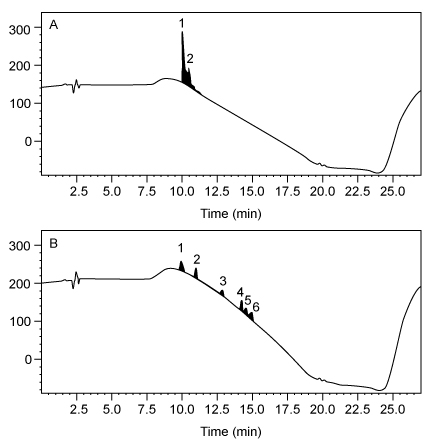 Figure 2 HPLC of synthetic bradykinin: (A) synthesis in DMF; (B) synthesis in PC
Adapted from S. B. Lawrenson et al., "The greening of peptide synthesis." Green Chem. ©2017 The Royal Society of Chemistry.
-What is the byproduct of the formation of Compound 3 described in the passage?
Figure 1 Synthesis of Compound 4To determine the effect that solvent type and temperature have on the synthesis of this peptide, the nontoxic solvents PC and EC as well as the toxic solvent DMF were each used in separate syntheses of Compound 4 at different temperatures. The reaction solvent was also used to rinse the resin. Table 1 shows the results of these syntheses.Table 1 Results from the Synthesis of Compound 4
The successful synthesis of Compound 4 using nontoxic solvents encouraged researchers to pursue the synthesis of a larger, biologically active peptide. Bradykinin, a vasodilator containing nine amino acids (Arg-Pro-Pro-Gly-Phe-Ser-Pro-Phe-Arg), was synthesized using the same solid-state peptide synthesis protocol used to synthesize Compound 4. Separate syntheses were done using either DMF or PC, and the purity of bradykinin from each synthesis was analyzed by high-performance liquid chromatography (HPLC) (Figure 2).In each chromatogram, peak 1 has the same retention time as commercially obtained bradykinin, and the other peaks correspond to impurities. In chromatogram A, the impurity has a similar retention time to the product peak whereas the impurity peaks in chromatogram B have distinct retention times compared to the product peak.
Figure 2 HPLC of synthetic bradykinin: (A) synthesis in DMF; (B) synthesis in PC
Adapted from S. B. Lawrenson et al., "The greening of peptide synthesis." Green Chem. ©2017 The Royal Society of Chemistry.
-What is the byproduct of the formation of Compound 3 described in the passage? (Multiple Choice)
4.9/5 (84)
(84) Passage
Aldehydes are organic compounds encountered in everyday life and used as intermediates in metabolism. Common aldehydes include formaldehyde, which is used in the fixation of tissues, and cinnamaldehyde, which provides the flavor and smell of cinnamon (Figure 1).
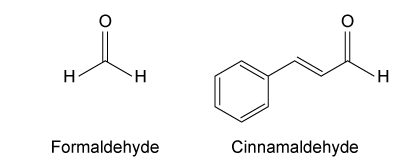 Figure 1 Common aldehydesThe aldol condensation shown in Figure 2 is an important carbon-carbon bond-forming reaction that has many applications in the synthesis of bioactive molecules. It also takes place in some metabolic processes, such as the citric acid cycle and gluconeogenesis. The aldol condensation begins with the aldol reaction, which can be acid- or base-catalyzed and requires nucleophilic addition to a carbonyl to provide the aldol product, which can be a β-hydroxy ketone or aldehyde. The final step of the aldol condensation consists of an acid- or base-catalyzed dehydration of the aldol product to yield an α,β-unsaturated ketone or aldehyde.
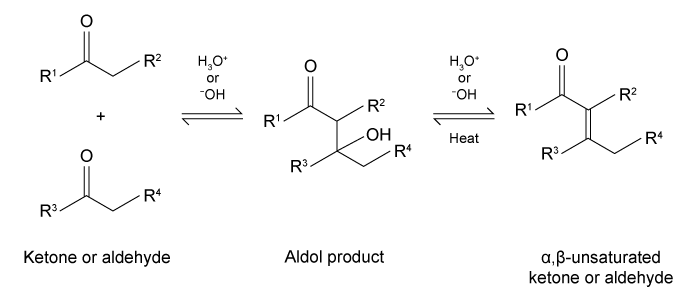 Figure 2 General aldol reaction and condensationThe reverse of an aldol reaction or condensation is known as a retro-aldol, which is important in metabolism, most notably in glycolysis. This reaction breaks a carbon-carbon bond to form aldehydes and/or ketones. In glycolysis, fructose 1,6-bisphosphate is broken down into an aldehyde and a ketone, glyceraldehyde 3-phosphate (GAP) and dihydroxyacetone phosphate (DHAP), respectively (Figure 3).
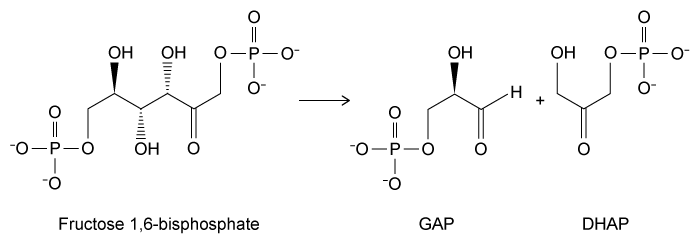 Figure 3 Retro-aldol in glycolysis
-Consider the reaction below.
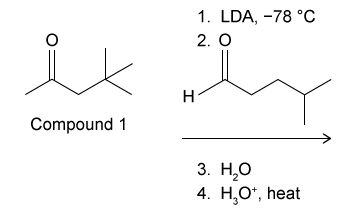 Which of the following would be the kinetic product if compound 1 undergoes an aldol condensation as described in Figure 2?
Figure 1 Common aldehydesThe aldol condensation shown in Figure 2 is an important carbon-carbon bond-forming reaction that has many applications in the synthesis of bioactive molecules. It also takes place in some metabolic processes, such as the citric acid cycle and gluconeogenesis. The aldol condensation begins with the aldol reaction, which can be acid- or base-catalyzed and requires nucleophilic addition to a carbonyl to provide the aldol product, which can be a β-hydroxy ketone or aldehyde. The final step of the aldol condensation consists of an acid- or base-catalyzed dehydration of the aldol product to yield an α,β-unsaturated ketone or aldehyde.
Figure 2 General aldol reaction and condensationThe reverse of an aldol reaction or condensation is known as a retro-aldol, which is important in metabolism, most notably in glycolysis. This reaction breaks a carbon-carbon bond to form aldehydes and/or ketones. In glycolysis, fructose 1,6-bisphosphate is broken down into an aldehyde and a ketone, glyceraldehyde 3-phosphate (GAP) and dihydroxyacetone phosphate (DHAP), respectively (Figure 3).
Figure 3 Retro-aldol in glycolysis
-Consider the reaction below. Which of the following would be the kinetic product if compound 1 undergoes an aldol condensation as described in Figure 2? (Multiple Choice)
4.7/5 (83)
(83) Triacylglycerols A and B are shown below. 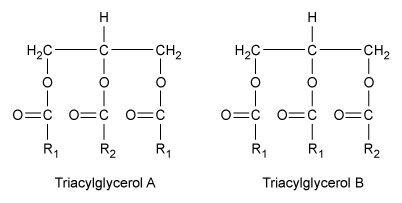 Which of the triacylglycerols would rotate plane-polarized light?
 (Multiple Choice)
4.8/5 (80)
(80) The reaction below was performed under thermodynamic conditions to yield Compound 1 and Compound 2 as a mixture of structural isomers. If Compound 1 is more stable than Compound 2, what can be inferred about the relative amounts of Compound 1 to Compound 2 in the mixture? 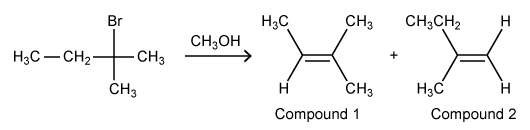
(Multiple Choice)
4.9/5 (85)
(85) Passage
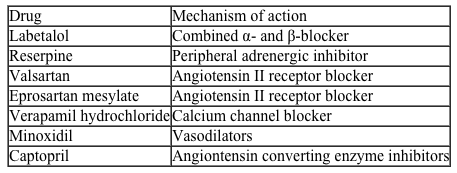
High blood pressure, or hypertension, is a prevalent condition in the United States. One in three adults has hypertension, and approximately 20% do not know that they have it. If left untreated, high blood pressure can lead to major health issues, including stroke, heart attack, and kidney disease or failure. A number of drugs can help control hypertension, including those shown in Table 1. These drugs can be classified into different groups based on their mechanism of action.Table 1 Drugs Used to Treat High Blood Pressure
 Labetalol (Figure 1) exists as four stereoisomers and is administered as a mixture of all four. This drug can be classified as a pseudohybrid drug because two of the isomers, (R,R) and (S,R), exhibit biological activity; the other two isomers, (S,S) and (R,S), are not active. The (R,R) isomer acts as a nonselective β-adrenergic receptor blocker, and the (S,R) isomer acts as a selective α-adrenergic receptor blocker.
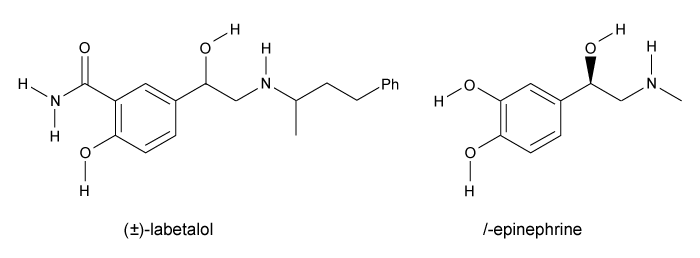 Figure 1 Structure of (±)-labetalol and l-epinephrinel-epinephrine (Figure 1) is the agonist of the α- and β-adrenergic receptors. The structural motifs that allow l-epinephrine to bind to the adrenergic receptors include an amine separated from an aromatic ring by two carbon units, a hydroxyl group at a chiral center beta to the amine, and two hydroxyl groups on the aromatic ring in the meta and para positions. With a few structural modifications, the agonist l-epinephrine can be converted into the antagonist labetalol. Substitution of a hydroxyl on the aromatic ring with an amide group and extension of the methyl group on the amine transforms l-epinephrine into labetalol. These substitutions keep a majority of the structural motifs necessary for labetalol to mimic l-epinephrine and bind to the adrenergic receptors.
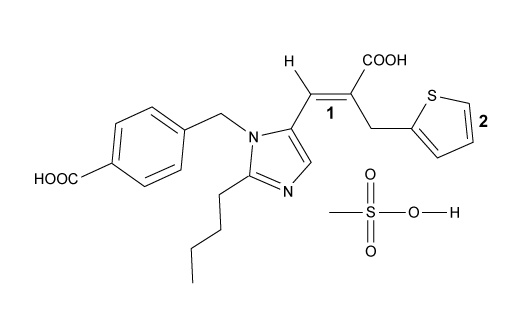
-The structure of eprosartan mesylate is shown below. Double bonds 1 and 2, respectively, can be classified as:
Labetalol (Figure 1) exists as four stereoisomers and is administered as a mixture of all four. This drug can be classified as a pseudohybrid drug because two of the isomers, (R,R) and (S,R), exhibit biological activity; the other two isomers, (S,S) and (R,S), are not active. The (R,R) isomer acts as a nonselective β-adrenergic receptor blocker, and the (S,R) isomer acts as a selective α-adrenergic receptor blocker.
Figure 1 Structure of (±)-labetalol and l-epinephrinel-epinephrine (Figure 1) is the agonist of the α- and β-adrenergic receptors. The structural motifs that allow l-epinephrine to bind to the adrenergic receptors include an amine separated from an aromatic ring by two carbon units, a hydroxyl group at a chiral center beta to the amine, and two hydroxyl groups on the aromatic ring in the meta and para positions. With a few structural modifications, the agonist l-epinephrine can be converted into the antagonist labetalol. Substitution of a hydroxyl on the aromatic ring with an amide group and extension of the methyl group on the amine transforms l-epinephrine into labetalol. These substitutions keep a majority of the structural motifs necessary for labetalol to mimic l-epinephrine and bind to the adrenergic receptors.
-The structure of eprosartan mesylate is shown below. Double bonds 1 and 2, respectively, can be classified as: (Multiple Choice)
4.9/5 (70)
(70) Passage
A limited number of cellular functions exist for D-amino acids, such as the structural role of D-alanine and D-glutamate in bacterial cell walls. Because genetically encoded amino acids are synthesized in the L form, production of D-amino acids depends on enzymes called racemases. With the exception of cysteine, conversion of an L-amino acid to a D-amino acid corresponds to the conversion of an S stereoisomer to an R stereoisomer. The mechanism of conversion requires the formation of a high-energy carbanion intermediate. Although pyridoxal phosphate (PLP)-dependent amino acid racemases such as glutamate racemase use PLP as a coenzyme to stabilize this intermediate, the reaction catalyzed by PLP-independent racemases such as alanine racemase proceeds through the enolate intermediate shown in Figure 1.
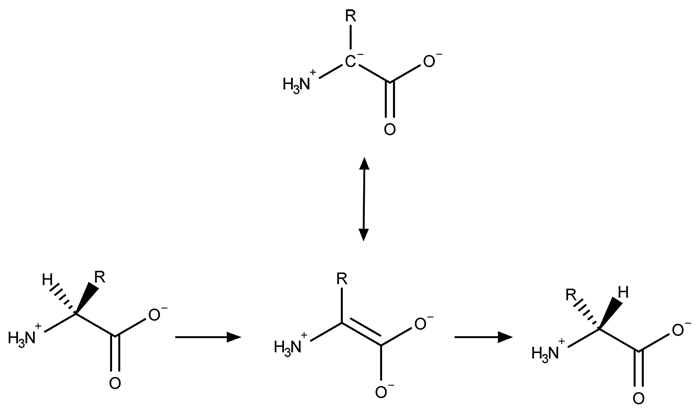 Figure 1 PLP-independent amino acid racemase reactionThe first step in most PLP-dependent reactions is the condensation of an aldehyde group on the coenzyme PLP. This forms a Schiff base linking PLP to a lysine side chain on the enzyme's active site. The lysine is then substituted with the amino acid to be converted from L to D configuration (Figure 2).
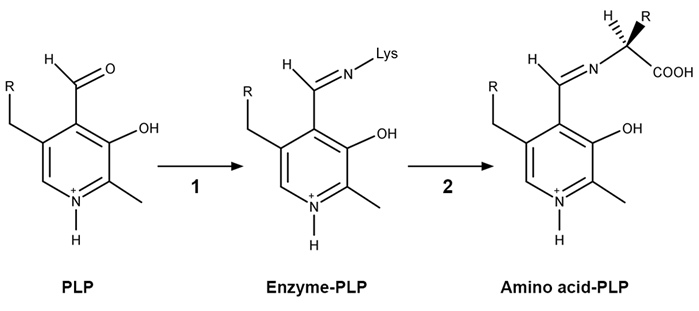 Figure 2 Formation of an amino acid-PLP adductThe next step in PLP-dependent reactions is the removal of the amino acid's α-hydrogen by a base in the enzyme's active site. A quinonoid intermediate and two additional intermediates are formed, as shown in Figure 3. The final step includes the rebonding of PLP to the enzyme's active site and the release of the D-amino acid.
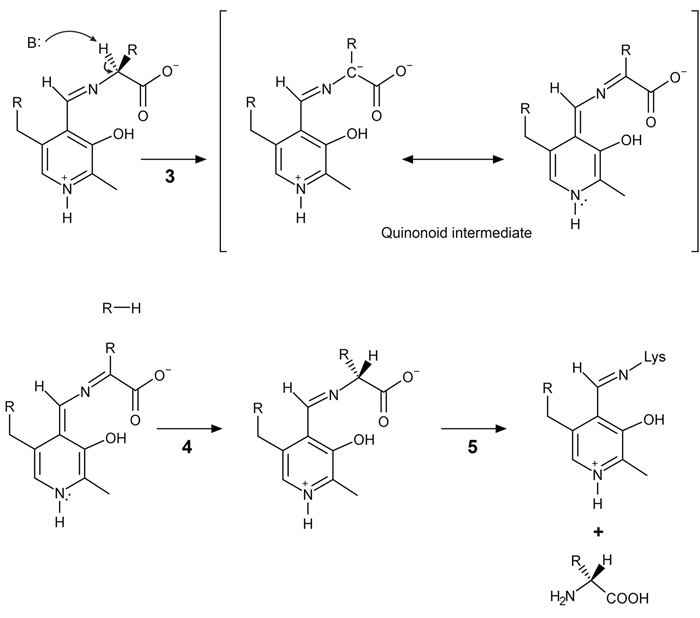 Figure 3 Intermediates of a PLP-dependent amino acid racemase-catalyzed reactionOther PLP-dependent enzymes participate in the decarboxylation of amino acids via a similar mechanism. Such enzymes break the bond between the carboxylate carbon and α-carbon in an amino acid by forming a quinonoid intermediate, which helps stabilize the carbanion intermediate of the reaction.
Adapted from Cava F, Lam H, De pedro MA, Waldor MK. Emerging knowledge of regulatory roles of D-amino acids in bacteria. Cell Mol Life Sci. 2011.
-Which of the following structures is the substrate for the reaction catalyzed by glutamate racemase, whose product is incorporated into bacterial cell walls?
Figure 1 PLP-independent amino acid racemase reactionThe first step in most PLP-dependent reactions is the condensation of an aldehyde group on the coenzyme PLP. This forms a Schiff base linking PLP to a lysine side chain on the enzyme's active site. The lysine is then substituted with the amino acid to be converted from L to D configuration (Figure 2).
Figure 2 Formation of an amino acid-PLP adductThe next step in PLP-dependent reactions is the removal of the amino acid's α-hydrogen by a base in the enzyme's active site. A quinonoid intermediate and two additional intermediates are formed, as shown in Figure 3. The final step includes the rebonding of PLP to the enzyme's active site and the release of the D-amino acid.
Figure 3 Intermediates of a PLP-dependent amino acid racemase-catalyzed reactionOther PLP-dependent enzymes participate in the decarboxylation of amino acids via a similar mechanism. Such enzymes break the bond between the carboxylate carbon and α-carbon in an amino acid by forming a quinonoid intermediate, which helps stabilize the carbanion intermediate of the reaction.
Adapted from Cava F, Lam H, De pedro MA, Waldor MK. Emerging knowledge of regulatory roles of D-amino acids in bacteria. Cell Mol Life Sci. 2011.
-Which of the following structures is the substrate for the reaction catalyzed by glutamate racemase, whose product is incorporated into bacterial cell walls? (Multiple Choice)
4.8/5 (62)
(62) Passage
Fatty acids (FAs) are lipids that play important roles in cellular function, including energy storage and membrane structure. Most polyunsaturated fatty acids (PUFAs) are made in the body; however, omega-3 alpha-linolenic acid and omega-6 linoleic acid must be obtained from the diet. These two PUFAs are precursors to other omega-3 and omega-6 long-chain FAs that are necessary for physiological processes such as neurological development, normal growth, and immune response. Insufficient omega-3 and omega-6 long-chain FAs can lead to an increase in omega-9 fatty acids such as mead acid, and to essential fatty acid deficiency (EFAD), which can cause infertility, decreased growth, and increased susceptibility to infection.Total FA levels in plasma and serum can be used to diagnose EFAD. Plasma and serum samples from several individuals were hydrolyzed to release FAs from triacylglycerols and phospholipids. Once isolated, the free FAs were converted to pentafluorobenzyl (PFB) derivatives and separated by gas chromatography (GC). Total levels of each type of fatty acid were quantified by negative chemical ionization-mass spectrometry (NCI-MS) immediately after GC. NCI is an ionization technique that creates negatively charged ions with little to no fragmentation. The NCI-MS revealed that two of the peaks from GC had the same m/z ratio (Figure 1). They were both confirmed to be forms of an unsaturated, unbranched 22-carbon FA called omega-9 docosenoic acid.
Figure 1 Selected ion chromatogram of docosenoic acidResearchers have proposed that an elevated ratio of the triene omega-9 mead acid to the tetraene omega-6 arachidonic acid, known as the triene/tetraene (TT) ratio, can signify EFAD. Using GC and NCI-MS, they measured the TT ratio, concentration of mead acid, and individual concentrations of omega-3 and omega-6 FAs in plasma and serum samples from three patients and compared their results to normal ranges. An increased TT ratio and mead acid concentration and decreased omega-3 and omega-6 FA concentrations were observed in the patient samples compared to normal ranges.
Adapted from E. Kish-Trier et al., "Quantitation of total fatty acids in plasma and serum by GC-NCI-MS." Clinical Mass Spectrometry. ©2016 Elsevier.
-Which of the following conclusions is NOT consistent with the results of the patient plasma and serum sample analysis described in the passage?
Figure 1 Selected ion chromatogram of docosenoic acidResearchers have proposed that an elevated ratio of the triene omega-9 mead acid to the tetraene omega-6 arachidonic acid, known as the triene/tetraene (TT) ratio, can signify EFAD. Using GC and NCI-MS, they measured the TT ratio, concentration of mead acid, and individual concentrations of omega-3 and omega-6 FAs in plasma and serum samples from three patients and compared their results to normal ranges. An increased TT ratio and mead acid concentration and decreased omega-3 and omega-6 FA concentrations were observed in the patient samples compared to normal ranges.
Adapted from E. Kish-Trier et al., "Quantitation of total fatty acids in plasma and serum by GC-NCI-MS." Clinical Mass Spectrometry. ©2016 Elsevier.
-Which of the following conclusions is NOT consistent with the results of the patient plasma and serum sample analysis described in the passage? (Multiple Choice)
4.8/5 (84)
(84) Passage
A limited number of cellular functions exist for D-amino acids, such as the structural role of D-alanine and D-glutamate in bacterial cell walls. Because genetically encoded amino acids are synthesized in the L form, production of D-amino acids depends on enzymes called racemases. With the exception of cysteine, conversion of an L-amino acid to a D-amino acid corresponds to the conversion of an S stereoisomer to an R stereoisomer. The mechanism of conversion requires the formation of a high-energy carbanion intermediate. Although pyridoxal phosphate (PLP)-dependent amino acid racemases such as glutamate racemase use PLP as a coenzyme to stabilize this intermediate, the reaction catalyzed by PLP-independent racemases such as alanine racemase proceeds through the enolate intermediate shown in Figure 1.
Figure 1 PLP-independent amino acid racemase reactionThe first step in most PLP-dependent reactions is the condensation of an aldehyde group on the coenzyme PLP. This forms a Schiff base linking PLP to a lysine side chain on the enzyme's active site. The lysine is then substituted with the amino acid to be converted from L to D configuration (Figure 2).
Figure 2 Formation of an amino acid-PLP adductThe next step in PLP-dependent reactions is the removal of the amino acid's α-hydrogen by a base in the enzyme's active site. A quinonoid intermediate and two additional intermediates are formed, as shown in Figure 3. The final step includes the rebonding of PLP to the enzyme's active site and the release of the D-amino acid.
Figure 3 Intermediates of a PLP-dependent amino acid racemase-catalyzed reactionOther PLP-dependent enzymes participate in the decarboxylation of amino acids via a similar mechanism. Such enzymes break the bond between the carboxylate carbon and α-carbon in an amino acid by forming a quinonoid intermediate, which helps stabilize the carbanion intermediate of the reaction.
Adapted from Cava F, Lam H, De pedro MA, Waldor MK. Emerging knowledge of regulatory roles of D-amino acids in bacteria. Cell Mol Life Sci. 2011.
-The Schiff base shown in Figure 2 involves the formation of what nitrogen-containing functional group?
Figure 1 PLP-independent amino acid racemase reactionThe first step in most PLP-dependent reactions is the condensation of an aldehyde group on the coenzyme PLP. This forms a Schiff base linking PLP to a lysine side chain on the enzyme's active site. The lysine is then substituted with the amino acid to be converted from L to D configuration (Figure 2).
Figure 2 Formation of an amino acid-PLP adductThe next step in PLP-dependent reactions is the removal of the amino acid's α-hydrogen by a base in the enzyme's active site. A quinonoid intermediate and two additional intermediates are formed, as shown in Figure 3. The final step includes the rebonding of PLP to the enzyme's active site and the release of the D-amino acid.
Figure 3 Intermediates of a PLP-dependent amino acid racemase-catalyzed reactionOther PLP-dependent enzymes participate in the decarboxylation of amino acids via a similar mechanism. Such enzymes break the bond between the carboxylate carbon and α-carbon in an amino acid by forming a quinonoid intermediate, which helps stabilize the carbanion intermediate of the reaction.
Adapted from Cava F, Lam H, De pedro MA, Waldor MK. Emerging knowledge of regulatory roles of D-amino acids in bacteria. Cell Mol Life Sci. 2011.
-The Schiff base shown in Figure 2 involves the formation of what nitrogen-containing functional group? (Multiple Choice)
4.9/5 (81)
(81) 
Filters
- Essay(0)
- Multiple Choice(0)
- Short Answer(0)
- True False(0)
- Matching(0)