



 Chat with AI
Exam 21: Thought and Culture in the Early Nineteenth Century

Exam 1: The Ancient Near East: The First Civilizations85 Questions
Exam 2: The Hebrews: a New View of God and the Individual90 Questions
Exam 3: The Greek City-State Democratic Politics78 Questions
Exam 4: Greek Thought From Myth to Reason77 Questions
Exam 5: The Hellenistic Age Cultural Diffusion76 Questions
Exam 6: The Roman Republic City-State to World Empire75 Questions
Exam 7: The Roman Empire a World-State90 Questions
Exam 8: Early Christianity a World Religion79 Questions
Exam 9: The Heirs of Rome Byzantium Islam and Latin Christendom95 Questions
Exam 10: The High Middle Ages Vitality and Enewal83 Questions
Exam 11: The Flowering of Medieval Culture the Christian Synthesis78 Questions
Exam 12: The Late Middle Ages Crisis and Dissolution76 Questions
Exam 13: The Renaissance Transition to the Modern Age88 Questions
Exam 14: The Reformation the Shattering of Christian Unity84 Questions
Exam 15: European Expansion Economic and Social Transformations88 Questions
Exam 16: The Rise of Sovereignty Transition to the Modern State84 Questions
Exam 17: The Scientific Revolution the Universe Seen As a Mechanism81 Questions
Exam 18: The Age of Enlightenment Reason and Reform89 Questions
Exam 19: The French Revolution the Affirmation of Liberty and Equality118 Questions
Exam 20: The Industrial Revolution the Great Transformation77 Questions
Exam 21: Thought and Culture in the Early Nineteenth Century105 Questions
Exam 22: Revolution and Counterrevolution 1815-184879 Questions
Exam 23: Thought and Culture in the Mid-Nineteenth Century Realism and Social Criticism81 Questions
Exam 24: The Surge of Nationalism From Liberal to Extreme Nationalism77 Questions
Exam 25: The Industrial West Responses to Modernization91 Questions
Exam 26: Imperialism Western Global Dominance92 Questions
Exam 27: Modern Consciousness New Views of Nature Human Nature and the Arts80 Questions
Exam 28: World War I the West in Despair87 Questions
Exam 29: An Era of Totalitarianism112 Questions
Exam 30: Thought and Culture in an Era of World Wars and Totalitarianism75 Questions
Exam 31: World War II Western Civilization in the Balance85 Questions
Exam 32: Europe After World War II Recovery and Realignment 1945-198987 Questions
Exam 33: The Troubled Present85 Questions
Select questions type


Instructions: Please use this outline map of Europe to answer the question(s). 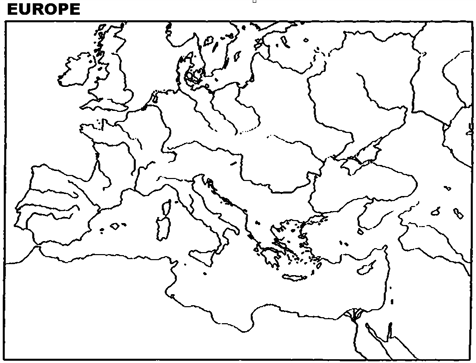 Locate and label the countries associated with the following cultural figures: Beethoven, Byron, Chateaubriand, Chopin, Hugo, Keats, Schelling, Schiller, Schlegel, Shelley, and Wordsworth. Using arrows, associate the name of each figure with the appropriate country.
 (Not Answered)
This question doesn't have any answer yet
In 1815, conservatism included all of the following values EXCEPT
(Multiple Choice)
4.7/5  (65)
(65) Who synthesized romanticism, Kantian philosophy, and Enlightenment rationalism?
(Multiple Choice)
4.8/5 (86)
(86) According to the text, the roots of nineteenth-century liberalism included
(Multiple Choice)
4.8/5 (80)
(80) Early nineteenth-century conservatives condemned the idea of all of the following EXCEPT
(Multiple Choice)
4.9/5 (80)
(80) Instructions: Please write a thorough, well-organized essay to answer each question. Present a coherent overview of the three main political ideologies in 1815: conservatism, liberalism, and socialism. Please include a statement about their basic beliefs, who supported the movement , and where the ideology would fall on a spectrum from the least radical to the most radical.
(Essay)
4.9/5 (93)
(93) The text identifies which of the following attractive to idealistic youth and intellectual seeking liberation through revolutionary struggle?
(Multiple Choice)
4.8/5 (76)
(76) Instructions: Please define the following key terms. Show Who? What? Where? When? Why Important?
phenomenal world
(Short Answer)
4.8/5 (68)
(68) Instructions: Please define the following key terms. Show Who? What? Where? When? Why Important?
phalansteries
(Short Answer)
4.9/5 (63)
(63) Instructions: Please define the following key terms. Show Who? What? Where? When? Why Important?
idealism
(Essay)
4.9/5 (75)
(75) According to the text, all of the following were contradictions between liberalism and nationalism in the first half of the nineteenth century EXCEPT
(Multiple Choice)
4.9/5 (76)
(76) Which of the following challenged the Enlightenment stress on rationalism?
(Multiple Choice)
4.9/5 (66)
(66) For the romantics, cultivating emotions, intuition, and the imagination was the path to
(Multiple Choice)
4.9/5 (76)
(76) Instructions: Please define the following key terms. Show Who? What? Where? When? Why Important?
utilitarianism
(Essay)
4.8/5 (94)
(94) Instructions: Please write a thorough, well-organized essay to answer each question. What was the relationship between nationalism and liberalism in the nineteenth century? Has this relationship necessarily continued into the twentieth century? Discuss.
(Essay)
4.8/5 (78)
(78) 
Filters
- Essay(0)
- Multiple Choice(0)
- Short Answer(0)
- True False(0)
- Matching(0)