



 Chat with AI
Exam 15: European Expansion Economic and Social Transformations

Exam 1: The Ancient Near East: The First Civilizations85 Questions
Exam 2: The Hebrews: a New View of God and the Individual90 Questions
Exam 3: The Greek City-State Democratic Politics78 Questions
Exam 4: Greek Thought From Myth to Reason77 Questions
Exam 5: The Hellenistic Age Cultural Diffusion76 Questions
Exam 6: The Roman Republic City-State to World Empire75 Questions
Exam 7: The Roman Empire a World-State90 Questions
Exam 8: Early Christianity a World Religion79 Questions
Exam 9: The Heirs of Rome Byzantium Islam and Latin Christendom95 Questions
Exam 10: The High Middle Ages Vitality and Enewal83 Questions
Exam 11: The Flowering of Medieval Culture the Christian Synthesis78 Questions
Exam 12: The Late Middle Ages Crisis and Dissolution76 Questions
Exam 13: The Renaissance Transition to the Modern Age88 Questions
Exam 14: The Reformation the Shattering of Christian Unity84 Questions
Exam 15: European Expansion Economic and Social Transformations88 Questions
Exam 16: The Rise of Sovereignty Transition to the Modern State84 Questions
Exam 17: The Scientific Revolution the Universe Seen As a Mechanism81 Questions
Exam 18: The Age of Enlightenment Reason and Reform89 Questions
Exam 19: The French Revolution the Affirmation of Liberty and Equality118 Questions
Exam 20: The Industrial Revolution the Great Transformation77 Questions
Exam 21: Thought and Culture in the Early Nineteenth Century105 Questions
Exam 22: Revolution and Counterrevolution 1815-184879 Questions
Exam 23: Thought and Culture in the Mid-Nineteenth Century Realism and Social Criticism81 Questions
Exam 24: The Surge of Nationalism From Liberal to Extreme Nationalism77 Questions
Exam 25: The Industrial West Responses to Modernization91 Questions
Exam 26: Imperialism Western Global Dominance92 Questions
Exam 27: Modern Consciousness New Views of Nature Human Nature and the Arts80 Questions
Exam 28: World War I the West in Despair87 Questions
Exam 29: An Era of Totalitarianism112 Questions
Exam 30: Thought and Culture in an Era of World Wars and Totalitarianism75 Questions
Exam 31: World War II Western Civilization in the Balance85 Questions
Exam 32: Europe After World War II Recovery and Realignment 1945-198987 Questions
Exam 33: The Troubled Present85 Questions
Select questions type


As agriculture changed in England

Free
(Multiple Choice)
4.9/5  (79)
(79) Correct Answer: Verified
E
According to the account of the unnamed slave trader in the text, all of the following were common ways for entrance into slavery EXCEPT
Free
(Multiple Choice)
4.8/5 (69)
(69) Correct Answer:Verified
VerifiedC
In the sixteenth and seventeenth centuries, the elite
Free
(Multiple Choice)
4.8/5 (82)
(82) Correct Answer:Verified
VerifiedC
A key technological development that facilitated Western overseas expansion was the
(Multiple Choice)
4.9/5 (84)
(84) Instructions: Please write a thorough, well-organized essay to answer each question. What type of incentives prompted the growth of mercantile capitalism?
(Essay)
5.0/5 (90)
(90) Instructions: Please define the following key terms. Show Who? What? Where? When? Why Important?
royal hegemony
(Essay)
4.8/5 (82)
(82) The greatest loss of economic potential during this period occurred in
(Multiple Choice)
4.9/5 (86)
(86) Mercantilism effectively stimulated economic development by all of the following EXCEPT
(Multiple Choice)
4.9/5 (75)
(75) Instructions: Please use this outline map of the world to answer the question(s). 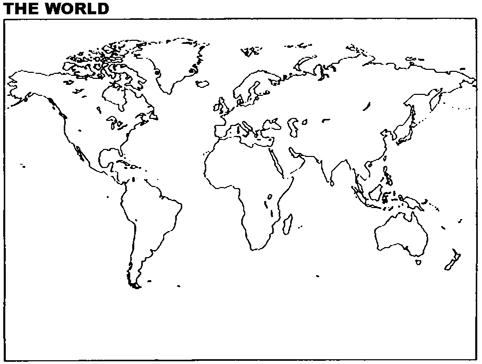 Trace the routes of Columbus, Da Gama, and Magellan.
 (Not Answered)
This question doesn't have any answer yet
Instructions: Please use this outline map of the world to answer the question(s). 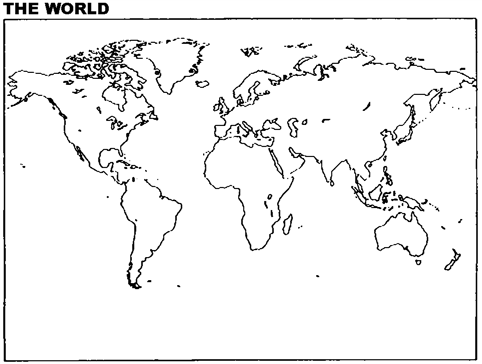 Locate and label the following: Europe, the Aztec Empire, the Inca Empire, Africa, India, and China.
 (Not Answered)
This question doesn't have any answer yet
France benefited significantly from commercial and industrial expansion, but it fell behind the English mainly because
(Multiple Choice)
4.9/5 (69)
(69) Expansion was attractive to the centralizing monarchical state because
(Multiple Choice)
4.9/5 (70)
(70) Instructions: Please define the following key terms. Show Who? What? Where? When? Why Important?
mercantilism
(Essay)
4.7/5 (73)
(73) The main cause of the price revolution in sixteenth-century Europe, according to the text, was
(Multiple Choice)
4.8/5 (88)
(88) Instructions: Please write a thorough, well-organized essay to answer each question. What factors caused the early modern witch craze, and what brought it to an end? What do the witch-hunts reveal about early modern society?
(Essay)
4.9/5 (79)
(79) In addition to a desire to expand abroad, Europe overseas expansion was made possible by
(Multiple Choice)
4.9/5 (89)
(89) 
Filters
- Essay(0)
- Multiple Choice(0)
- Short Answer(0)
- True False(0)
- Matching(0)