



 Chat with AI
Exam 29: An Era of Totalitarianism

Exam 1: The Ancient Near East: The First Civilizations85 Questions
Exam 2: The Hebrews: a New View of God and the Individual90 Questions
Exam 3: The Greek City-State Democratic Politics78 Questions
Exam 4: Greek Thought From Myth to Reason77 Questions
Exam 5: The Hellenistic Age Cultural Diffusion76 Questions
Exam 6: The Roman Republic City-State to World Empire75 Questions
Exam 7: The Roman Empire a World-State90 Questions
Exam 8: Early Christianity a World Religion79 Questions
Exam 9: The Heirs of Rome Byzantium Islam and Latin Christendom95 Questions
Exam 10: The High Middle Ages Vitality and Enewal83 Questions
Exam 11: The Flowering of Medieval Culture the Christian Synthesis78 Questions
Exam 12: The Late Middle Ages Crisis and Dissolution76 Questions
Exam 13: The Renaissance Transition to the Modern Age88 Questions
Exam 14: The Reformation the Shattering of Christian Unity84 Questions
Exam 15: European Expansion Economic and Social Transformations88 Questions
Exam 16: The Rise of Sovereignty Transition to the Modern State84 Questions
Exam 17: The Scientific Revolution the Universe Seen As a Mechanism81 Questions
Exam 18: The Age of Enlightenment Reason and Reform89 Questions
Exam 19: The French Revolution the Affirmation of Liberty and Equality118 Questions
Exam 20: The Industrial Revolution the Great Transformation77 Questions
Exam 21: Thought and Culture in the Early Nineteenth Century105 Questions
Exam 22: Revolution and Counterrevolution 1815-184879 Questions
Exam 23: Thought and Culture in the Mid-Nineteenth Century Realism and Social Criticism81 Questions
Exam 24: The Surge of Nationalism From Liberal to Extreme Nationalism77 Questions
Exam 25: The Industrial West Responses to Modernization91 Questions
Exam 26: Imperialism Western Global Dominance92 Questions
Exam 27: Modern Consciousness New Views of Nature Human Nature and the Arts80 Questions
Exam 28: World War I the West in Despair87 Questions
Exam 29: An Era of Totalitarianism112 Questions
Exam 30: Thought and Culture in an Era of World Wars and Totalitarianism75 Questions
Exam 31: World War II Western Civilization in the Balance85 Questions
Exam 32: Europe After World War II Recovery and Realignment 1945-198987 Questions
Exam 33: The Troubled Present85 Questions
Select questions type


The new society being built in the Soviet Union included

Free
(Multiple Choice)
4.8/5  (70)
(70) Correct Answer: Verified
E
On the Iberian Peninsula in the interwar period, all the following occurred EXCEPT
Free
(Multiple Choice)
4.8/5 (83)
(83) Correct Answer:Verified
VerifiedE
The main economic crisis in Germany during the early 1920s was
Free
(Multiple Choice)
4.9/5 (83)
(83) Correct Answer:Verified
VerifiedC
Which of the following was NOT connected with Germany in the years 1918-1920?
(Multiple Choice)
4.8/5 (99)
(99) In which Soviet republic was suffering worst during the 1930s, forcing some inhabitants to resort to cannibalism?
(Multiple Choice)
4.9/5 (70)
(70) When many identified with Hitler's views and sentiments, they connected with
(Multiple Choice)
4.9/5 (81)
(81) Mussolini's F ascist government sought to put into place an economic policy best described as
(Multiple Choice)
4.7/5 (85)
(85) The German Republic in the 1920s was opposed by all the following EXCEPT
(Multiple Choice)
5.0/5 (88)
(88) Instructions: Please define the following key terms. Show Who? What? Where? When? Why Important?
New Deal
(Essay)
4.8/5 (74)
(74) The text asserts that totalitarianism differed significantly from earlier autocratic regimes in that its leaders
(Multiple Choice)
4.9/5 (74)
(74) Which of the following circumstances were conducive to the growth of F ascism?
(Multiple Choice)
4.8/5 (87)
(87) How did Stalin come to succeed Lenin as leader of the Soviet Union?
(Multiple Choice)
4.8/5 (76)
(76) The relationship of Nazism to Christianity included which of the following features?
(Multiple Choice)
4.9/5 (89)
(89) Church-state relations in Mussolini's Italy can be described as
(Multiple Choice)
4.9/5 (80)
(80) Instructions: Please define the following key terms. Show Who? What? Where? When? Why Important?
New Economic Policy
(Essay)
4.9/5 (75)
(75) R eaction to collectivization in the 1930s included all of the following EXCEPT
(Multiple Choice)
4.8/5 (94)
(94) Instructions: Please use this outline map of Europe to answer the question(s). 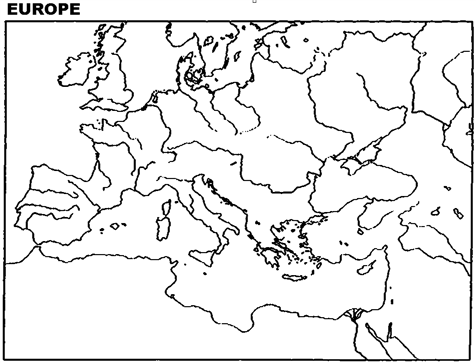 Locate and label the Soviet Republic in which resistance to collectivization was most intense and which the Soviet government subjected to an artificial famine that killed 6 million people.
 (Not Answered)
This question doesn't have any answer yet
Instructions: Please define the following key terms. Show Who? What? Where? When? Why Important?
Night of Broken Glass (Kristallnacht)
(Essay)
4.8/5 (69)
(69) 
Filters
- Essay(0)
- Multiple Choice(0)
- Short Answer(0)
- True False(0)
- Matching(0)