



 Chat with AI
Exam 20: The Industrial Revolution the Great Transformation


Which of the following constituted the largest group of city workers until the 1850s?

 (81)
 Verified
A
The Dutch Republic lacked which of the following preconditions for industrialization?
(87) VerifiedC
Instructions: Please write a thorough, well-organized essay to answer each question. Why was the agricultural revolution a necessary precursor to industrialization? How did the agricultural revolution change traditional social structures and labor patterns?
(72)  Answered by Examlex AI Copilot
The agricultural revolution was a necessary precursor to industrialization for several reasons. Firstly, the agricultural revolution led to an increase in food production, which in turn led to a population increase. This population increase created a surplus of labor, which was essential for the industrialization process. Additionally, the surplus of food allowed for a larger workforce to be sustained, which was necessary for the growth of industrial cities and factories.
Furthermore, the agricultural revolution also led to advancements in technology and farming techniques, which increased productivity and allowed for more efficient use of land. This increase in productivity freed up labor from the agricultural sector, which could then be utilized in the emerging industrial sector. The surplus of labor from the agricultural revolution provided the workforce needed for the factories and industries that were essential for industrialization.
The agricultural revolution also changed traditional social structures and labor patterns in several ways. Firstly, the shift from small-scale, subsistence farming to larger, more commercialized farming operations led to the consolidation of land and the displacement of small farmers. This led to a concentration of wealth and power in the hands of a few landowners, which in turn led to the creation of a working class of laborers who were dependent on these landowners for employment.
Additionally, the agricultural revolution led to the enclosure movement, where common lands were enclosed and privatized, leading to the displacement of rural communities and the loss of traditional ways of life. This forced many people to move to urban areas in search of work, which contributed to the growth of industrial cities and the formation of a new urban working class.
In conclusion, the agricultural revolution was a necessary precursor to industrialization because it provided the surplus of labor and food needed for the growth of the industrial sector. It also changed traditional social structures and labor patterns by concentrating wealth and power in the hands of a few landowners and creating a new urban working class. Overall, the agricultural revolution laid the groundwork for the industrial revolution and the profound social and economic changes that came with it.
Instructions: Please use this outline map of Europe to answer the question(s). 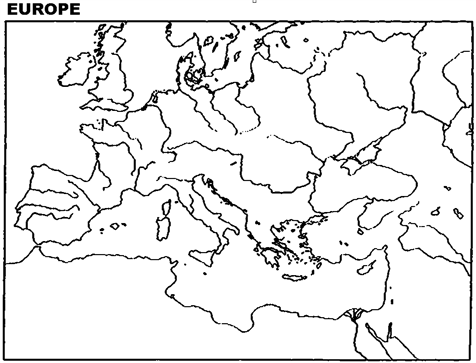 Locate and label the following areas urbanized during the 1800s: the English Midlands, the Scottish Lowlands, the northern plain of France, Belgium, the Rhineland, and northern Italy.
Instructions: Please define the following key terms. Show Who? What? Where? When? Why Important?
pig pron
(72) With the development of mass transportation in the later nineteenth century in large European cities
(79) The agricultural revolution in Europe contributed to the Industrial Revolution by
(79) The effects of the Industrial Revolution included all the following EXCEPT
(92) Instructions: Please write a thorough, well-organized essay to answer each question. What were the major features of the Industrial Revolution? In what ways did it create a new age in the history of the West?
(89) Instructions: Please define the following key terms. Show Who? What? Where? When? Why Important?
factories
(64) What was the innovation that significantly improved the quality of iron in the eighteenth century?
(82) Instructions: Please define the following key terms. Show Who? What? Where? When? Why Important?
middle classes
(75) Instructions: Please define the following key terms. Show Who? What? Where? When? Why Important?
"holy Monday"
(82) Which of the following is a key reason England was able to industrialize first?
(74) Instructions: Please define the following key terms. Show Who? What? Where? When? Why Important?
agricultural revolution
(72) Instructions: Please write a thorough, well-organized essay to answer each question. After the 1830s or so, the Industrial Revolution required huge infusions of capital. Why was this so, and how was this capital mobilized?
(68) 
Filters
- Essay(0)
- Multiple Choice(0)
- Short Answer(0)
- True False(0)
- Matching(0)