



 Chat with AI
Exam 28: World War I the West in Despair


Instructions: Please write a thorough, well-organized essay to answer each question. What factors explain the stalemate of World War I in the West? What does the stalemate indicate about the changing nature of war between the early nineteenth and twentieth centuries?

 (80)
 Answered by Examlex AI Copilot
The stalemate of World War I in the West can be attributed to several factors. One of the main reasons for the stalemate was the development of new defensive technologies and tactics that made it difficult for either side to make significant advances. The introduction of machine guns, barbed wire, and trench warfare made it extremely challenging for soldiers to break through enemy lines. Additionally, the use of artillery and the construction of elaborate defensive fortifications further contributed to the stalemate.
Another factor that contributed to the stalemate was the lack of effective offensive strategies. Both sides were entrenched in their positions and were unable to come up with successful tactics to break through the enemy lines. The failure of large-scale offensives, such as the Battle of the Somme and the Battle of Verdun, further solidified the stalemate.
The changing nature of war between the early nineteenth and twentieth centuries is indicated by the stalemate of World War I in the West. The development of new technologies and tactics, such as trench warfare and machine guns, transformed the nature of warfare. These advancements made it increasingly difficult for armies to achieve decisive victories and led to a more defensive and attritional style of warfare.
Furthermore, the stalemate of World War I also highlighted the growing importance of industrialization and mass production in warfare. Both sides were able to sustain prolonged campaigns due to their ability to produce large quantities of weapons, ammunition, and supplies. This marked a shift from the more limited and localized conflicts of the early nineteenth century to the large-scale, industrialized warfare of the twentieth century.
In conclusion, the stalemate of World War I in the West can be attributed to the development of new defensive technologies and tactics, as well as the lack of effective offensive strategies. This stalemate indicates a significant shift in the nature of war between the early nineteenth and twentieth centuries, characterized by the increasing importance of defensive warfare, industrialization, and mass production in modern conflicts.
Instructions: Please define the following key terms. Show Who? What? Where? When? Why Important?
Triple Entente
(89) Answered by Examlex AI CopilotThe Triple Entente was a military alliance formed in 1907 between the United Kingdom, France, and Russia.
Who: The Triple Entente included the United Kingdom, France, and Russia.
What: It was a military alliance aimed at countering the threat posed by the Triple Alliance, which consisted of Germany, Austria-Hungary, and Italy.
Where: The alliance was formed in Europe, but its impact was felt globally.
When: The Triple Entente was formed in 1907, leading up to World War I.
Why Important: The Triple Entente was important because it significantly shifted the balance of power in Europe and contributed to the tensions that eventually led to the outbreak of World War I. It also had a major impact on the alliances and conflicts that shaped the 20th century.
Instructions: Please define the following key terms. Show Who? What? Where? When? Why Important?
Verdun
(86) Answered by Examlex AI CopilotVerdun is a term that is most commonly associated with a significant battle during World War I, known as the Battle of Verdun. Below is the definition of Verdun in the context of this historical event:
Who?
The Battle of Verdun involved the French and German armies. Key military leaders included French Generals Philippe Pétain and Robert Nivelle, and the German Chief of Staff Erich von Falkenhayn.
What?
Verdun was one of the longest and most brutal battles in World War I and in the history of warfare. It was characterized by its extensive use of artillery and the massive casualties suffered by both sides. The battle became a symbol of French national determination and the phrase "Ils ne passeront pas" (They shall not pass) is often associated with the defense of Verdun.
Where?
The battle took place near the town of Verdun-sur-Meuse in northeastern France. The region had a ring of fortifications that were considered vital for the defense of France against a German invasion.
When?
The Battle of Verdun began on February 21, 1916, and lasted until December 18, 1916. It was fought over a period of about 10 months.
Why Important?
The Battle of Verdun is important for several reasons:
1. Human Cost: It resulted in an estimated 700,000 casualties (dead, wounded, and missing), making it one of the costliest battles in human history.
2. Military Tactics: The battle highlighted the futility of trench warfare and attrition tactics that came to define World War I. It also showcased the devastating impact of modern artillery and the resilience of soldiers under prolonged stress.
3. National Symbolism: For France, Verdun became a symbol of the country's strength and determination to resist invasion. The phrase "Ils ne passeront pas" became emblematic of the French will to fight and defend their homeland at all costs.
4. Psychological Impact: The battle had a lasting impact on the collective memory of the French and German people and is often remembered as an example of the horrors of war.
5. Strategic Outcome: Although the battle was tactically inconclusive, it succeeded in bleeding the German army's resources and manpower, which contributed to the eventual failure of the German war effort.
In summary, Verdun is a key historical term that refers to a major battle of World War I, which took place near the town of Verdun-sur-Meuse in France. It is remembered for its extraordinary duration, high casualties, and as a symbol of French national resolve. The battle's significance extends to military history, national identity, and the memory of the Great War.
Instructions: Please define the following key terms. Show Who? What? Where? When? Why Important?
Provisional Government
(81) Which of the following was the first country to decide on war after the assassination of Francis Ferdinand?
(85) Which of the following was considered in the text's discussion of the consequences of World War I?
(74) Instructions: Please define the following key terms. Show Who? What? Where? When? Why Important?
Black Hand
(75) When the war became mired down in trench warfare, the military and civilian leaders of the warring countries
(92) Following the spring 1917 mutinies in the French Army, General Pétain undertook a policy of
(72) Manfred Freiherr von Richthofen was associated with which new technology employed to devastating effect in World War I?
(65) Instructions: Please write a thorough, well-organized essay to answer each question. Why was the replacement of General Robert Nivelle by General Pétain particularly significant?
(77) Which of the following was NOT a territorial settlement negotiated by treaties at the end of the war?
(81) Which of the following did NOT occur? In 1917 and 1918, the Bolsheviks
(82) During the war, which Wilson claimed would make the world safe for democracy, states
(88) Instructions: Please define the following key terms. Show Who? What? Where? When? Why Important?
"All Power to the Soviets"
(83) Instructions: Please use this outline map of Europe to answer the question(s). 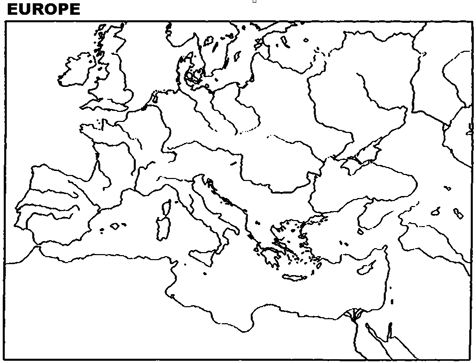 Locate and label the Triple Entente, the Triple Entente, and the Central Powers.
What incident or development resulted in the entry of the United States into World War I?
(73) Instructions: Please write a thorough, well-organized essay to answer each question. Describe and explain the willingness of the leaders and the populations to go to war.
(93) 
Filters
- Essay(0)
- Multiple Choice(0)
- Short Answer(0)
- True False(0)
- Matching(0)