



 Chat with AI
Exam 13: Structure Determination

Exam 1: Structure and Bonding:acids and Bases41 Questions
Exam 2: Alkanes: the Nature of Organic Compounds44 Questions
Exam 3: Alkenes and Alkynes: the Nature of Organic Reactions40 Questions
Exam 4: Reactions of Alkenes and Alkynes44 Questions
Exam 5: Aromatic Compounds52 Questions
Exam 6: Sterechemistry at Tetrahedral Centers39 Questions
Exam 7: Organohalides: Nucleophilic Substitutions and Eliminations40 Questions
Exam 8: Alcohols, Phenols, Ethers, and Their Sulfur Analogs36 Questions
Exam 9: Aldehydes and Ketones: Nucleophilic Addition Reactions32 Questions
Exam 10: Carboxylic Acids and Derivatives: Nucleophilic Acyl Substitution Reactions63 Questions
Exam 11: Carbonyl Alpha-Substitution Reactions and Condensation Reactions38 Questions
Exam 12: Amines32 Questions
Exam 13: Structure Determination65 Questions
Exam 14: Biomolecules: Carbohydrates48 Questions
Exam 15: Biomolecules: Amino Acids, Peptides, and Proteins50 Questions
Exam 16: Biomolecules: Lipids and Nucleic Acids50 Questions
Exam 17: The Organic Chemistry of Metabolic Pathways40 Questions
Select questions type


Assume you are carrying out the conversion of 1-bromobutane to butan-1-ol. How could you use IR spectroscopy to determine when the reaction is complete? 
(Essay)
4.8/5  (75)
(75) Which of the following statements best describes the base peak in a mass spectrum?
(Multiple Choice)
4.9/5 (86)
(86) Which of the following compounds gives an infrared spectrum with a peak at ~1750 cm-1, but no significant peaks at 3000-3500 cm-1 or 1050-1250 cm-1?
(Multiple Choice)
4.9/5 (78)
(78) Instructions: For each of the compounds below tell how many signals you would expect the molecule to have in its normal, broadband decoupled 13C NMR spectra.
-Number of signals: 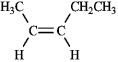
(Essay)
4.9/5 (81)
(81) Consider the compound below:  a)At what approximate positions might the compound show IR absorptions?
b)How would this spectrum differ from that of cyclohexanol?
a)At what approximate positions might the compound show IR absorptions?
b)How would this spectrum differ from that of cyclohexanol? (Essay)
4.8/5 (76)
(76) Instructions: The following questions pertain to the charting of NMR spectra. MATCH a term to each description below. Place the letter of the term in the blank to the left of the description.
-Refer to instructions. __________ The NMR charts are calibrated using an arbitrary scale that is divided into __________ units.
(Multiple Choice)
4.8/5 (96)
(96) Instructions: Predict the splitting patterns you would expect for each proton in the molecules below:
-Predict: 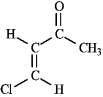
(Essay)
4.7/5 (68)
(68) A compound with the molecular formula C6H4ClBr produces only two doublets in the 1H NMR spectrum.
a)Propose a structure for this compound.
b)How many signals would be present in the 13CNMR for this structure?
(Essay)
4.8/5 (84)
(84) Which of the following bonds undergoes stretching at the highest frequency?
(Multiple Choice)
4.8/5 (78)
(78) Instructions: The following questions pertain to the charting of NMR spectra. MATCH a term to each description below. Place the letter of the term in the blank to the left of the description.
-Refer to instructions. __________ The exact place on the chart at which a nucleus absorbs is called its __________.
(Multiple Choice)
4.9/5 (75)
(75) Instructions: Select the most reasonable formula for the compounds with the following mass spectral data.
-Refer to instructions. M+ at m/z = 216
(Multiple Choice)
4.9/5 (80)
(80) Instructions: Match each of the following groups of bond-types to the region of the infrared spectrum in which their absorptions occur.
-N-H, C-H, and O-H stretching and bending motions.
(Multiple Choice)
4.9/5 (78)
(78) Nuclear magnetic resonance spectroscopy provides information about a molecule's:
(Multiple Choice)
4.9/5 (74)
(74) Which of the following compounds gives a 1H NMR spectrum consisting of only two singlets?
(Multiple Choice)
4.7/5 (78)
(78) Instructions: Refer to the mass spectrum of 2-methylbutane shown below to answer the following question(s). 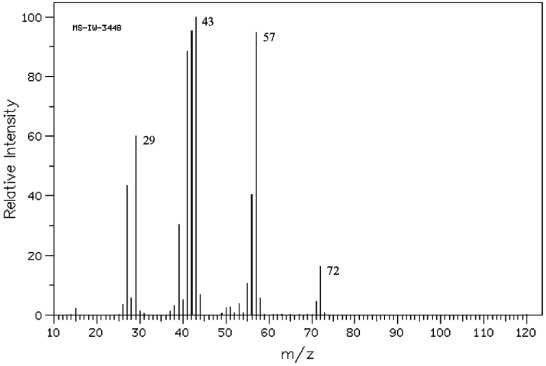 (Spectrum obtained from: SDBSWeb: http://www.aist.go.jp/RIODB/SDBS/)
-Refer to instructions. What peak represents the base peak?
(Spectrum obtained from: SDBSWeb: http://www.aist.go.jp/RIODB/SDBS/)
-Refer to instructions. What peak represents the base peak? (Short Answer)
4.9/5 (93)
(93) Which feature in the 1H NMR spectrum provides information about the electronic environment of the protons in a compound?
(Multiple Choice)
4.8/5 (75)
(75) Instructions: Refer to the mass spectrum of 2-methylbutane shown below to answer the following question(s). (Spectrum obtained from: SDBSWeb: http://www.aist.go.jp/RIODB/SDBS/)
-Refer to instructions. What peak represents M+?
(Spectrum obtained from: SDBSWeb: http://www.aist.go.jp/RIODB/SDBS/)
-Refer to instructions. What peak represents M+? (Essay)
4.8/5 (77)
(77) Instructions: For each of the compounds below tell how many signals you would expect the molecule to have in its normal, broadband decoupled 13C NMR spectra.
-Number of signals: 
(Essay)
4.9/5 (78)
(78) Which of the following bonds gives rise to a strong absorbance near 1700 cm-1 in the infrared spectrum?
(Multiple Choice)
4.9/5 (84)
(84) 
Filters
- Essay(0)
- Multiple Choice(0)
- Short Answer(0)
- True False(0)
- Matching(0)