



 Chat with AI
Exam 3: Alkenes and Alkynes: the Nature of Organic Reactions

Exam 1: Structure and Bonding:acids and Bases41 Questions
Exam 2: Alkanes: the Nature of Organic Compounds44 Questions
Exam 3: Alkenes and Alkynes: the Nature of Organic Reactions40 Questions
Exam 4: Reactions of Alkenes and Alkynes44 Questions
Exam 5: Aromatic Compounds52 Questions
Exam 6: Sterechemistry at Tetrahedral Centers39 Questions
Exam 7: Organohalides: Nucleophilic Substitutions and Eliminations40 Questions
Exam 8: Alcohols, Phenols, Ethers, and Their Sulfur Analogs36 Questions
Exam 9: Aldehydes and Ketones: Nucleophilic Addition Reactions32 Questions
Exam 10: Carboxylic Acids and Derivatives: Nucleophilic Acyl Substitution Reactions63 Questions
Exam 11: Carbonyl Alpha-Substitution Reactions and Condensation Reactions38 Questions
Exam 12: Amines32 Questions
Exam 13: Structure Determination65 Questions
Exam 14: Biomolecules: Carbohydrates48 Questions
Exam 15: Biomolecules: Amino Acids, Peptides, and Proteins50 Questions
Exam 16: Biomolecules: Lipids and Nucleic Acids50 Questions
Exam 17: The Organic Chemistry of Metabolic Pathways40 Questions
Select questions type


Match each definition to one of the terms below.
-The energy needed by reactants to reach the transition state.

Free
(Multiple Choice)
4.9/5  (70)
(70) Correct Answer: Verified
C
Rank each set of substituents using the Cahn-Ingold-Prelog sequence rules by numbering the highest priority substituent 1 and numbering the lowest priority substituent 4. Place the number in the blank below the substituent. 
Free
(Essay)
4.7/5 (80)
(80) Correct Answer:Verified
Verified
Which of the following substituents has the highest priority according to the Cahn-Ingold-Prelog system?
Free
(Multiple Choice)
4.8/5 (83)
(83) Correct Answer:Verified
VerifiedB
Instructions: Draw structures corresponding to each name below.
-Draw:
trans-4,4-dimethylpent-2-ene
(Essay)
4.9/5 (80)
(80) Instructions: Use the reaction energy diagram below to answer the following question(s). 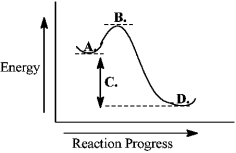 -The products are found at _____ on the diagram.
 (Short Answer)
4.9/5 (67)
(67) The structures below show the stepwise bond making and bond breaking in this reaction. Draw curved arrows to show the electron flow that has occurred in each step. 
(Essay)
4.8/5 (69)
(69) Instructions: Assign E or Z configurations to each alkene below.
-Assign: 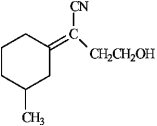
(Short Answer)
4.7/5 (82)
(82) In an organic reaction, which of the following is most likely to function as only a nucleophile?
(Multiple Choice)
4.8/5 (91)
(91) Instructions: Use the reaction energy diagram below to answer the following question(s).
-The transition state is found at _____ on the diagram.
-The transition state is found at _____ on the diagram. (Short Answer)
4.8/5 (79)
(79) Instructions: Identify the functional groups present in each compound below, and predict the direction of polarity in each.
-Identify and predict:
amphetamine 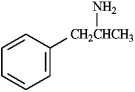
(Essay)
4.8/5 (87)
(87) Instructions: Consider the reaction of 2-bromo-2-methylpropane with water, shown below, to answer the following question(s). 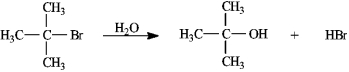 -Refer to instructions. This reaction is an example of:
 (Multiple Choice)
4.8/5 (89)
(89) Which of the following substituents has the highest priority according to the Cahn-Ingold-Prelog system?
(Multiple Choice)
4.8/5 (83)
(83) Match each definition to one of the terms below.
-Another term used for a Lewis acid.
(Multiple Choice)
4.9/5 (81)
(81) Instructions: Use the reaction energy diagram below to answer the following question(s).
-The reactants are found at _____ on the diagram.
-The reactants are found at _____ on the diagram. (Short Answer)
4.9/5 (72)
(72) Which of the following is a characteristic of a polar reaction?
(Multiple Choice)
4.8/5 (71)
(71) Instructions: Provide names for each structure below. Be sure to include the cis,trans or E,Z designations where applicable.
-Name and designate: 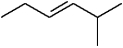
(Essay)
4.8/5 (83)
(83) Instructions: Add curved arrows to the following reaction(s) to indicate the flow of electrons in each.
-Indicate flow: 
(Essay)
4.7/5 (79)
(79) Instructions: Use the reaction energy diagram below to answer the following question(s).
-The free-energy change for the reaction is indicated at _____ on the diagram.
-The free-energy change for the reaction is indicated at _____ on the diagram. (Short Answer)
4.7/5 (85)
(85) Instructions: Classify each structure below as a nucleophile or electrophile, and briefly explain your choice.
-Classify and explain:
phenol 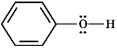
(Essay)
4.9/5 (71)
(71) Below are all the chemical structures and intermediates involved in a reaction. On the structures provided, show all electron flow using the arrow formalism for the complete stepwise mechanism. 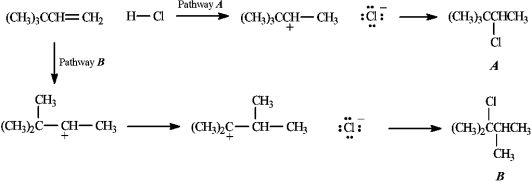
(Essay)
4.9/5 (76)
(76) 
Filters
- Essay(0)
- Multiple Choice(0)
- Short Answer(0)
- True False(0)
- Matching(0)